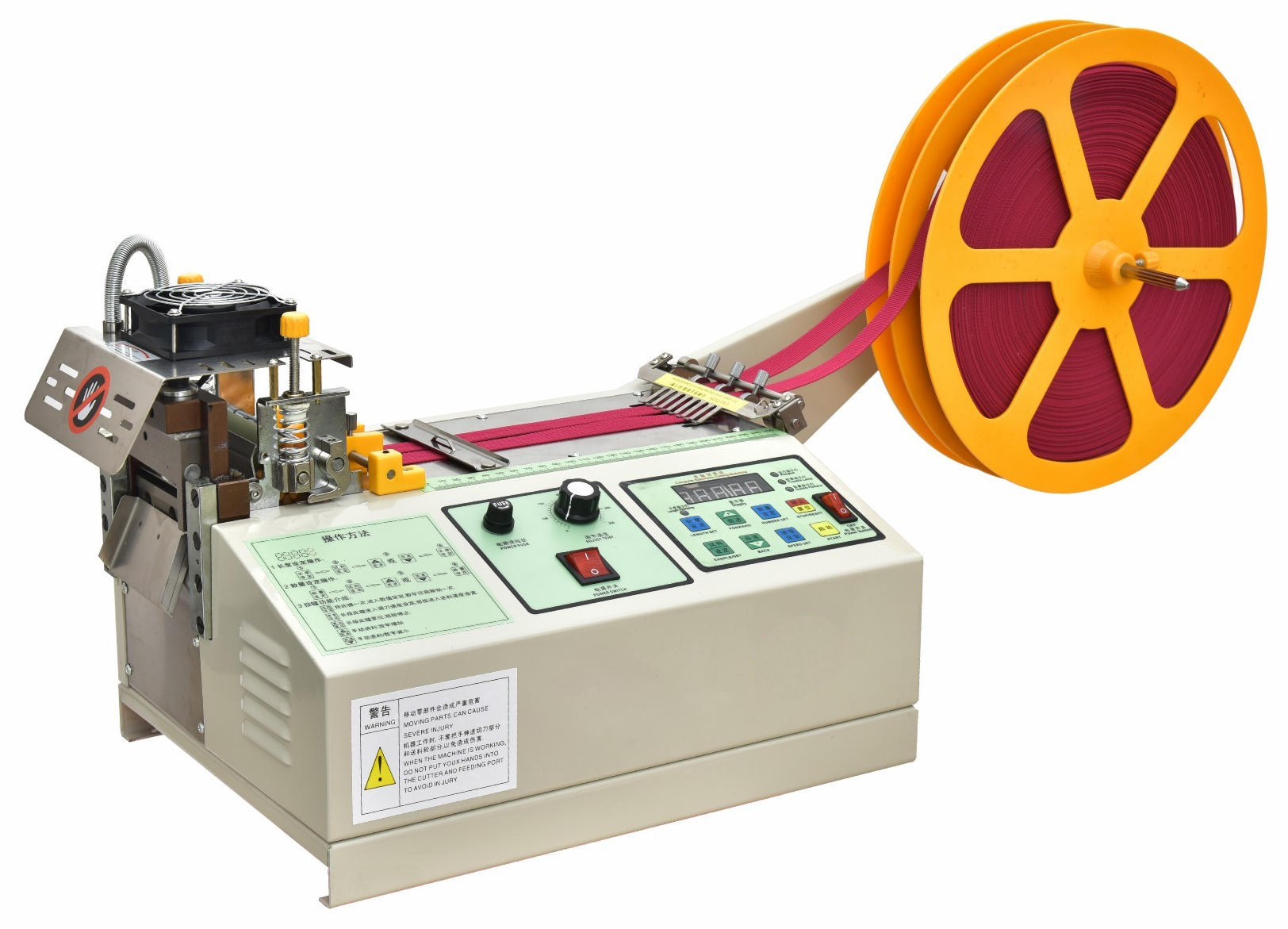
95 mm
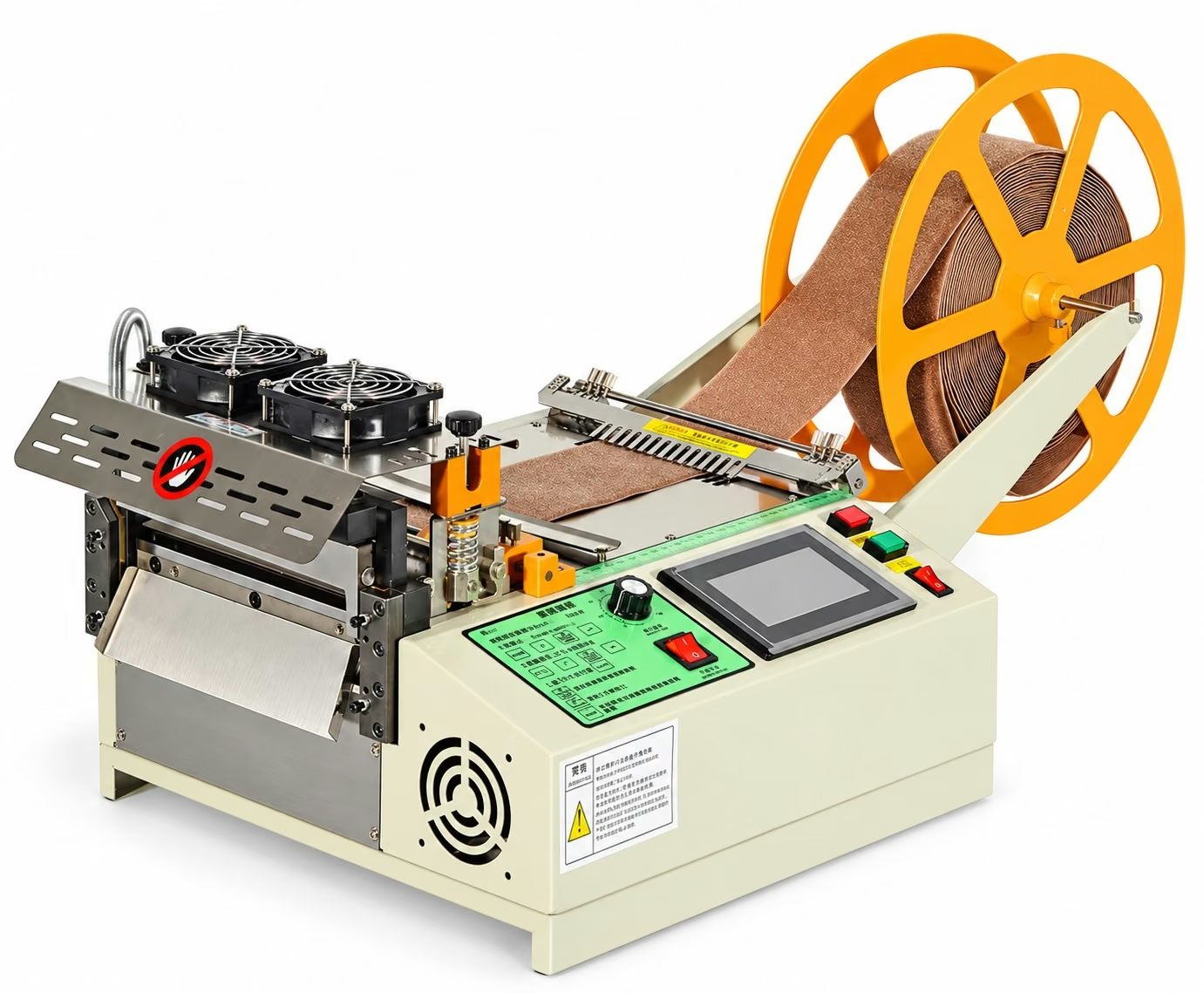
95mm Economy
100 pieces/min
For routine cut-to-length work on tapes up to 95mm wide.
0.44 kW · 24 / 25 kg
View specifications
CUT TO LENGTH · CUT & SEAL
See this machine’s application
Choose the cutting width and output that fit your tape preparation work.
The HESPER hot and cold tape cutting machine range cuts compatible webbing, ribbon, hook-and-loop tape and braided tape to preset lengths for sewing, assembly and packaging. Hot knife cutting can seal the cut ends of suitable thermoplastic tapes to help reduce fraying. Choose cold cutting when a mechanical cut without blade heating is required.
Discuss your material & get a quote
The two 95mm options serve narrow-tape applications. The 210mm and 310mm touchscreen options provide greater cutting width. A wider machine does not automatically have a higher reference output.
For routine cut-to-length work on tapes up to 95mm wide.
0.44 kW · 24 / 25 kg
View specifications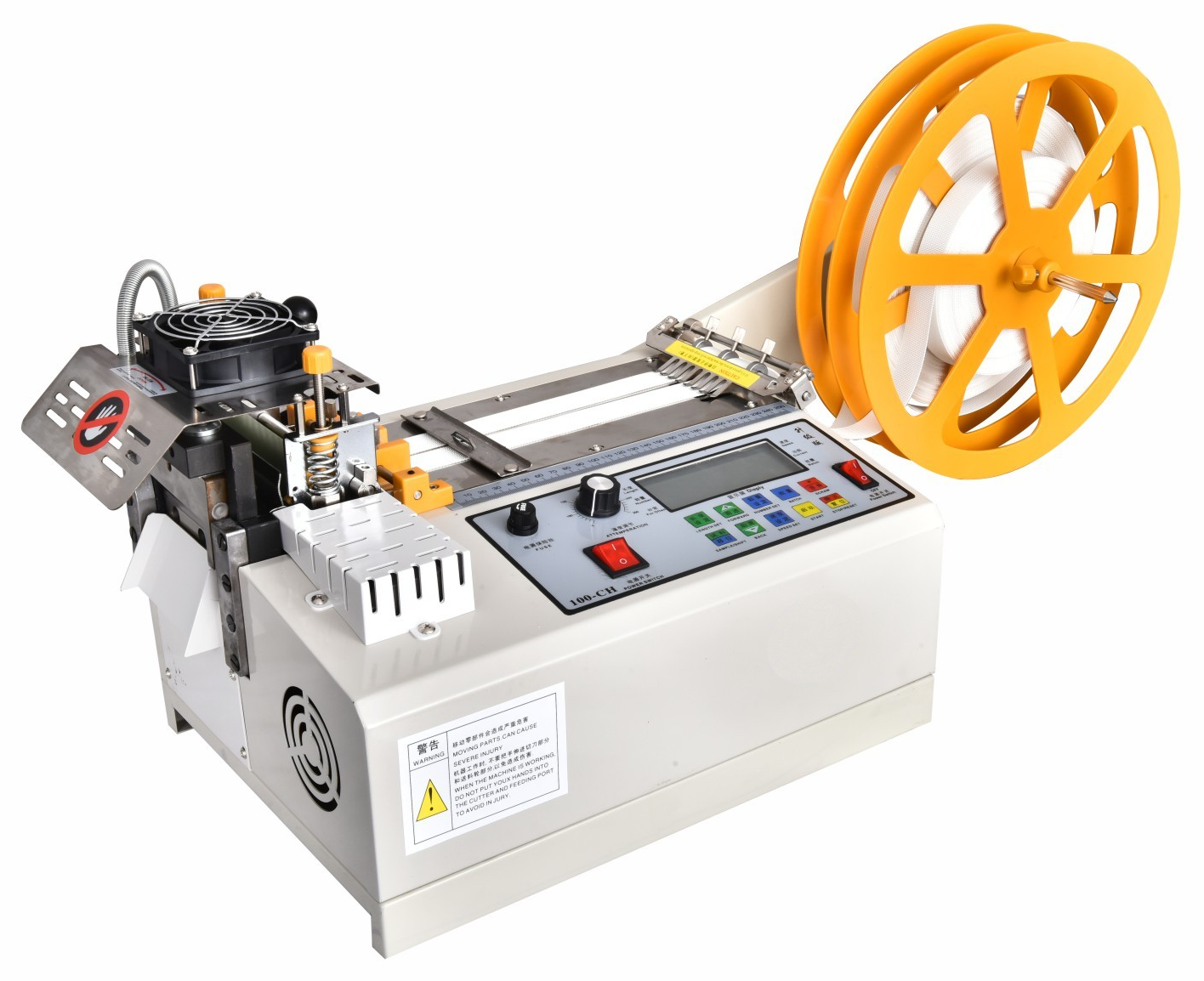
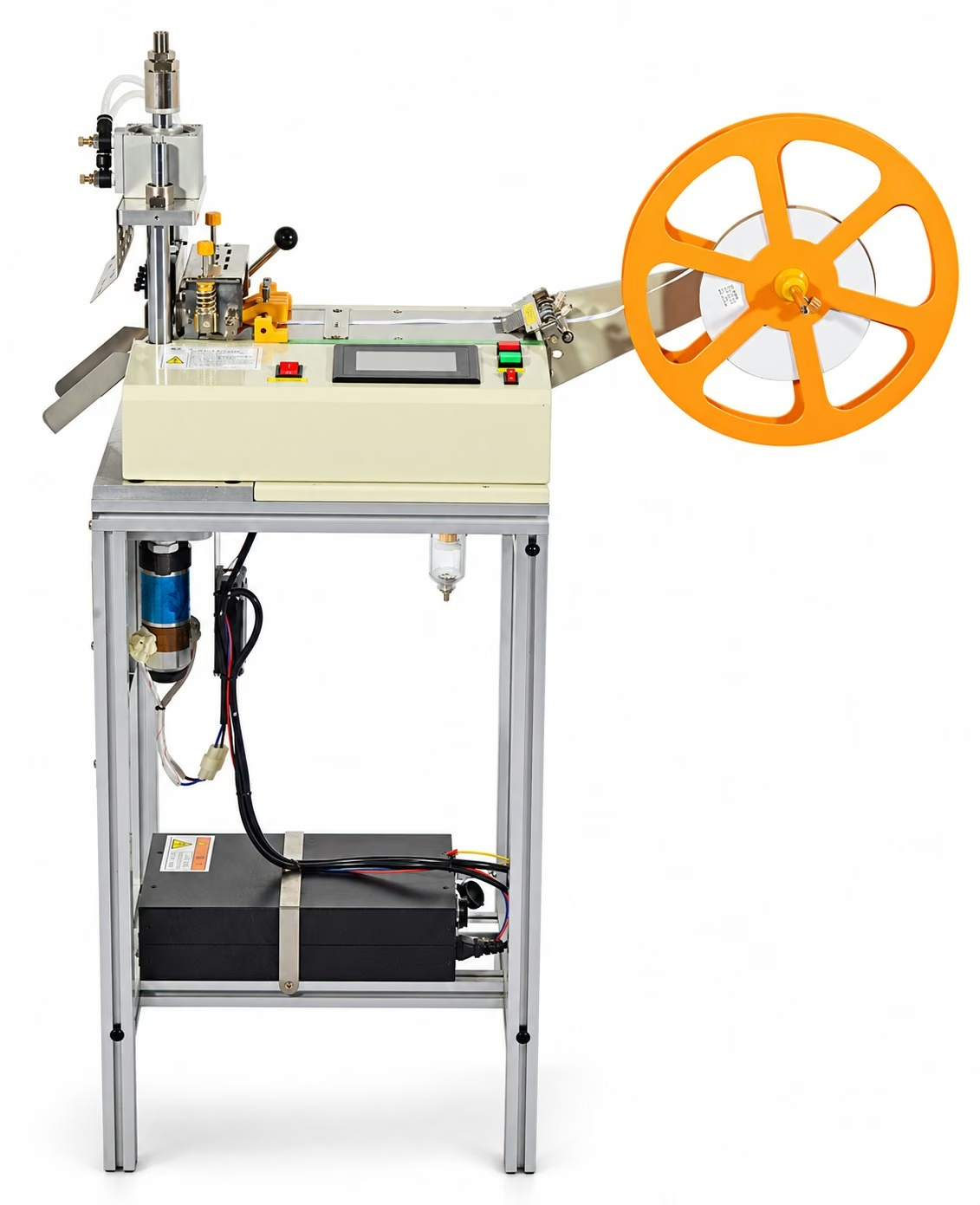
The same 95mm width with a reference output of 140 pieces/minute.
0.45 kW · 25 kg
View specifications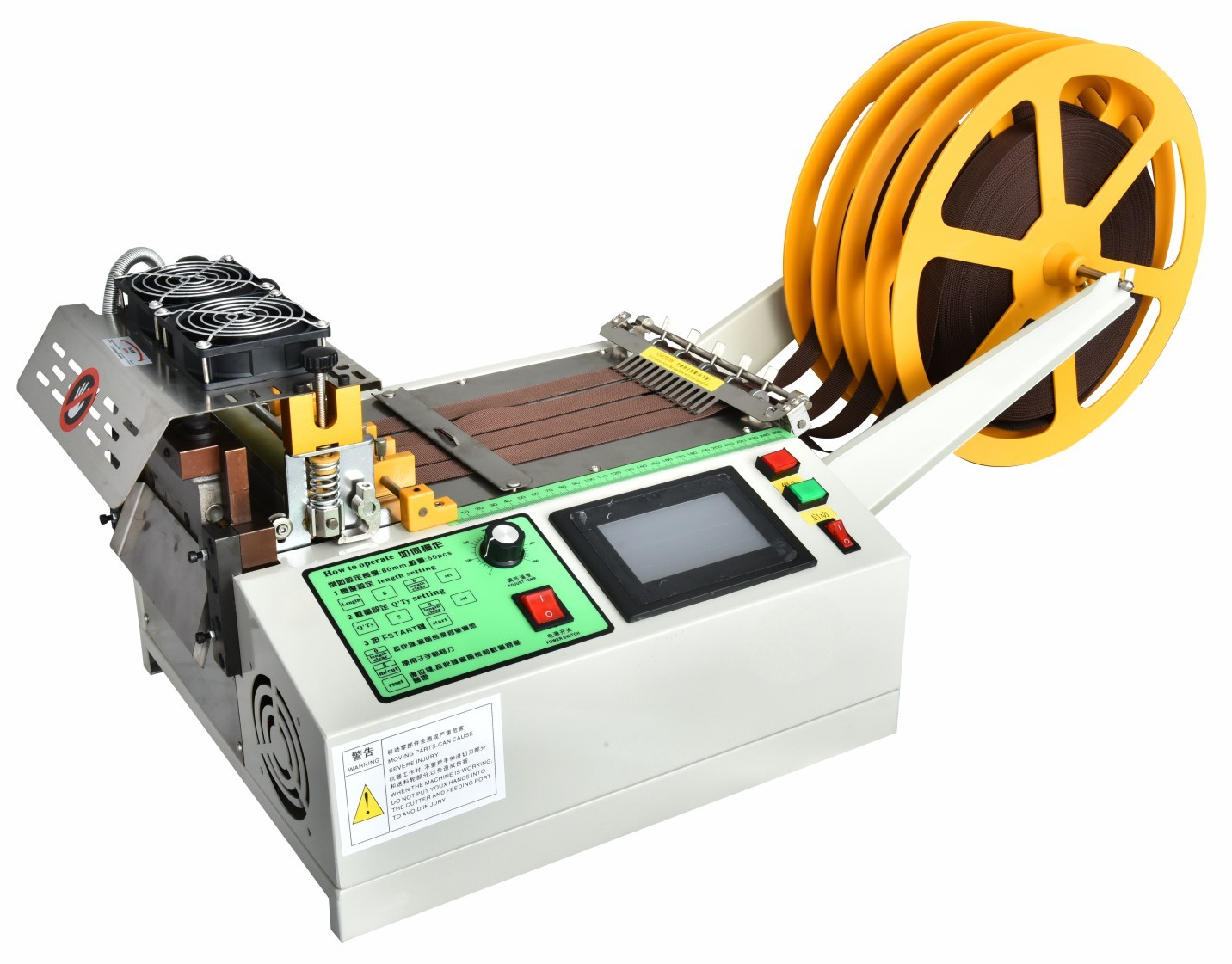
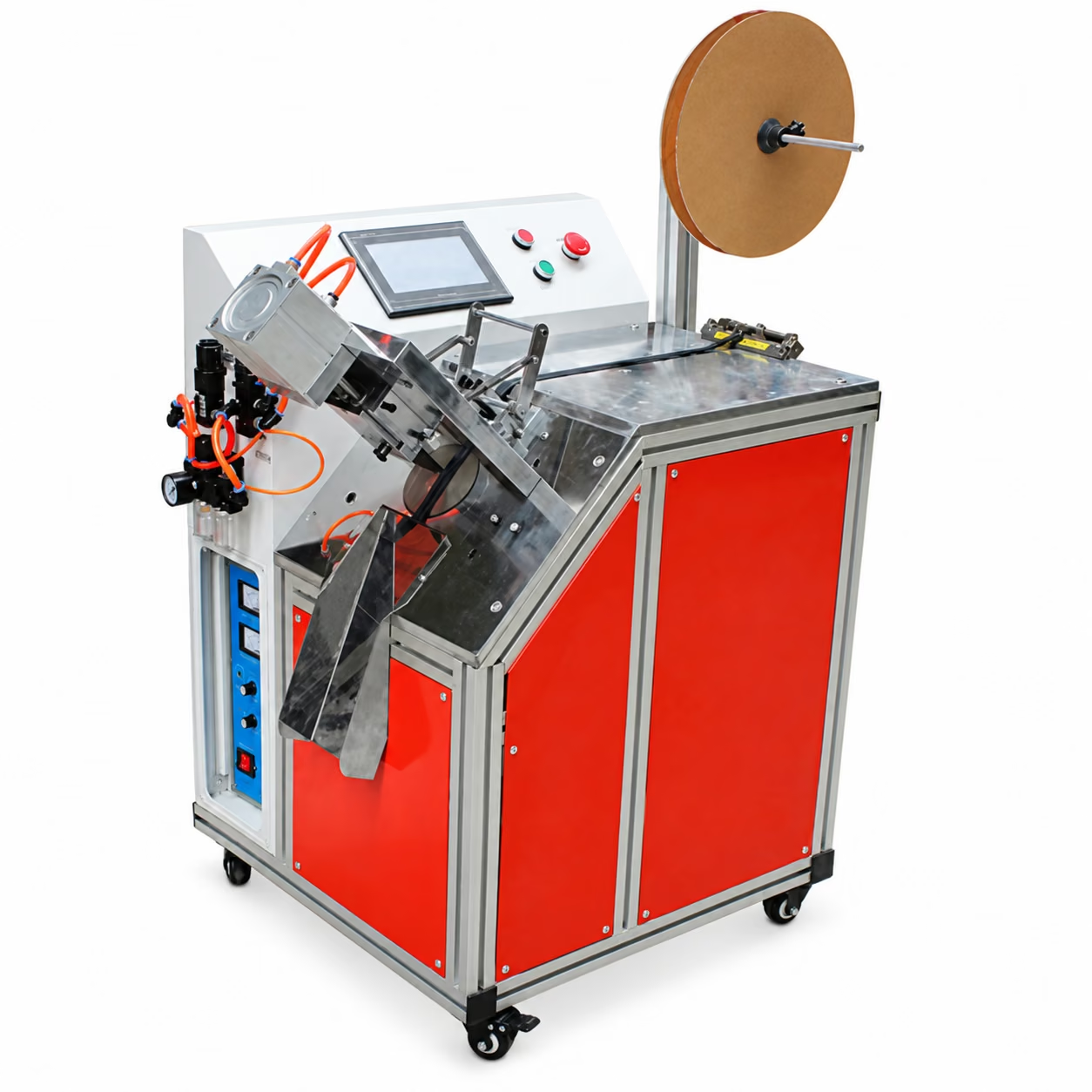
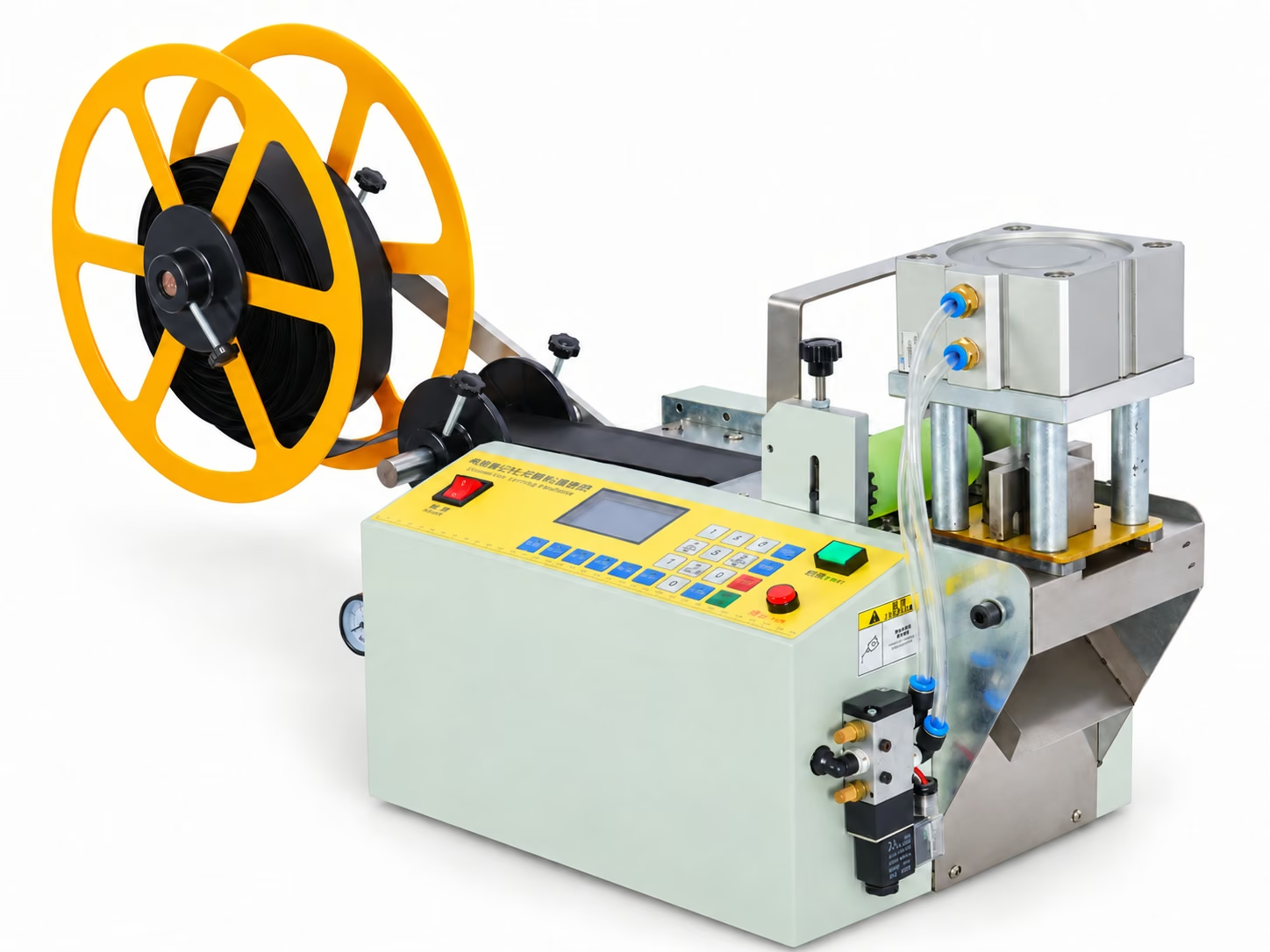
For cutting widths above 95mm and up to 210mm.
0.57 kW · 30.5 kg
View specifications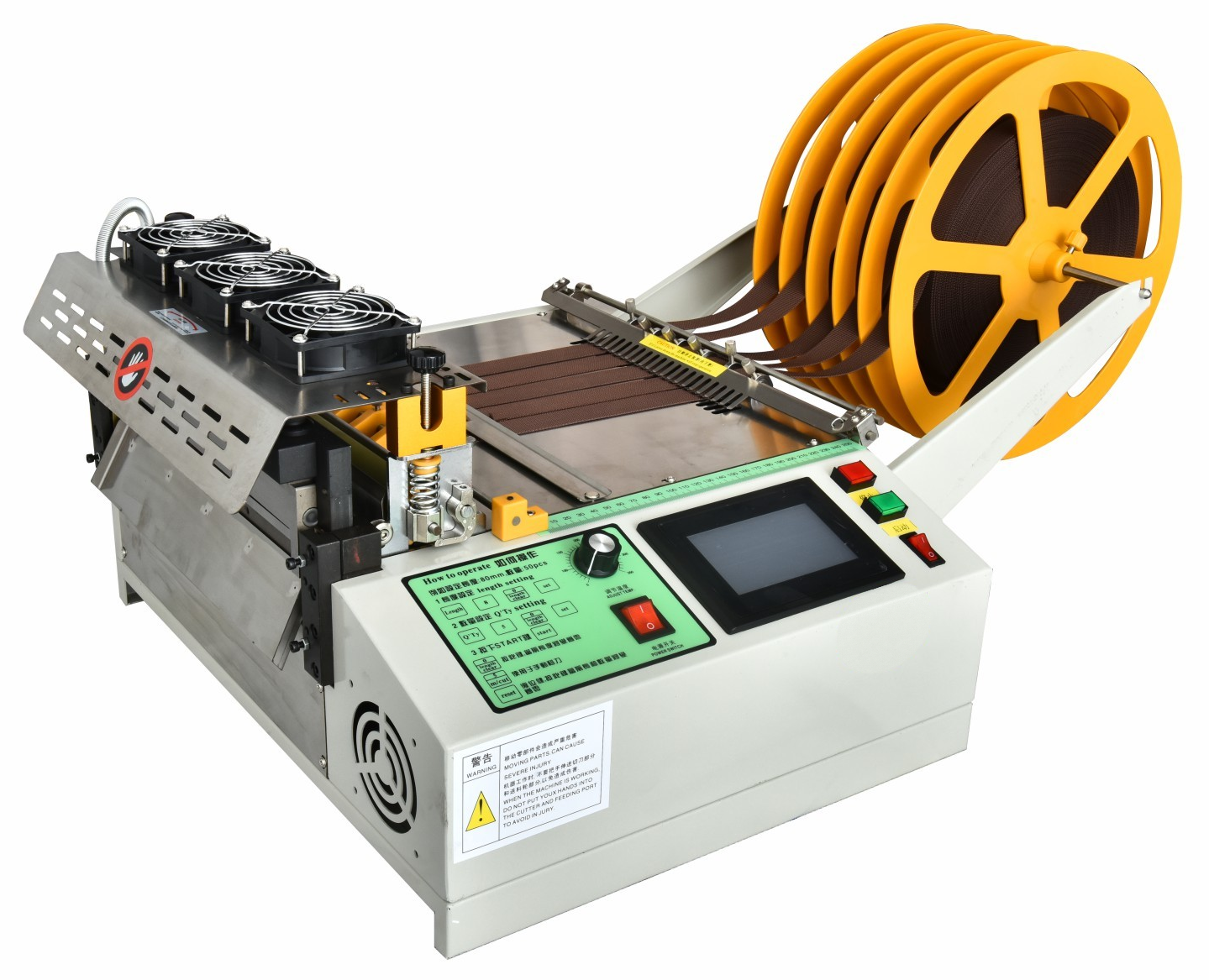
For cutting widths above 210mm and up to 310mm.
0.67 kW · 37 kg
View specificationsAll output figures use a 50mm cut length
On a small screen, scroll sideways to compare all four options.
| Parameter | 95mm Economy | 95mm High-Speed | 210mm Touchscreen | 310mm Touchscreen |
|---|---|---|---|---|
| Cutting width | 1–95 mm | 1–95 mm | 1–210 mm | 1–310 mm |
| Cutting length setting range | 1–99,999 mm | 1–99,999 mm | 1–99,999 mm | 1–99,999 mm |
| Reference output at 50mm | 100 pieces/min | 140 pieces/min | 110 pieces/min | 110 pieces/min |
| Cutting method | Cold knife / hot knife | Cold knife / hot knife | Cold knife / hot knife | Cold knife / hot knife |
| Voltage options | 110 V / 220 V | 110 V / 220 V | 110 V / 220 V | 110 V / 220 V |
| Power | 0.44 kW | 0.45 kW | 0.57 kW | 0.67 kW |
| Weight as listed | 24 / 25 kg | 25 kg | 30.5 kg | 37 kg |
| Blade temperature as listed | 450°C | 450°C | 1–450°C | 450°C |
| Control panel | Button control panel | LCD and buttons | Touchscreen | Touchscreen |
The Economy weight is retained as “24/25kg” from its brochure. The 210mm brochure lists 1–450°C; the other three list a 450°C maximum. Actual cutting output varies with material, cut length and operating settings.
Machine features
Use your material, cutting width and required edge finish to narrow down the options.
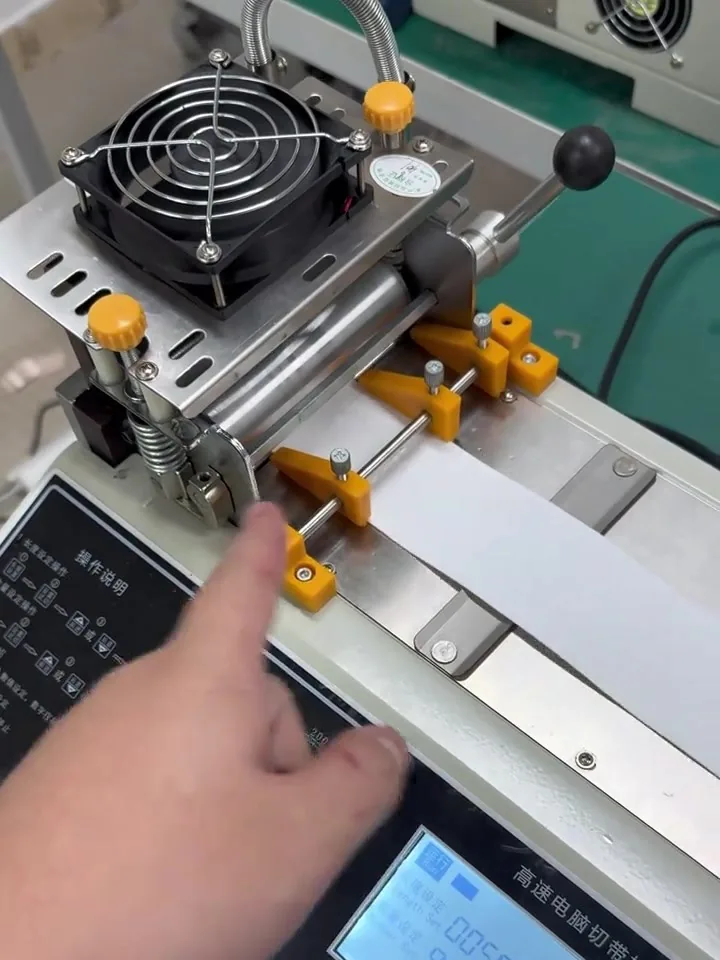
Set the guides to match the strip width so the material feeds into the blade. The 95 mm High-Speed and both touchscreen versions list stepper-driven feeding.
A hot knife can seal the cut edge of suitable synthetic tapes. Use a cold knife when the cut requires no heat. Check dimensions and edge finish on trial pieces from your own material.
Set cut length, speed and quantity on the 95 mm High-Speed and both touchscreen versions. They stop when the job is complete. Both 95 mm versions use buttons. The 210 mm and 310 mm versions use touchscreens.
Prepare nylon webbing and compatible braided tape in preset lengths for bag straps, belt-loop components and sewn assemblies. A webbing cutting and sealing setup can cut suitable thermoplastic tape and seal its cut ends in one operation. Match blade temperature and feeding settings to the fiber composition, construction and thickness.
Produce repeat lengths for garment trims, packaging ribbon and decorative assembly. Hot knife ribbon cutting helps seal the ends of compatible synthetic ribbon. Satin and grosgrain describe fabric constructions; check the fiber composition when selecting hot or cold cutting.
Cut compatible hook-and-loop tape into preset lengths before sewing or assembling fastening components. Specify sew-on or adhesive-backed tape, backing construction, width and thickness when selecting feeding and blade settings.
Prepare zipper tape in preset lengths for subsequent assembly. Specify the zipper type, tooth material and required cutting position to match the blade and feeding setup to your application.
Prepare shoelace material or belt-loop strips in repeat lengths for subsequent tipping, sewing or assembly operations. Select the cutting method for the material composition and required cut-end finish.
The 95mm Economy brochure lists elastic tape. Provide the elastic width, thickness, stretch behavior and required relaxed cut length to evaluate how feeding tension affects finished dimensions.
The 95mm High-Speed, 210mm and 310mm brochures list plastic hose. Provide the material, outside diameter, wall thickness and finished length to match the feeding and cutting setup to your tubing.
For suitable heat-sealable synthetic webbing and ribbon. The heated blade cuts and seals at the cut line to help reduce loose fibers. Maximum blade temperature is 450°C; select the working temperature for the actual material.
For compatible materials requiring a mechanical cut without blade heating. Choose the mode for the material structure and required edge finish, then check sample dimensions and cut ends before batch production.
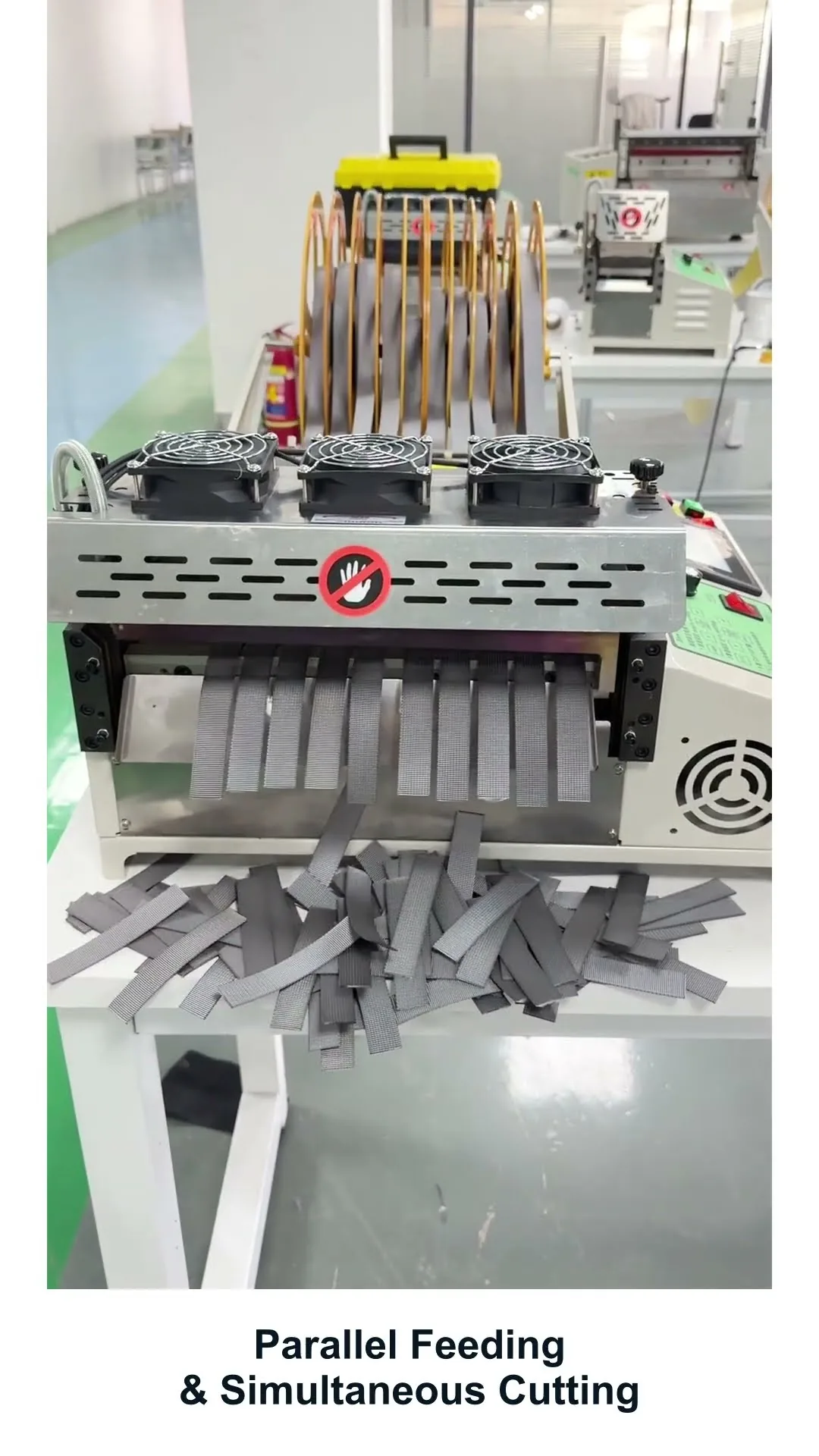
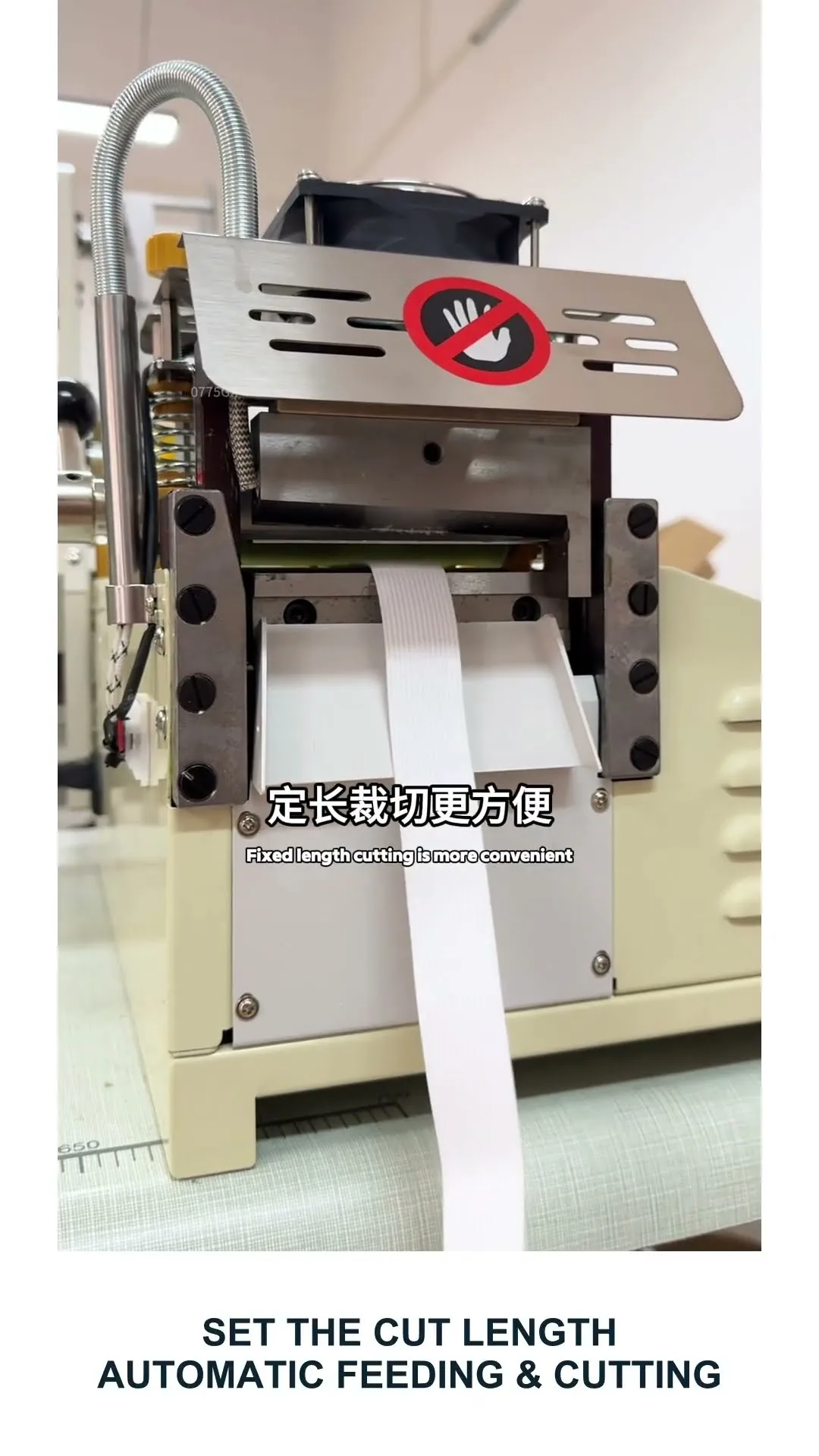
Machine photos
See how the strip is guided, how multiple strips pass through the cutter, and what to inspect on the cut pieces.
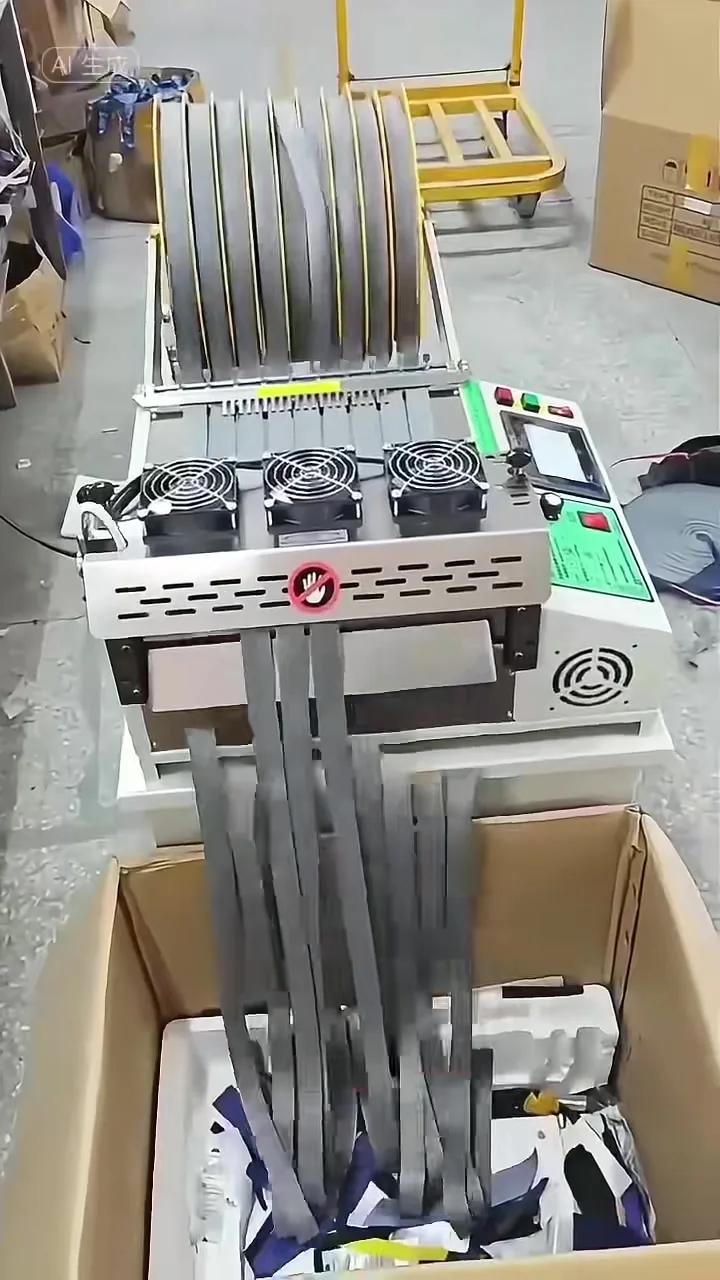
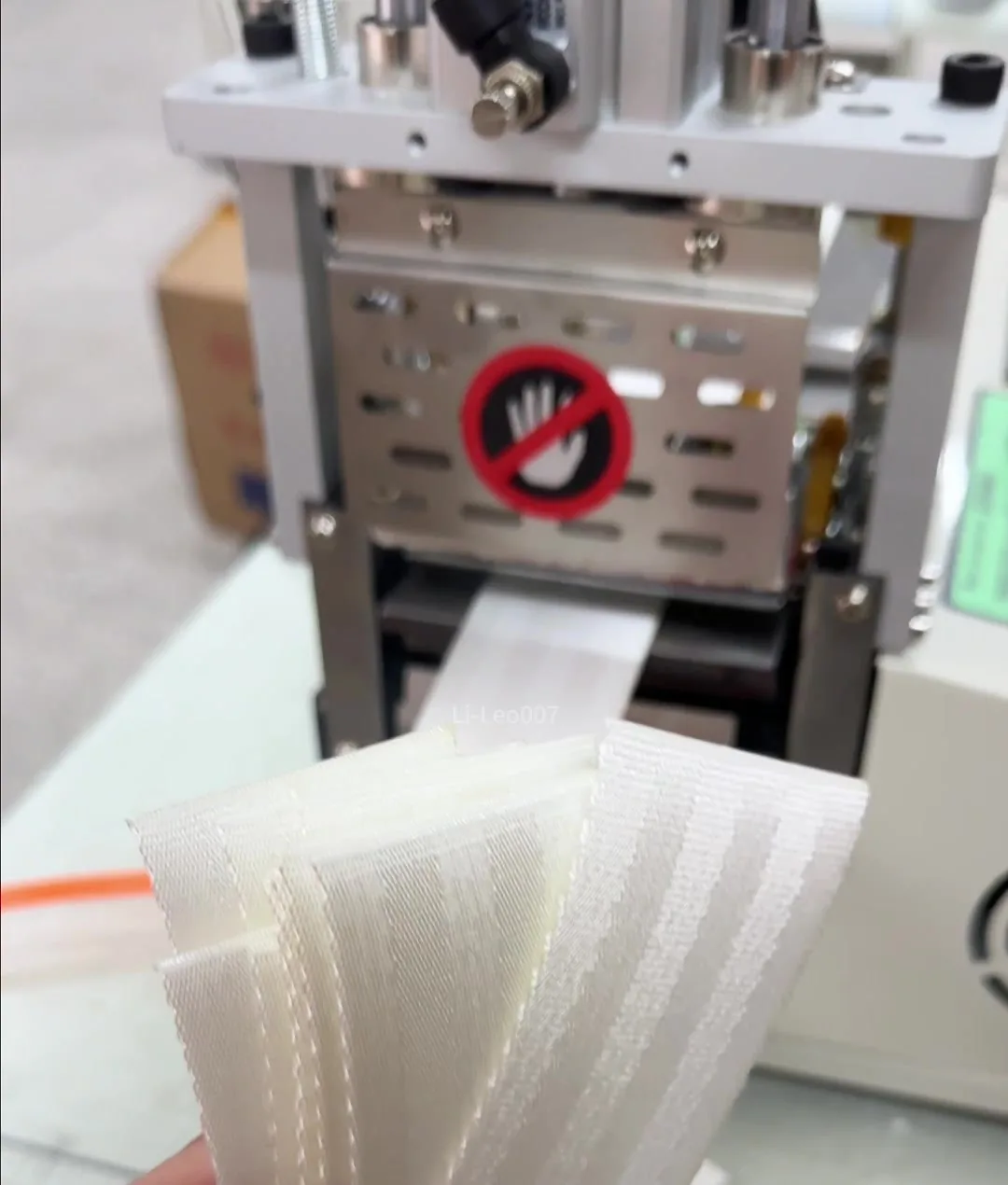
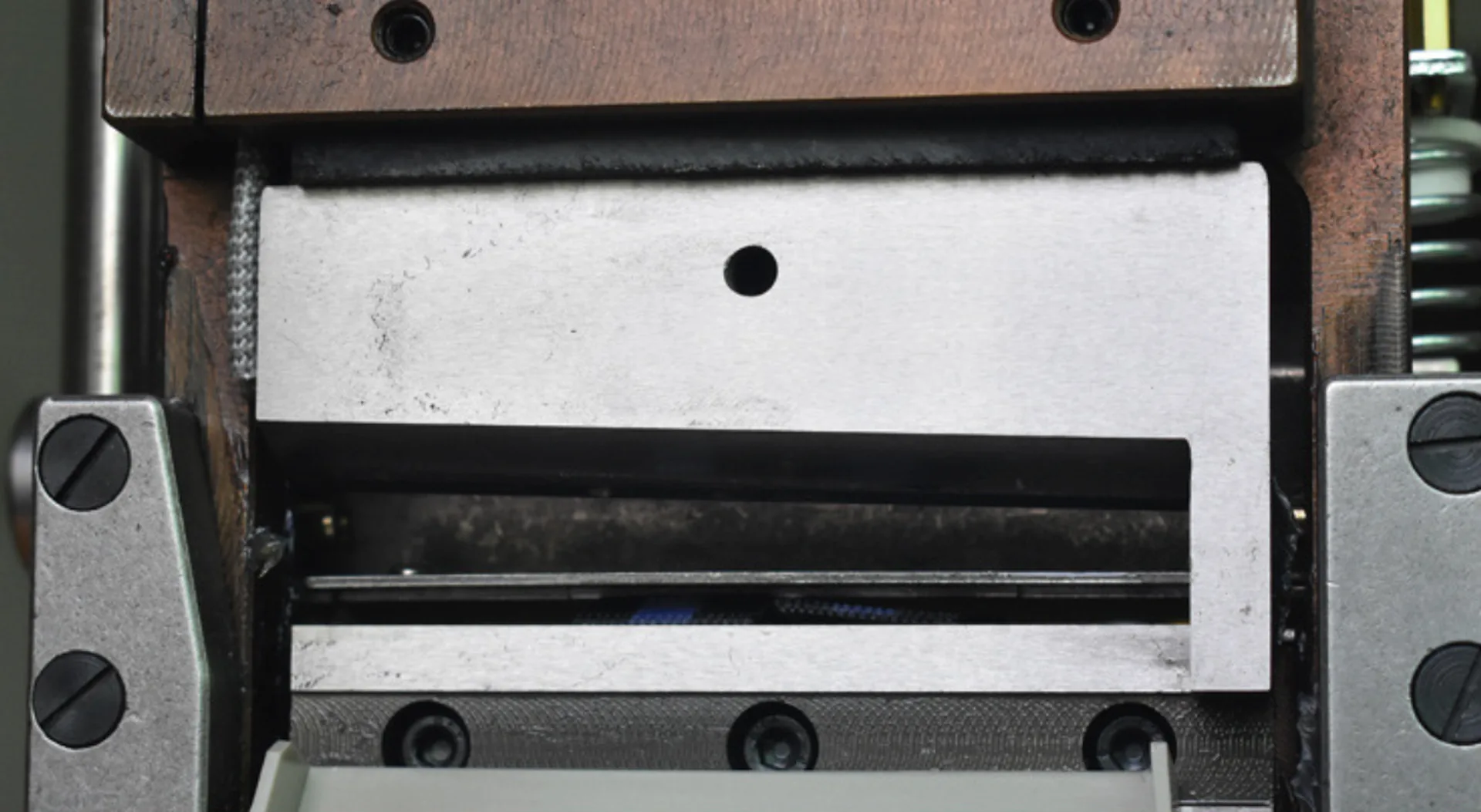
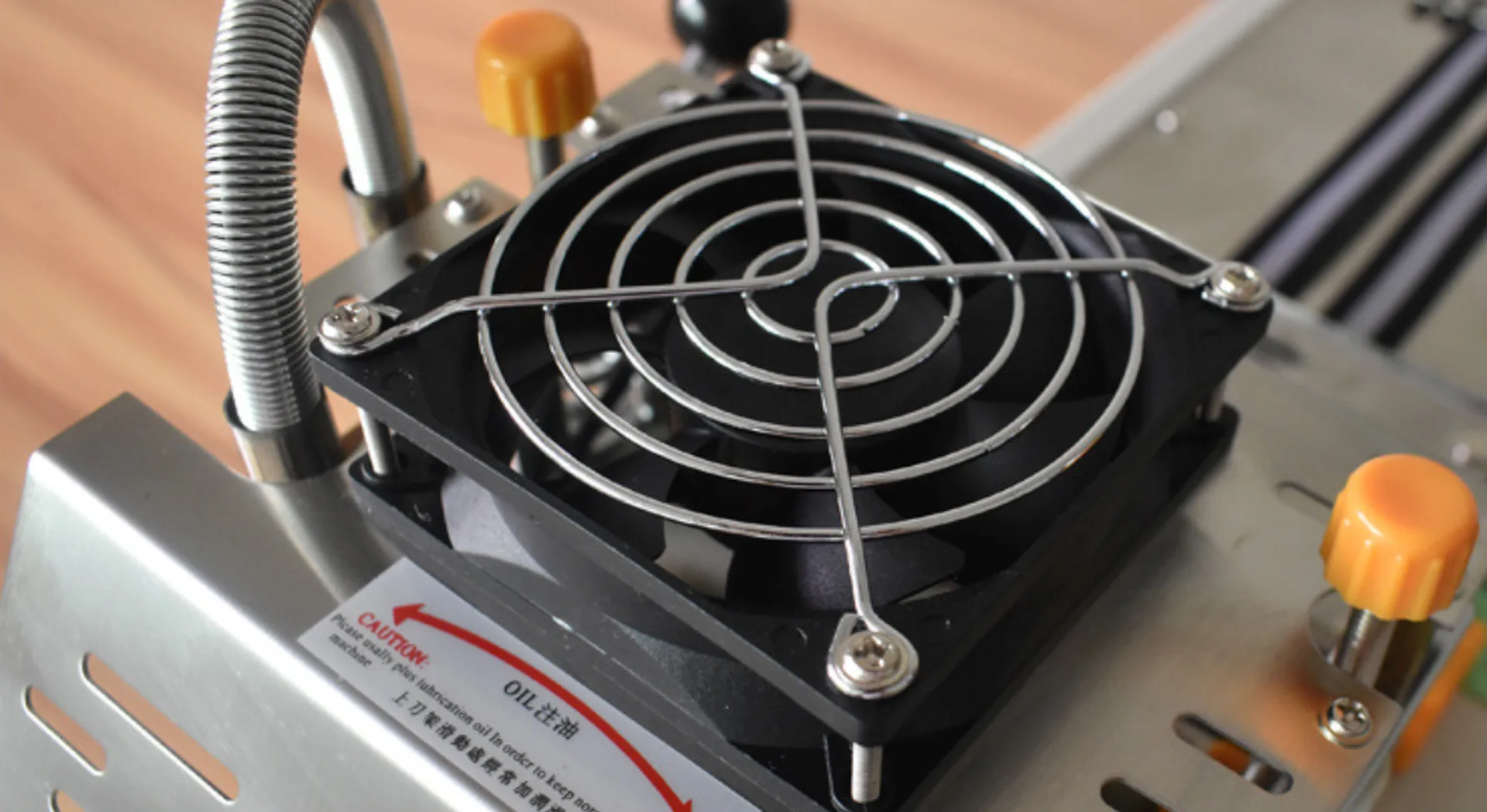
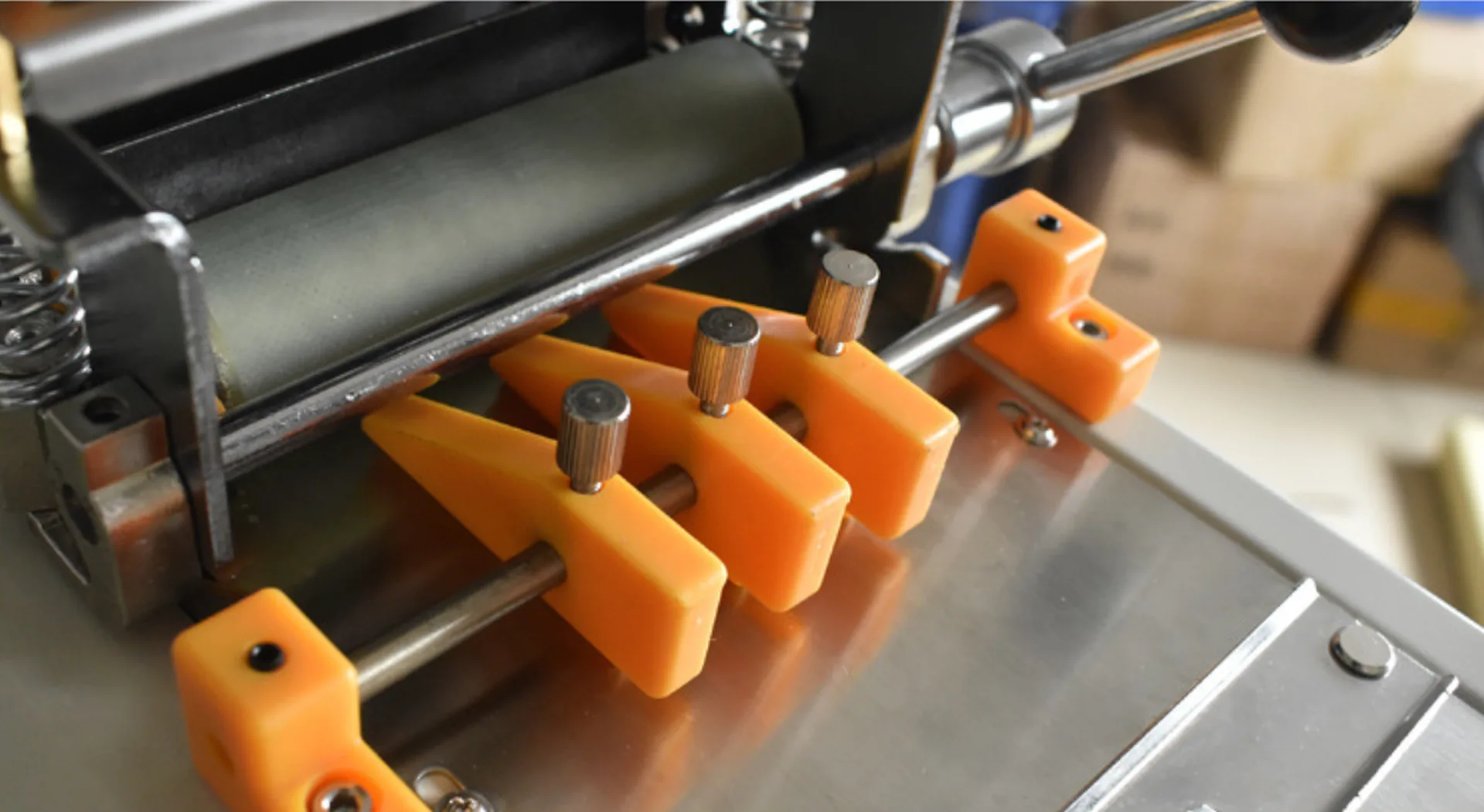
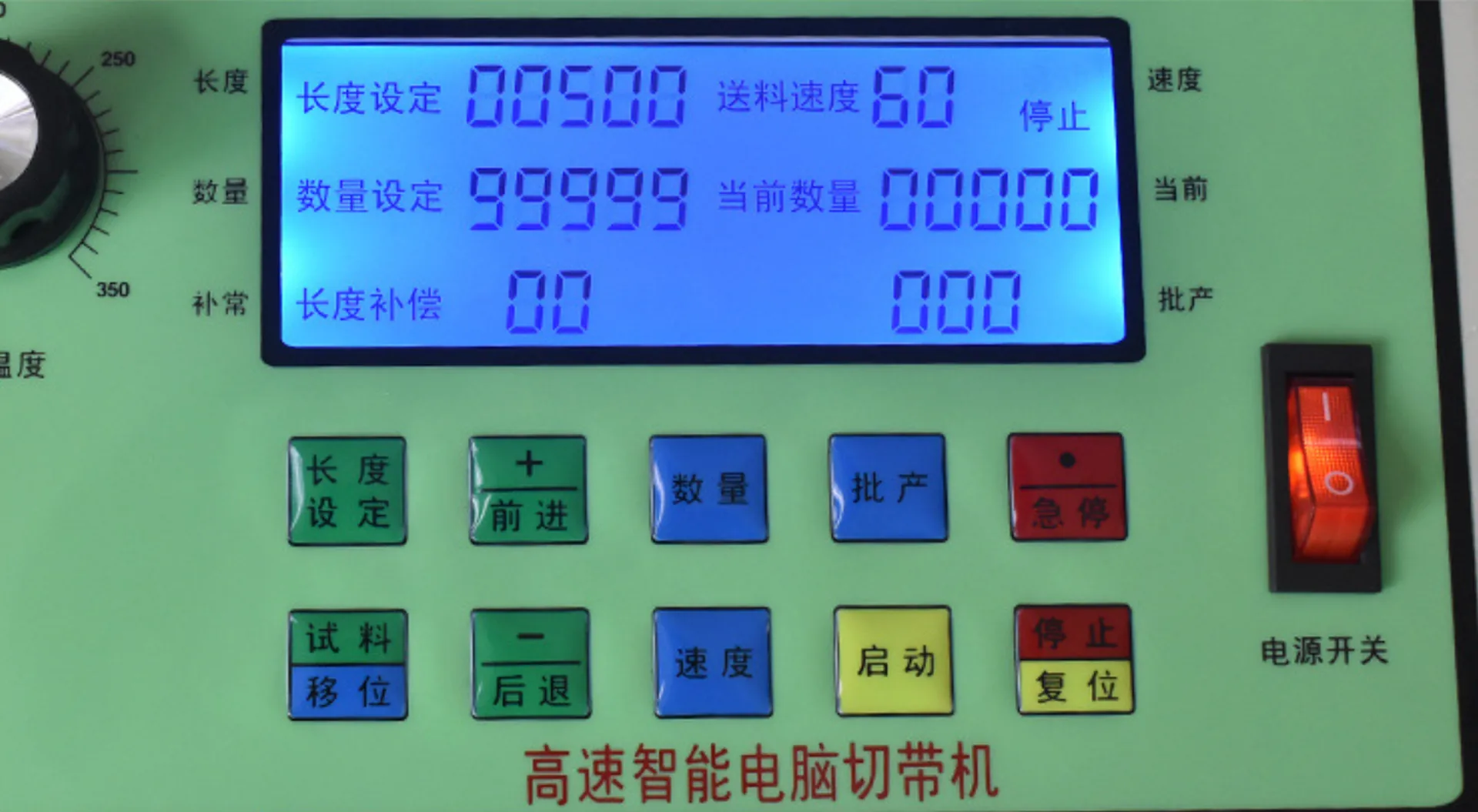
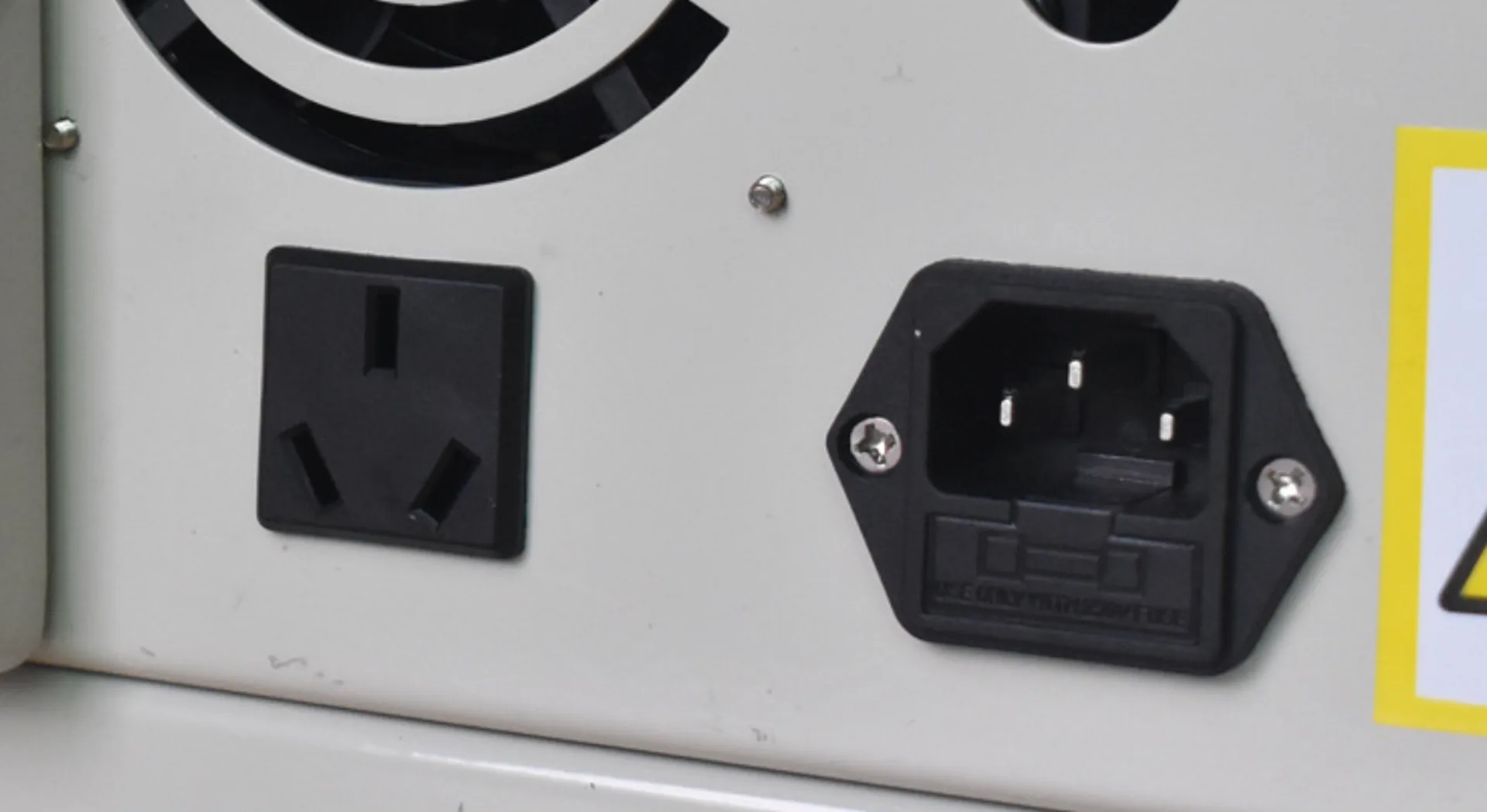
The Economy lists 100 pieces/minute, 0.44kW and a weight of 24/25kg. The High-Speed lists 140 pieces/minute, 0.45kW and 25kg. Both have a 1–95mm cutting width, and both output figures use a 50mm cut length.
They provide greater cutting width and touchscreen controls. Both list 110 pieces/minute at a 50mm cut length, compared with 140 for the 95mm High-Speed. Select cutting width and output separately.
All four brochures list a cutting length setting range of 1–99,999mm. The respective cutting widths are 1–95mm, 1–95mm, 1–210mm and 1–310mm.
Hot knife cutting can cut suitable heat-sealable nylon webbing and seal the cut ends in the same operation. Results depend on fiber composition, webbing construction, temperature and cutting settings.
Hot cutting can seal compatible synthetic ribbon ends and help reduce fraying. For satin or grosgrain ribbon, check the actual fiber composition before selecting cold or hot cutting.
All four brochures list hook-and-loop tape, and the Economy brochure also lists elastic tape. Adhesive backing, thickness and elastic stretch affect feeding and finished dimensions. Provide samples and your size requirements.
The supplied brochures include zipper and shoelace applications; the High-Speed and touchscreen brochures also list plastic hose. Check zipper teeth and cut position, or tubing composition, outside diameter and wall thickness.
The Economy brochure illustrates a leather-belt application. Cutting an existing belt to length can be evaluated using its thickness, width, construction and a sample. This does not establish a leather-sheet slitting function.
All four list a maximum of 450°C. The 210mm brochure additionally gives 1–450°C. Choose the actual working temperature to suit the material.
All four list 110V/220V options. Power is 0.44kW for the 95mm Economy, 0.45kW for the 95mm High-Speed, 0.57kW for the 210mm and 0.67kW for the 310mm.
Send the material and composition, width, thickness or tubing dimensions, required length, target output, batch quantity, cut-end sealing requirements and available power supply. Samples and roll dimensions help select an appropriate option.
Send your material specifications, required width and cut length, output target and cut-end requirements for application advice and a quotation.
Request a Quote · Send a Material Sample →Applications and support
Share your material and finished-part requirements when choosing a cutter. For an existing machine, include the model and a photo of the control panel.
Share the material, strip width and thickness, target cut length, and edge finish. If you have a sample, let us know whether the cut edge needs heat sealing so we can discuss a trial.
If the strip drifts, slips or fails to cut through, record the feed speed and cut settings. Note whether it happens on every cut. You can email a short video of the feed path.
Check the machine nameplate against your site power supply before installation. Switch off and disconnect power before cleaning the feed path or checking the guides and blade. Let the hot blade cool and follow the manual for your model.
Automatic feeding and hot or cold cut-to-length processing for webbing, hook-and-loop tape and zippers.
Ultrasonic cut-to-length processing for webbing, ribbon and elastic cord.
For ribbon and webbing that need V-shaped or angled ends.
Combines cut-to-length processing and hole punching for webbing, elastic bands and handle cords.
Transfers cut pieces to the collection table after hot cutting.