
Does your cut webbing need a sealed tail that resists fraying, or an end that folds easily into a seam? That is a useful starting point when choosing hot or cold cutting. Consider hot cutting when the material can be heat-sealed and the end needs protection from fraying. Cold cutting is often a better fit when the end will be folded and sewn in, or when the material is unsuitable for heat.
Fraying, hard melted beads, pieces sticking together and scratchy edges are different problems. A hot knife can help seal suitable webbing, but it can also stiffen the end. A cold knife avoids a melted edge but leaves the cut fibers unsealed. Choosing the method means looking at both the fiber composition and what happens during sewing, assembly and use.
What each method does to the cut end
A hot knife cuts with a heated blade. On webbing made from suitable heat-sealable synthetic fibers, the heat melts the fibers at the cut line as the blade passes through, so the end is cut and sealed in one operation and loose fibers are less likely to work free.
A cold knife makes a mechanical cut without heating the blade. It does not create a heat-melted edge, but it also leaves the cut fibers unsealed. The weave, material and blade condition affect how tidy the end looks; loosely woven webbing can still fray after cutting.
Start with what the webbing is made of
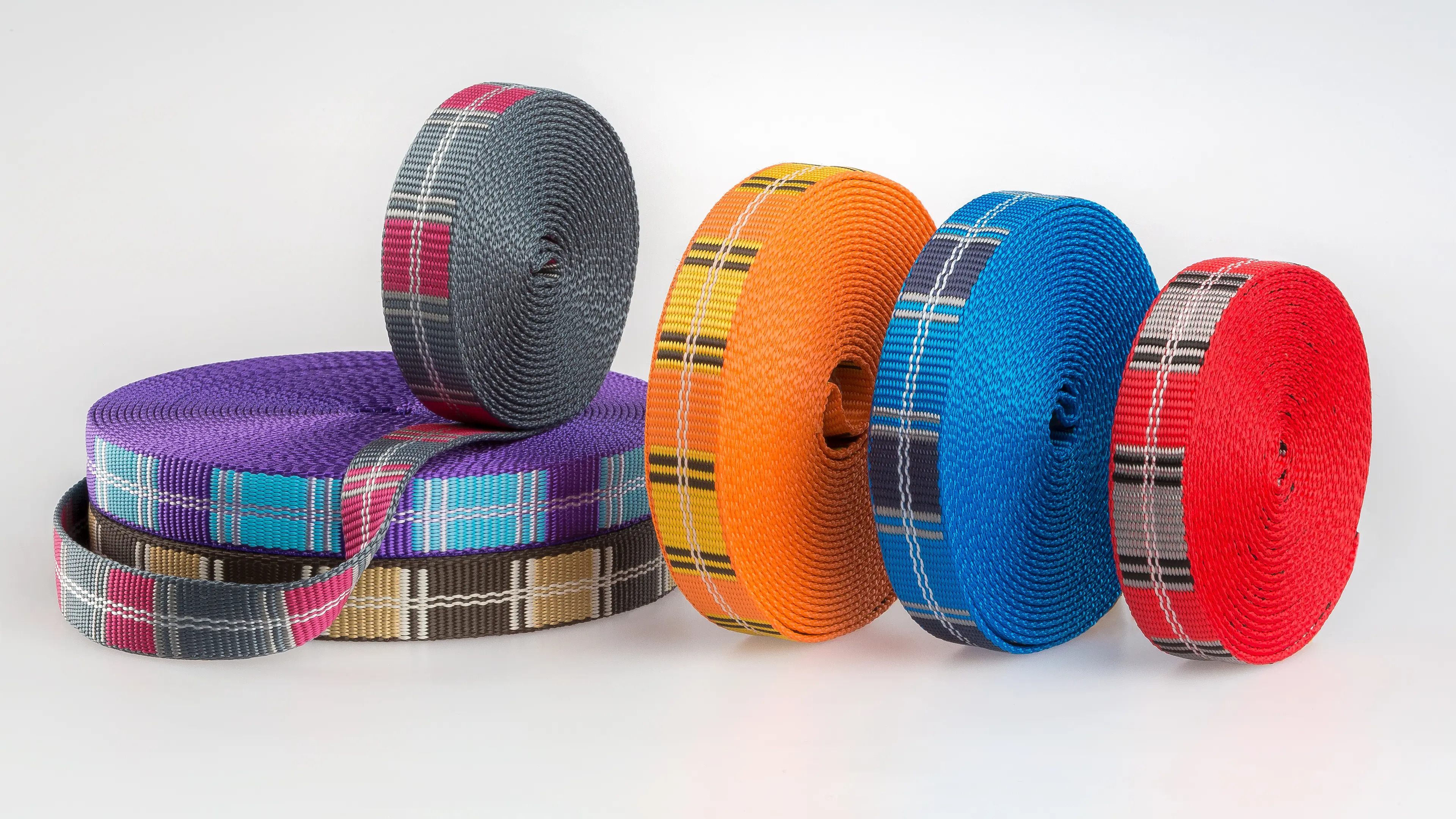
Nylon webbing, polyester webbing and polypropylene webbing can all be considered for hot cutting and sealing. Whether a particular strap seals well depends on its fiber composition, construction and surface coatings. A blade temperature that works for one webbing should not simply be carried over to every other material.
Pure cotton fibers do not melt and seal like these thermoplastic fibers; further heating can cause charring. Pure cotton webbing is therefore usually considered for cold cutting, with folding, sewing or binding used to finish the end. However, a cotton label does not necessarily mean pure cotton. Check the actual composition of a blend before choosing the process. Satin and grosgrain also describe constructions, not fiber compositions.
Then think about where the end goes
An end that stays exposed, such as a strap tail, a pull tab or a loop that hangs free, gains the most from a sealed edge. A well-sealed hot-cut end on suitable nylon or polyester webbing helps it stay tidy through handling and use.
An end that disappears into a seam is a different case. If the cut edge is folded under, sewn into a bag body or enclosed by binding or a tip, cold cutting may already meet the requirement and avoid a heat-melted ridge inside the seam. What matters is whether the cut edge is properly secured in the next operation: a bar tack nearby does not necessarily enclose all the loose fibers.
Comfort matters too. A sealed edge can feel stiff or scratchy, which counts on garment straps, pet collars and anything worn against the skin. If the end will touch skin, compare a hot-cut and a cold-cut sample in your hand before cutting a batch.
When hot cutting goes wrong
A blade temperature that does not suit the webbing is a common cause of poor hot-cut ends. Too much heat can leave a thick bead, dark or glossy edges, strings of melted plastic and smoke, and pieces may stick together after cutting. Too little heat can leave an end that is cut but not fully sealed, with fibers that pull out later.
Thickness, weave density, blade condition and the operating cycle also affect the cut end. After changing webbing or adjusting the cutting cycle, check that the seal remains continuous and the end is not too bulky instead of relying only on the previous batch’s temperature setting.
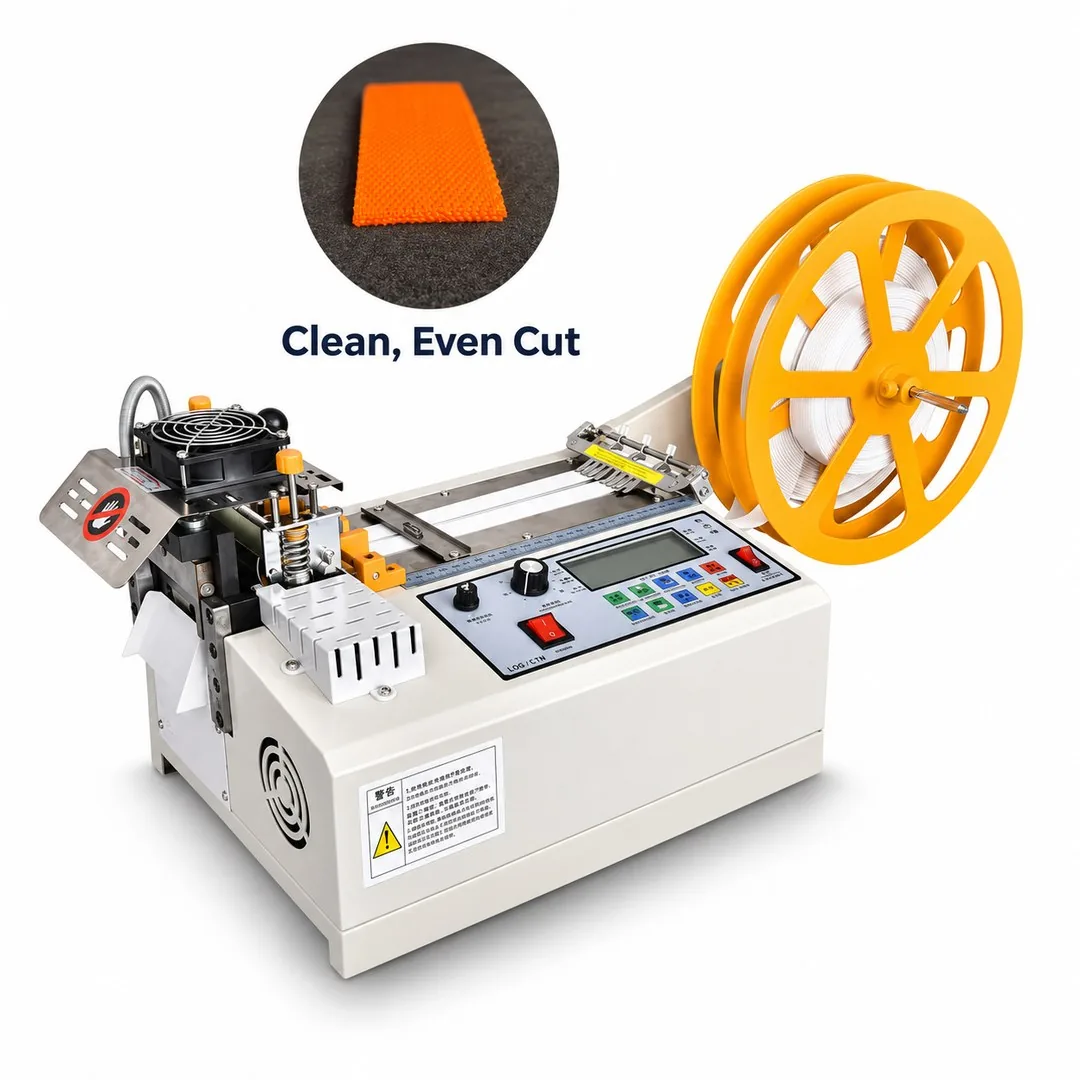
The HESPER range lists a maximum blade temperature of 450°C. That is the listed upper limit, not a working setting. The right temperature is the one that seals your own webbing cleanly at the speed you run, and cutting samples is the practical way to find it.
Other tapes, same question
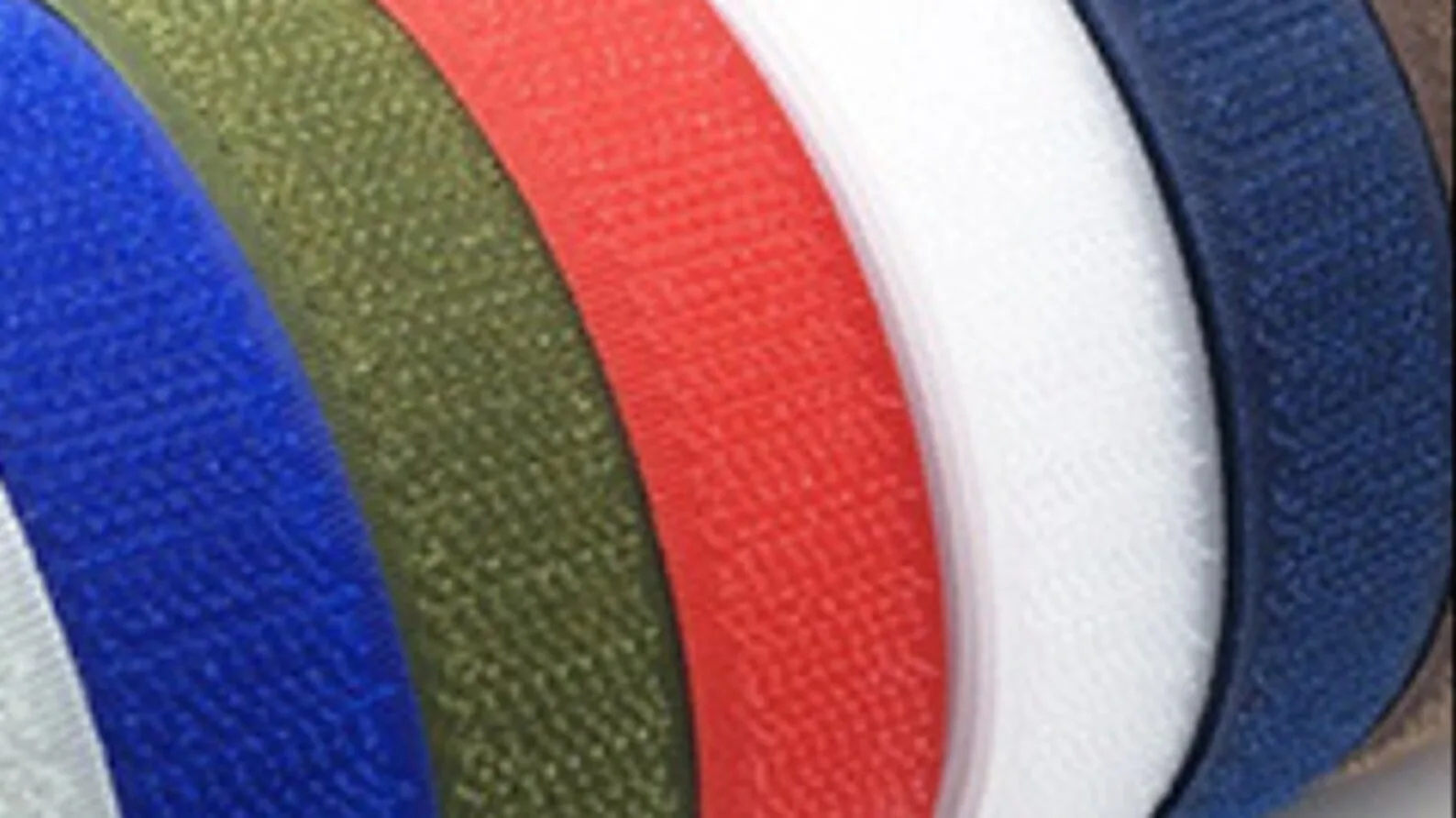
The same choice comes up with other materials cut on a tape cutting machine. Hot cutting can help seal compatible synthetic ribbon. Hook and loop tape comes sew-on or adhesive-backed, and the backing, width and thickness all affect the blade and feeding settings. Zipper tape depends on the zipper type, the tooth material and where the cut falls. Shoelace material and belt-loop strips are usually cut before tipping, sewing or assembly, so the end finish should suit that next step.
In each case the method follows the material and the finish the next operation needs.
Test on your own webbing
Before cutting a batch, make a set of samples from the same roll. If the material suits both methods, compare hot-cut and cold-cut ends. Let heated samples cool, inspect the edges, flex the ends and feel for stiffness, then try them in the actual sewing, folding or assembly operation. Measure several pieces too, so the comparison covers both the end finish and the dimensions.
A sealed end that is difficult to fold into a seam, or a tidy edge that feels scratchy against skin, has not yet solved the finished-product problem. The suitable cutting method is the one that helps the webbing move through the next operation with the end finish you need.
HESPER hot and cold tape cutting machines come in four options: two with a maximum cutting width of 95 mm, one at 210 mm and one at 310 mm. Each supports hot and cold cutting. Tell us the webbing composition, width, thickness, target cut length and daily quantity, along with whether the end stays exposed, is sewn into a seam or touches skin. Material photos and a sample make the discussion more useful than simply asking which machine can cut webbing.
See the HESPER hot and cold tape cutting machines · Send a material sample · sales@hespermachine.com