
Every morning in your workshop, someone picks up a ruler, scissors and a lighter and cuts 300 pieces of ribbon, webbing or elastic. The job gets done. But you wonder: "Is a ribbon cutting machine only for big factories? Do I really need one at this volume?"
Short answer: daily volume alone does not decide it. What decides it is how much time, waste and waiting those pieces cost you, and whether the same job comes back again and again.
This guide gives you a simple way to check. Then it matches the most common small-workshop problems to the right HESPER machine, from a webbing cutting machine to a tube cutting machine and a roll to sheet cutting machine.
Do the Math First: What "a Few Hundred Pieces" Really Costs You
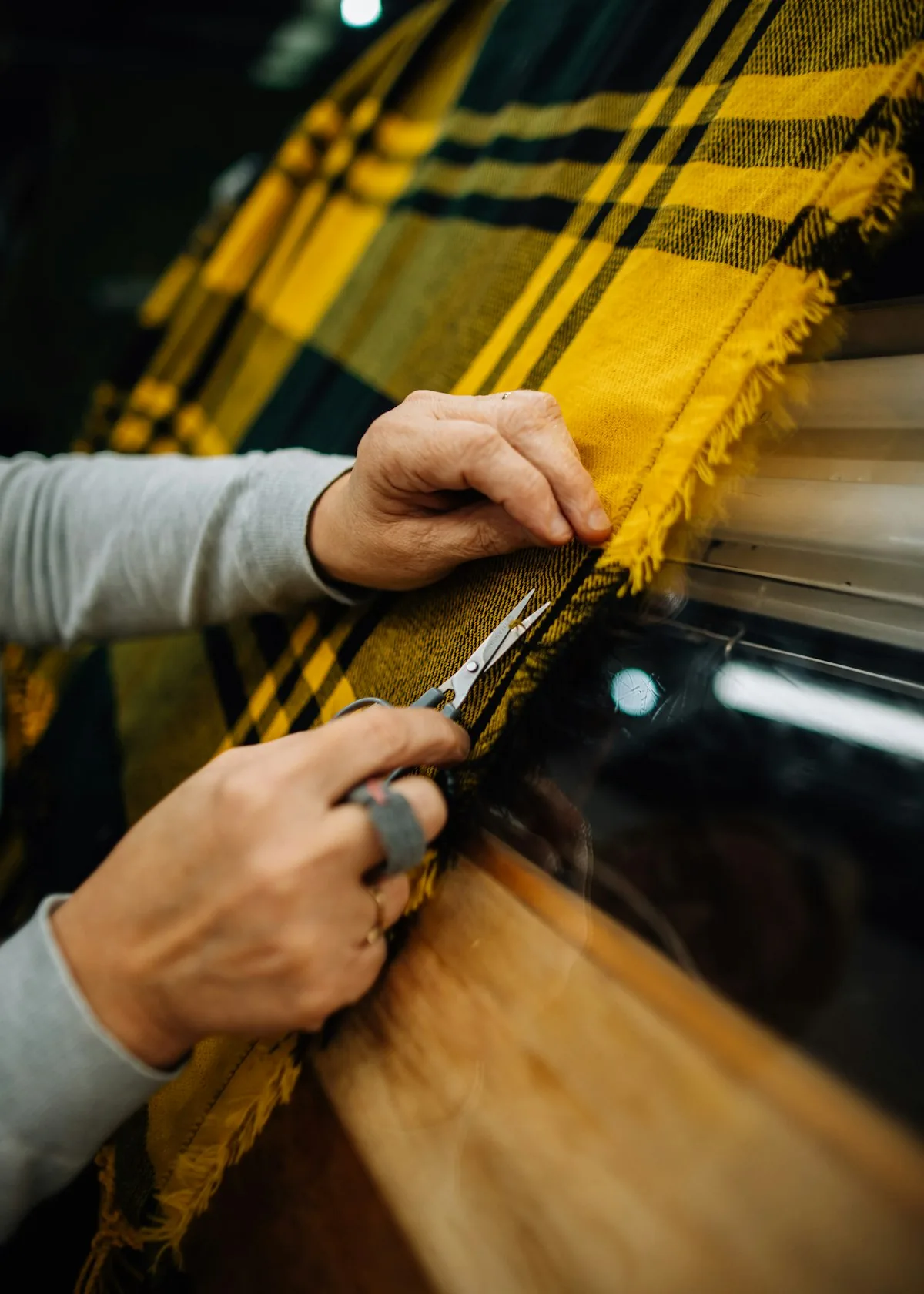
Time one person cutting 20 pieces by hand. Count everything: pulling the material, measuring, cutting, sealing the end and stacking. In many small shops this comes to about 15 seconds per piece.
Now compare a cut to length machine. The HESPER CXY-160W lists a cutting speed of 120–240 pieces per minute. Add about 10 minutes a day to load the roll, enter the length and check the first pieces.
| Pieces per day | Hand cutting (15 s/piece) | Machine (10 min setup + 120 pieces/min) | Time saved per month (22 working days) |
|---|---|---|---|
| 200 | 50 min | about 12 min | about 14 hours |
| 300 | 75 min | about 13 min | about 23 hours |
| 500 | 125 min | about 14 min | about 41 hours |
These are example numbers. Your real speed depends on material, cut length and edge finish. But the pattern holds: savings grow with every piece, while setup time stays almost the same.
Also count rejects (wrong length, messy ends), rework (frayed ends sealed again) and waiting time at sewing or packing. To estimate payback, divide the total machine cost by your verified monthly savings. Our guide on how long a ribbon cutting machine takes to pay for itself shows the steps.
Different Materials or Shapes Every Day? A Machine Can Still Keep Up
Many small workshops think their jobs change too often for a machine. Changing jobs do not rule out automation. They only change how the machine is set up.
- Your materials change every day. HESPER can make a few custom blades matched to the materials you cut. When the material changes, you swap the blade instead of going back to scissors.
- You need special end shapes. Blades can be made for the cut shape you need: straight, angled, trapezoid, V-notch, pointed, rounded or serrated ends, or cut-and-punch.
- Lengths change from order to order. Enter the new length and quantity on the panel. No measuring by hand.
- Each item is only a few dozen pieces. Group similar jobs and run them back to back, so blade and length changes stay quick.
Send us your materials and a photo or drawing of the shapes you need, and we will suggest a blade set for your jobs. See also Can one automatic cutting machine cut different materials?
Your Problem, the Right Machine
If a job repeats every week and one of the problems below sounds familiar, a machine trial is worth your time. Start from the problem, not from the catalogue.
"My webbing ends fray, and the lengths are never the same"
This is the classic case for a webbing cutting machine with a hot knife. The CXY-160W hot and cold cut to length machine feeds webbing, ribbon or elastic from the roll and seals synthetic ends as it cuts. It handles hot-cut widths of 1–160 mm and cut lengths of 1–10,000 mm, with temperature adjustable from 0 to 650 °C. You set the length and quantity once, and the machine stops by itself when the roll runs out.
"My satin ribbon edges melt hard or look rough"
Soft ribbon often looks better with ultrasonic cutting. The CXY-100CW ultrasonic cutter is an automatic ribbon cutting machine with a Chinese/English panel, automatic piece counting and a stop-and-alarm when material runs out. Its ultrasonic generator tracks resonance automatically. Need V-cuts or angled ends? The ultrasonic V-cut machine has a 100 mm effective width, with matching tooling for each end shape.
"After cutting, we still punch holes by hand"
Bag handles, straps and elastic often need holes. The automatic cutting and hole punching machine does both in one pass. It is a compact unit (460 × 400 × 385 mm, 32 kg) with a 100 mm maximum cutting width and a listed speed of 38 m/min.
"Hook-and-loop and zipper tape slow us down"
The hot and cold tape cutting machine lets you choose hot or cold cutting for each material. Adjustable guides allow several strips to run together, depending on strip width.
Tubes, labels and film: the same logic
| Problem by hand | Machine type | HESPER machine and listed specs |
|---|---|---|
| Silicone, PVC, PTFE or heat-shrink tube gets crushed or cut at a slant | Tube cutting machine | Pneumatic caterpillar-feed tube cutter: 80 cuts/min, 220 V; needs compressed air |
| Printed or woven labels cut off the print | Label cutting machine | Photoelectric label cutter: Panasonic sensor reads the registration mark |
| Film, bubble wrap, nonwoven or release paper sheets come out crooked | Roll to sheet cutting machine | HZX series: blade widths 100–1200 mm, 90 cuts/min, 220 V |
Buying Tips for Small Volumes
- Buy the smallest machine that fixes your real problem. At 300 pieces a day you need one reliable machine, not a production line.
- Check your power and air. These machines run on 220 V. Some, like the tube cutter and the V-cut machine, also need a compressed-air supply.
- Plan for growth with multi-strip cutting. Several machines can run more than one strip at a time, depending on strip width and guide setup.
Test With Your Own Material Before You Buy
- Send real material from the rolls you cut every day.
- Give clear targets: width, thickness, cut length, allowed tolerance and the edge you need (sealed, straight, angled or V-cut).
- Pick your three most common repeat jobs. They are where the machine earns its money.
- Ask for a video and the cut pieces. Measure them and try them at your next step: sewing, buckling or packing.
Not sure what to send? See Can an automatic cutting machine cut my material?
FAQ
Is a ribbon cutting machine hard for a beginner to use?
No. On the CXY-160W you enter the cut length and quantity, switch the panel to English with one touch, and press start. Feed speed and temperature are set with keys, and the machine stops when the material runs out. Once a job is set up and tested, any operator can repeat it.
How do I cut webbing without fraying?
Use heat or ultrasound. A hot knife seals polyester and nylon webbing as it cuts; ultrasonic cutting gives softer ribbon a smoother sealed edge. Cotton does not melt, so it needs a different finish. More in Will cut webbing fray?
Can one machine cut both webbing and tubes?
Usually not well. A webbing cutting machine feeds flat strips with rollers and guides. A tube cutting machine grips the tube with belts so it is not crushed.
How accurate is a cut to length machine?
It depends on the machine and the material. For example, the cutting and hole punching machine lists a cutting tolerance of 0.002 × L mm (L = cut length). Stretchy elastic can still change length after it relaxes, so measure test pieces from your own material.
What does an automatic ribbon cutting machine cost?
It depends on the cutting method, width, end shape and extras such as hole punching or photoelectric registration. See what affects ribbon cutting machine price.
The Bottom Line
A few hundred pieces a day is not too small for automation. If the same jobs repeat and hand cutting costs you an hour or more a day, a compact ribbon cutting machine can pay for itself. If your materials and cut shapes change often, custom blades let the same machine keep up.
Not sure which side you're on? Send HESPER a photo of your material, the finished length and your daily output. We'll tell you honestly whether a machine makes sense, and which one. Send your cutting requirements or email sales@hespermachine.com.