
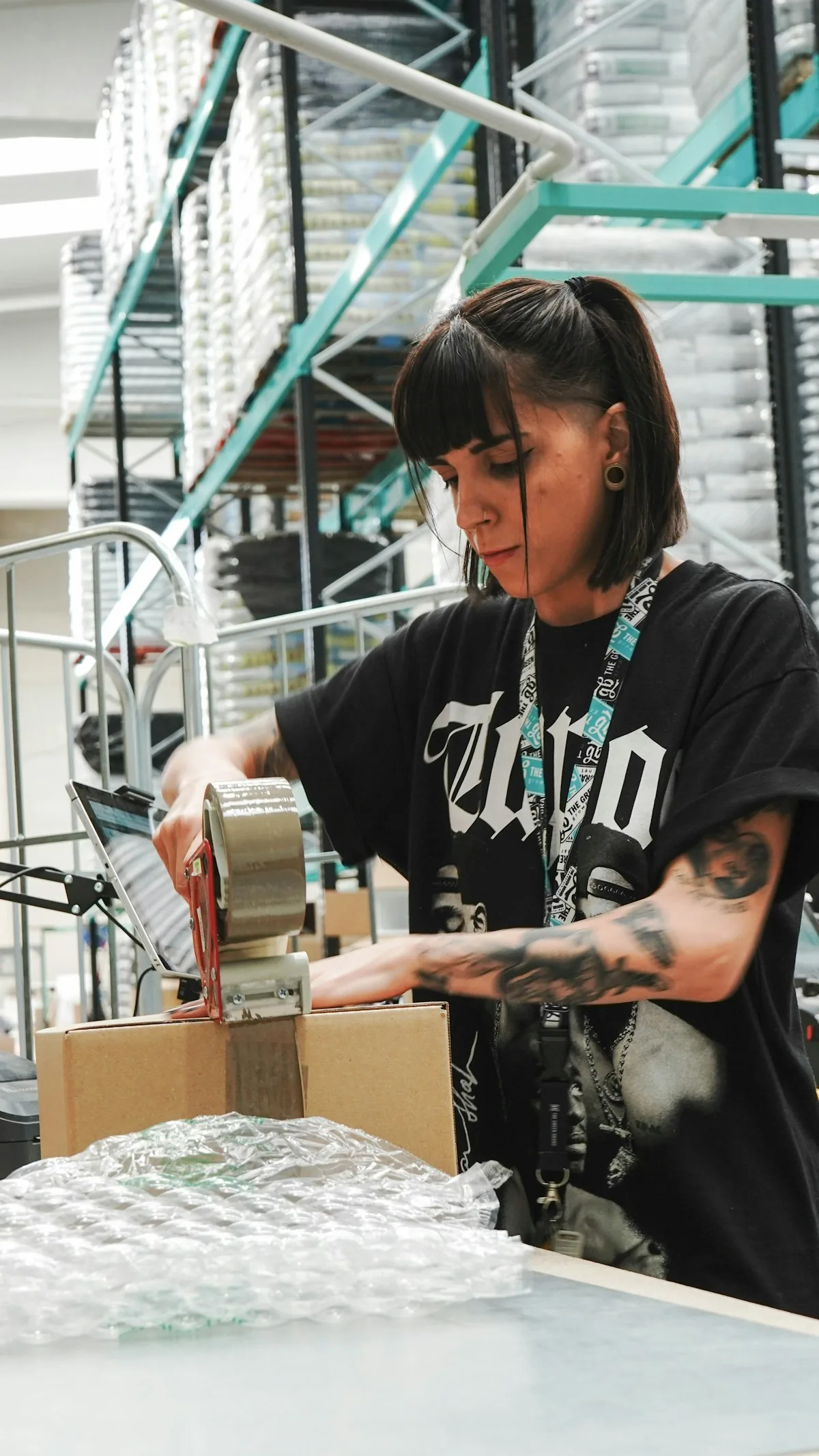
In many warehouses, packers still pull bubble wrap off a roll and cut each piece with a knife or scissors. When the number of parcels grows, the team starts looking for an automatic bubble wrap cutter.
A first request often lists roll width and length, whether perforation is needed and a daily roll count, then asks for price, photos, delivery cost and lead time. This guide uses 20 in × 300 ft rolls and 30 rolls per day as a sizing example, not as a customer case or a machine performance result.
That is a good start. But a supplier needs a few more details to recommend the right machine and give a quote you can compare. This guide shows, step by step, how to turn those numbers into a clear machine brief.
Step 1: Read the size of your bubble wrap rolls correctly
Bubble wrap sizes on a roll are usually written as width × length. "20 in × 300 ft" gives two numbers:
- Width: 20 in = 508 mm. This decides the machine width.
- Length: 300 ft = 91.44 m per bubble wrap roll. This decides how often the roll is changed.
It does not tell the supplier everything. HESPER product pages ask for the material, thickness, stretch, web width, roll diameter and roll weight. For bubble wrap, also say the bubble size and its film construction and any laminated layers, if you know them. Our guide to roll specifications for cut-to-length machines explains why roll diameter and weight matter for the unwind stand.
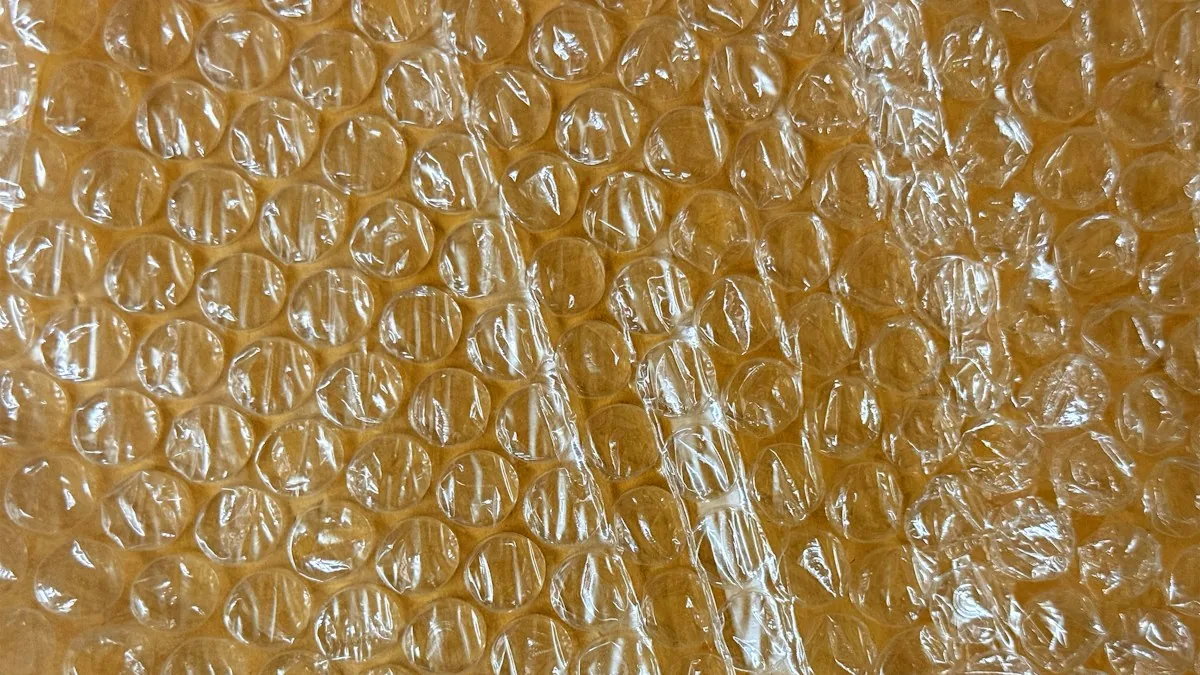
Step 2: Choose the width class, then confirm it
A 508 mm roll needs a usable feed and cutting width that accommodates 508 mm plus any required clearance. In the HESPER range, start by discussing 600 mm-class or wider models, such as the HZX-600 (600 mm blade width) or the film & nonwoven cut-to-length machine CXY-600G (600 mm width specification).
One important detail: blade width is not the same as the maximum material width. Guides, rollers and side clearance also need space. So the usable width for your 508 mm roll is confirmed with your roll details and a sample trial, not taken from the model number alone.
Step 3: Turn "30 rolls a day" into cuts per day
A daily roll count is useful, but a cutting machine works in cuts. The required sheet count depends on the cut length. The table assumes each roll is exactly 91.44 m long, is cut separately and has no joined end remnants. These are calculated whole-sheet counts, not measured machine output:
| Sheet length | Whole sheets per 300 ft roll | Whole sheets from 30 rolls | Remainder per roll |
|---|---|---|---|
| 300 mm | 304 | 9,120 | 0.24 m |
| 500 mm | 182 | 5,460 | 0.44 m |
| 1,000 mm | 91 | 2,730 | 0.44 m |
Calculation: round down 91.44 m ÷ sheet length for each roll, then multiply by 30. Additional start/end trimming, setup waste and differences between actual and nominal roll length are not deducted. Confirm whether the required working hours allow this volume, including feeding, cutting, sheet collection and stops.
Two more points matter for daily output:
- Roll changes. Processing 30 rolls involves 30 roll loads, including the first load, and 29 changes between rolls. Ask how the roll is loaded and how long a change takes on the separate roll stand.
- Listed speed is a rating. The HZX page lists 90 cuts/min and explains that actual output depends on the material, cut length and feeding conditions. Measure real output in a trial.
Step 4: Sheets or perforated bubble wrap?
"No perforation" is a useful detail, but also specify the finished format. If you want separate sheets, discuss a cut-to-length or roll-to-sheet machine. If you want intact rolls without perforation, state that separately.
If you later want perforated bubble wrap on tear-off rolls instead, that is a different process: perforating and rewinding. HESPER's easy-tear perforating and rewinding machine lists a 410 mm blade width, which is narrower than a 508 mm web. The listed configuration is therefore not suitable for the full 20-inch width; discuss an appropriately sized solution without assuming a wider version is available.
Which HESPER machines to compare for bubble wrap
All four machines below list bubble wrap as a material. Use the table to decide which roll to sheet cutting machine or film cutting machine to discuss first.
| Machine | What the product page lists | Consider it when |
|---|---|---|
| HZX roll-to-sheet cutting machine | Benchtop cutter with separate unwind stand; blade widths 100–1200 mm (HZX-600: 600 mm); listed 90 cuts/min; 220 V | You want a benchtop roll-to-sheet cutter at a packing area |
| Film & nonwoven cut-to-length machine | Width specifications 100–1500 mm (CXY-600G: 600 mm); separate floor-standing roll holder; adjustable feed roller pressure; 220 V | You want a floor-standing roll holder with the cutter |
| PVC film & plastic sheet cut-to-length machine | Automatic / manual modes; Chinese / English controls; adjustable guides and roller pressure | You cut several packaging materials; confirm width for a 20-inch roll |
| HYD-600 heat sealing and cutting machine | Listed cut width 0.1–600 mm; listed linear speed 34 m/min (not sheets/min); heat-sealing configuration confirmed separately | You also need to discuss heat sealing; confirm the configuration and suitability for your film |
The HZX, film cut-to-length and HYD-600 pages list a 220 V supply. The HYD-600 page also specifies 50 Hz. Confirm site voltage and frequency in the quotation. During a sample trial, check roller grip, length consistency and whether the bubbles are damaged by pressure; listing bubble wrap does not guarantee the same result for every construction.
Step 5: What to include in your request for quotation
Send these details with your request, so every supplier quotes the same job:
- Roll width, roll length, roll outer diameter, core size and roll weight
- Bubble wrap type: bubble size, film construction and laminated layers, film colour if relevant
- Sheet lengths you need, and the acceptable length tolerance
- Rolls or sheets per day, and working hours per day
- Perforation: yes or no
- Power supply at your site, and the space available at the packing area
- A real sample of your bubble wrap
And ask every supplier to answer the same points in the quotation:
- Model, width and what is included (for example, the roll stand)
- Unit price, total price and which taxes are included
- Packing, shipping and delivery costs, and the delivery terms
- Lead time, installation support and warranty terms
- Payment terms
- Photos or a video of the machine cutting bubble wrap, ideally your own sample
HESPER product pages ask buyers to confirm lead time, packing, shipping, installation support and warranty terms with the enquiry, so put these questions in your first message. For a general checklist, see what to prepare for a roll-cutting machine enquiry.
Frequently asked questions
What machine width do I need for 20-inch bubble wrap rolls?
A 20-inch roll is 508 mm wide, so start the discussion with 600 mm-class or wider models. Blade width is not the same as the maximum material width, so the usable width is confirmed with your roll and a sample trial.
How many sheets will 30 rolls of 300 ft bubble wrap make in a day?
At 91.44 m per roll, cutting each roll separately without joining remnants gives 5,460 whole sheets at 500 mm, or 2,730 at 1,000 mm, from 30 rolls. Each roll leaves 0.44 m in either example. These calculated counts exclude additional trimming, setup waste and roll-length variation; they do not guarantee daily machine output.
Can a cutting machine make perforated bubble wrap rolls instead of sheets?
That is a different process. Sheet cutting cuts the roll into separate pieces. Perforating and rewinding makes tear-off rolls. If you need separate sheets without perforation, a cut-to-length or roll-to-sheet machine is the starting point.
What should a quotation for a bubble wrap cutting machine include?
The model and width, what is included (such as the roll stand), the power supply, the price and the taxes it includes, packing and delivery costs, lead time, installation support, warranty terms and payment terms. Ask for cut samples and a video made with your own bubble wrap.
Planning a bubble wrap cutting machine for your warehouse? Send HESPER your roll size, sheet lengths, daily volume and a sample. We will suggest the width class and machine to test and arrange a cutting trial. Send an enquiry or email sales@hespermachine.com.