
TAPE CUTTERS · BIAS TAPE
Bias tape is cut across the grain on purpose, so it stretches and curves around edges. That is what makes it useful for binding, and what makes it hard to cut to an exact length. Here is how to set up a tape cutter for it.
A workshop makes aprons, bibs and quilted bags, all finished with bias tape. Every edge needs a piece of a set length, and someone cuts them by hand from the roll. Some pieces come up short once they relax, the folds pop open on others, and cotton ends start to fray before they reach the sewing table.
The same thing happens wherever pre-made bias tape is cut into lengths for kits, binding or ties. A tape cutter can take over the measuring and cutting, but bias tape behaves differently from straight-grain tape, so the setup matters.
THE SHORT ANSWER
Feed bias tape relaxed, with no pull from the roll, because it stretches easily along its length. Set the guides to its folded width so the folds stay closed. Cut cotton bias tape with the cold knife; heat won't seal cotton. Polyester or satin bias tape can be tested with the hot knife. Measure pieces laid flat, not stretched, and check the length through the batch.
- 01 Why bias tape is tricky
- 02 Feed it relaxed
- 03 Keep the folds closed
- 04 Hot or cold cut
- 05 Lengths for binding
- 06 End shapes
- 07 Check through the batch
- → HESPER machines
- ? FAQ
01 · WHY BIAS TAPE IS TRICKY
Made to stretch, made to fold
Bias tape is a narrow strip of fabric cut at an angle to the weave, then pressed into single-fold or double-fold tape. Cutting on the bias gives it stretch, so it can curve around necklines, armholes and rounded corners. That same stretch means a small pull during cutting changes the length.
| What you see | Likely cause | What to change |
|---|---|---|
| Pieces shorter than the setting | Tape stretched as it was fed | Take the pull off the roll; ease the roller grip |
| Lengths vary | Tension changes as the roll unwinds | Feed from a loose supply |
| Folds open before the cut | Guides too loose or too wide | Set the guides to the folded width |
| Cotton ends fray | Cut ends of woven cotton unravel | Cold cut, handle gently, sew soon |
| Polyester ends hard or beaded | Hot knife too hot | Lower the temperature, or cut cold |
02 · FEED IT RELAXED
Take the pull off the roll
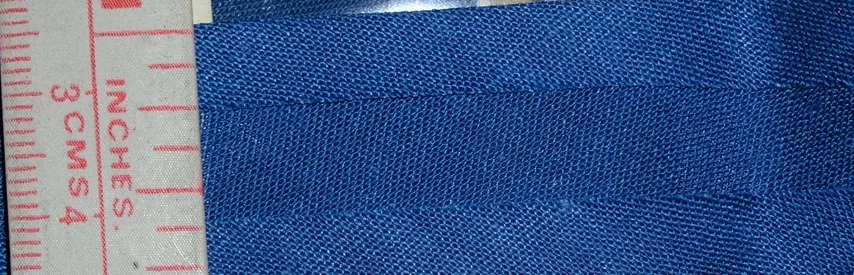
Bias tape stretches more easily than straight-grain tape, so tension on the feed side is the main cause of short pieces.
- Let it come off loosely. Unwind from a loose roll or a box, not a tightly wound core.
- Clear the path. Nothing should catch or drag the tape between the roll and the machine.
- Grip without stretching. Set the feed roller firm enough not to slip, light enough not to pull the tape longer.
03 · KEEP THE FOLDS CLOSED
Guide it at its folded width
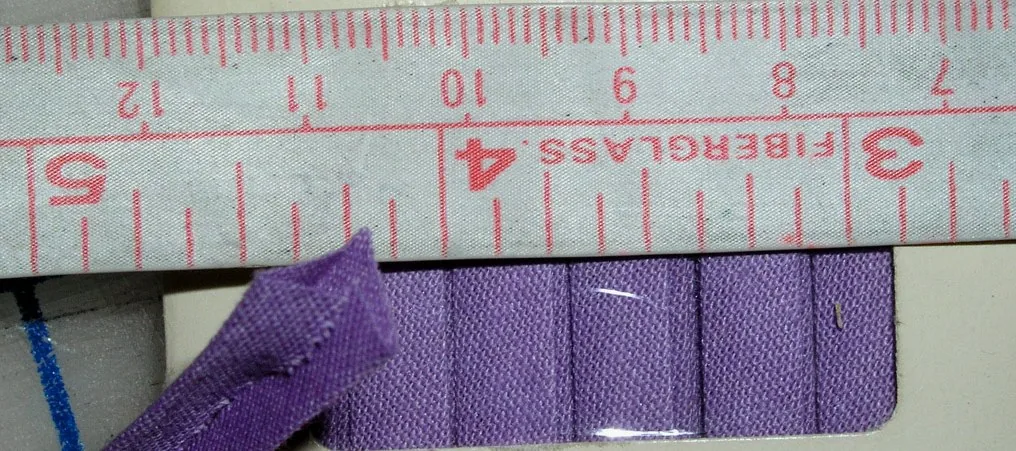
Single-fold and double-fold bias tape are pressed flat, but the folds can spring open on the way through.
- Set the guides to the folded width. Close enough to hold the folds in place, not so tight that they crush or curl.
- Feed the same side up. Keep the open folds facing the same way on every piece.
- Check the cut ends. A square cut across closed folds means the tape fed straight.
04 · HOT OR COLD CUT
Choose by fiber
- Cotton and poly-cotton: cold cut. Cotton doesn't melt, so heat won't seal it. Cut cold and handle the pieces gently so the ends don't fray before sewing.
- Polyester and satin: test the hot knife. On suitable synthetic tape, the heated blade can seal the end. Start at a low temperature and raise it in small steps.
- Blends: test. Cut a few pieces each way and check them at the sewing table.
05 · LENGTHS FOR BINDING
Agree how the length is measured
Binding lengths are usually worked out from the edge being bound, plus an allowance for joining or turning the ends.
- Work out the length relaxed. Decide the piece length with the tape lying flat, not stretched.
- Allow for curves. Tape that will be eased around a curve may need a different length from tape on a straight edge. Test one before cutting a batch.
- One size at a time. Run each length as its own batch and bundle it before changing the setting.
06 · END SHAPES
Choose the end shape for the job
Not every piece needs a square end. HESPER tape cutters can cut all of the end shapes below, from a plain straight cut to angles, V-notches, points, rounded ends, zigzag ends and punched holes.
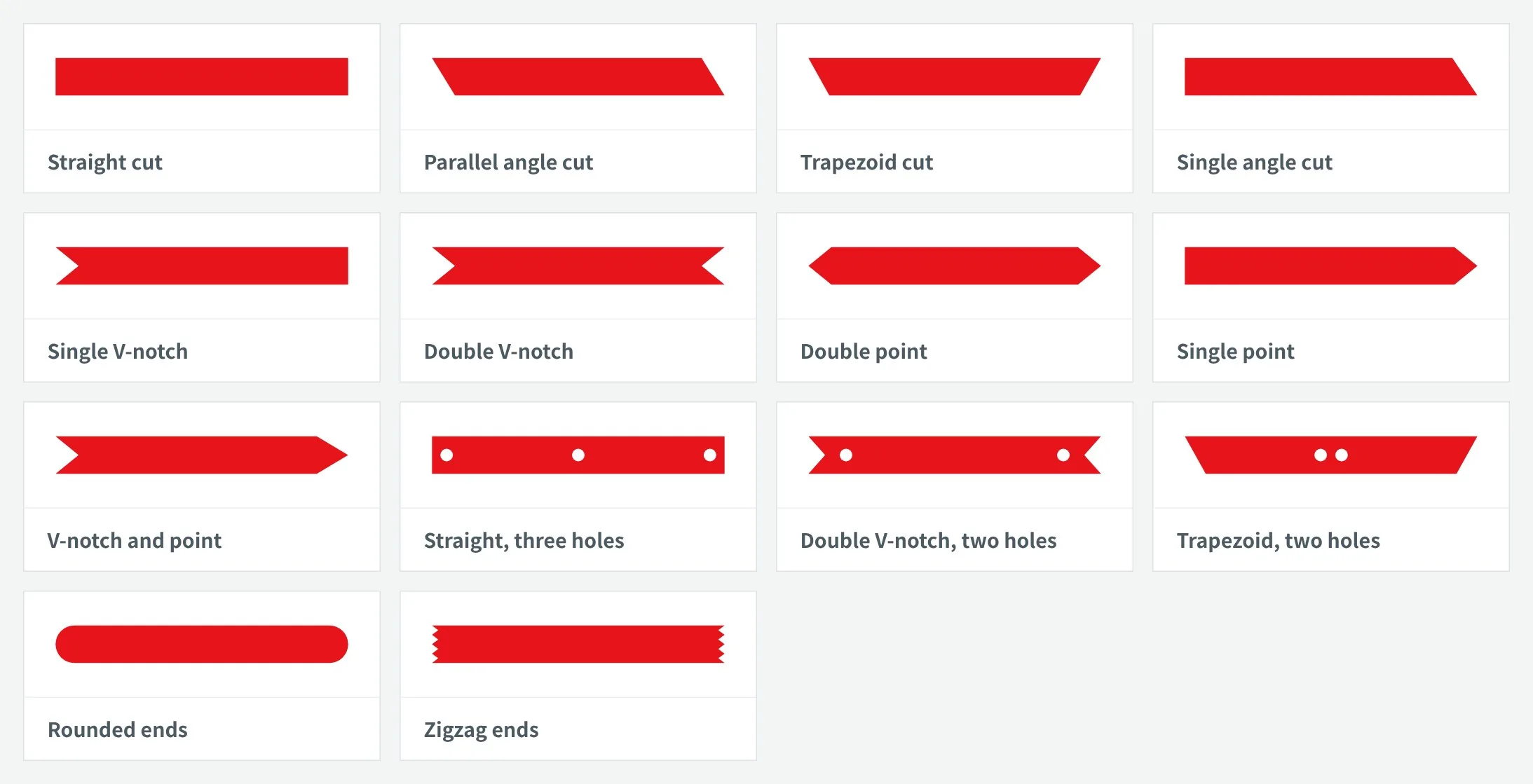
- Straight cut. The usual choice for binding, where the end is joined to the next piece or turned under.
- Angle cuts. Parallel, single-angle and trapezoid ends. Bias strips are often joined on a diagonal to spread the bulk of the seam, so an angled end can save a step.
- V-notches and points. Decorative ends for ties, ribbons and tabs that stay visible.
- Rounded and zigzag ends. A rounded end has no corners to catch. A zigzag end works like a pinked edge.
- Holes. Punched at set positions for pieces that will be threaded, hung or fastened.
- Test on your tape. Cut a few pieces in the shape you need and check the ends at the next step, especially on cotton.
07 · CHECK THROUGH THE BATCH
Measure flat, measure often
- Measure the first pieces. Lay them flat, let them relax, and compare with the setting.
- Recheck as the roll shrinks. Tension can change as the roll gets smaller.
- Compare side by side. Laying several pieces together shows any difference at a glance.
HESPER EQUIPMENT
HESPER hot and cold tape cutting machines
Four options, each listed with hot and cold knife cutting. If your bias tape is cotton and you are weighing hot and cold cutting, see rotary knife vs hot knife. Details and specifications are on the tape cutter page.
95 MM
95mm EconomyCutting width 1–95 mm. Button control panel for routine cut-to-length work.95 MM
95mm High-SpeedCutting width 1–95 mm. LCD and buttons.210 MM
210mm TouchscreenCutting width 1–210 mm for wider tapes and webbing.310 MM
310mm TouchscreenCutting width 1–310 mm for the widest strips.? FAQ
Bias tape cutting questions
Can a tape cutter cut bias tape?
Yes, pre-made bias tape on a roll can be cut to length. Feed it relaxed and set the guides to its folded width.
Why are my bias tape pieces too short?
Because bias tape stretches easily. If it is pulled during feeding, it springs back after the cut. Take the tension off the roll.
Can I hot cut cotton bias tape?
No. Cotton doesn't melt, so heat won't seal it. Cut it cold.
What about satin or polyester bias tape?
Test the hot knife at a low temperature. On suitable synthetic tape it can seal the end.
Does a tape cutter make bias tape from fabric?
No. It cuts finished bias tape to length. Making bias tape from fabric is a different process.
Can the ends be cut to a shape?
Yes. HESPER tape cutters can cut straight, angled, V-notched, pointed, rounded and zigzag ends, and punch holes. Test the shape on your tape first.
How do I keep the folds closed?
Set the guides to the folded width and feed the same side up every time.
How should bias tape be measured?
Laid flat and relaxed, not stretched. Check several pieces.
BIAS TAPE
Still Cutting Bias Tape by Hand?
Send HESPER the tape's fiber, width and fold type, the lengths you cut and how many. A short sample of your tape is the quickest way to find the right cut and setup.
Send your tape details · See the tape cutters · sales@hespermachine.com