
A stack of thick webbing comes off the cutter looking tidy, but a few threads still join the pieces when you pick them up. Other pieces separate, only for their ends to loosen when bent. Sewing, buckle assembly or packing then has to wait while someone cuts and tidies the ends again.
First distinguish an incomplete cut from an end that frays after cutting. The first calls for a look at the blade and cutting process; the second calls for a look at whether the material can be heat-sealed and whether that edge suits the next operation. Treating both as a temperature problem can send you in the wrong direction.
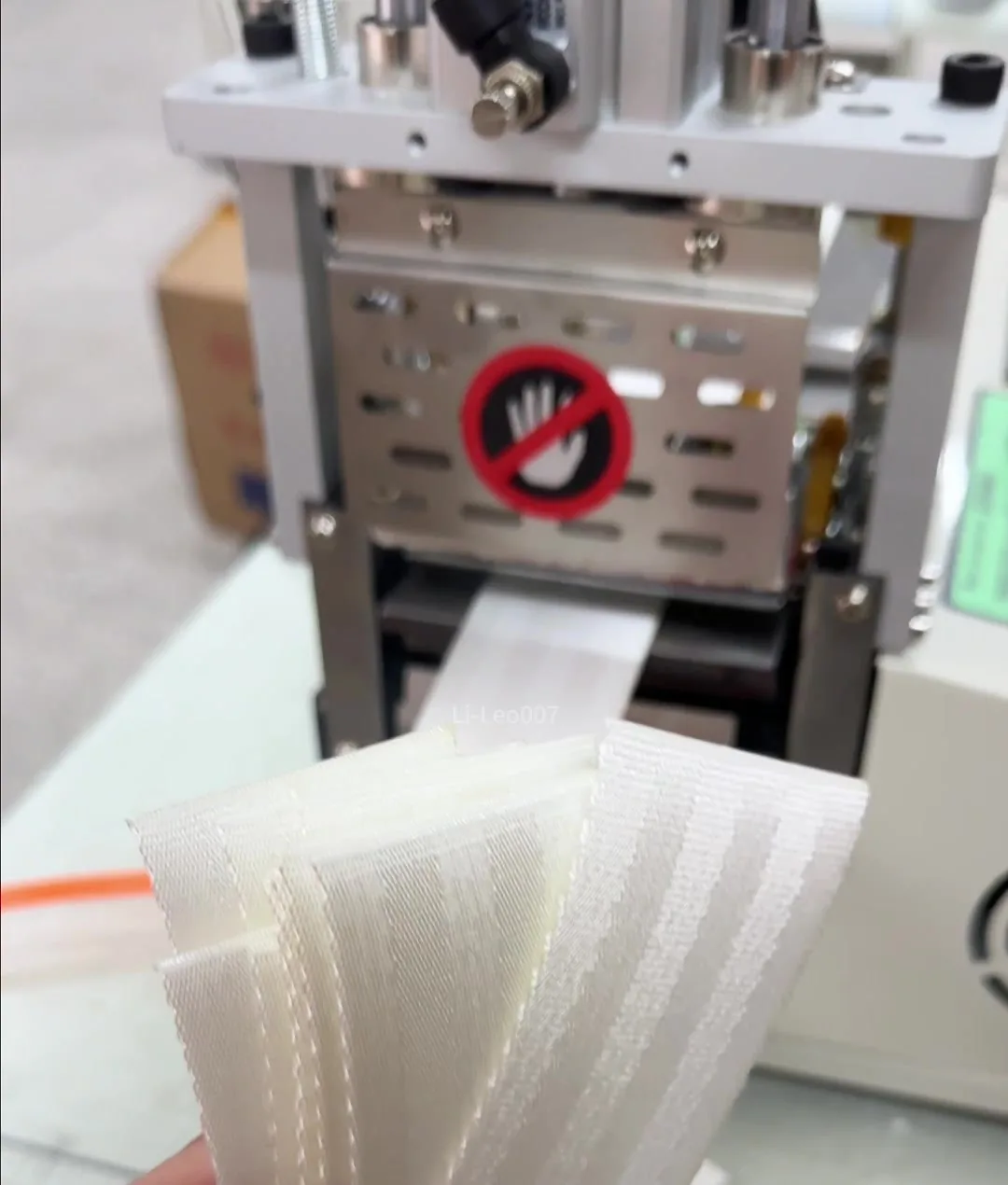
Joined threads and fraying ends need different checks
If fibres still connect two pieces, the immediate issue is cutting all the way through. Cutting force is not the only possible cause. Blade condition, the match between blade and material, cutter travel and the material’s position at the cut all deserve attention. Pulling the pieces apart may separate them temporarily, but can leave an already uneven end in worse shape.
If the pieces separate but the ends loosen when bent or rubbed, focus on the edge treatment. A surface that looks fused does not necessarily remain intact through handling, sewing or threading through a buckle. At the start of the video, a stack of cut pieces is lifted and the caption describes threads still joining them. It is a useful reminder to look beyond the first impression at the outlet.
More thickness does not simply mean more heat
Thicker webbing means more material to cut through, but two straps of the same thickness can differ in fibre composition, weave and stiffness. Thickness matters when choosing a blade and arranging a cutting trial; it cannot, by itself, determine the force or temperature needed.
For thermoplastic webbing that is suitable for heat sealing, the blade must complete the cut while the edge receives suitable heat. Too little heat may leave a weak seal; too much can cause noticeable shrinkage, hardening or scorching. When threads still join the pieces, check for a complete cut first. When separated pieces fray, assess the seal against the material and required finish rather than simply raising the temperature.
What to look at in the pneumatic cutting head
The demonstration shows a pneumatic hot cutter, with an air cylinder above the cutting head. The video describes the blade as customised for this type of thick webbing, then shows the cutting process and the pieces being removed.
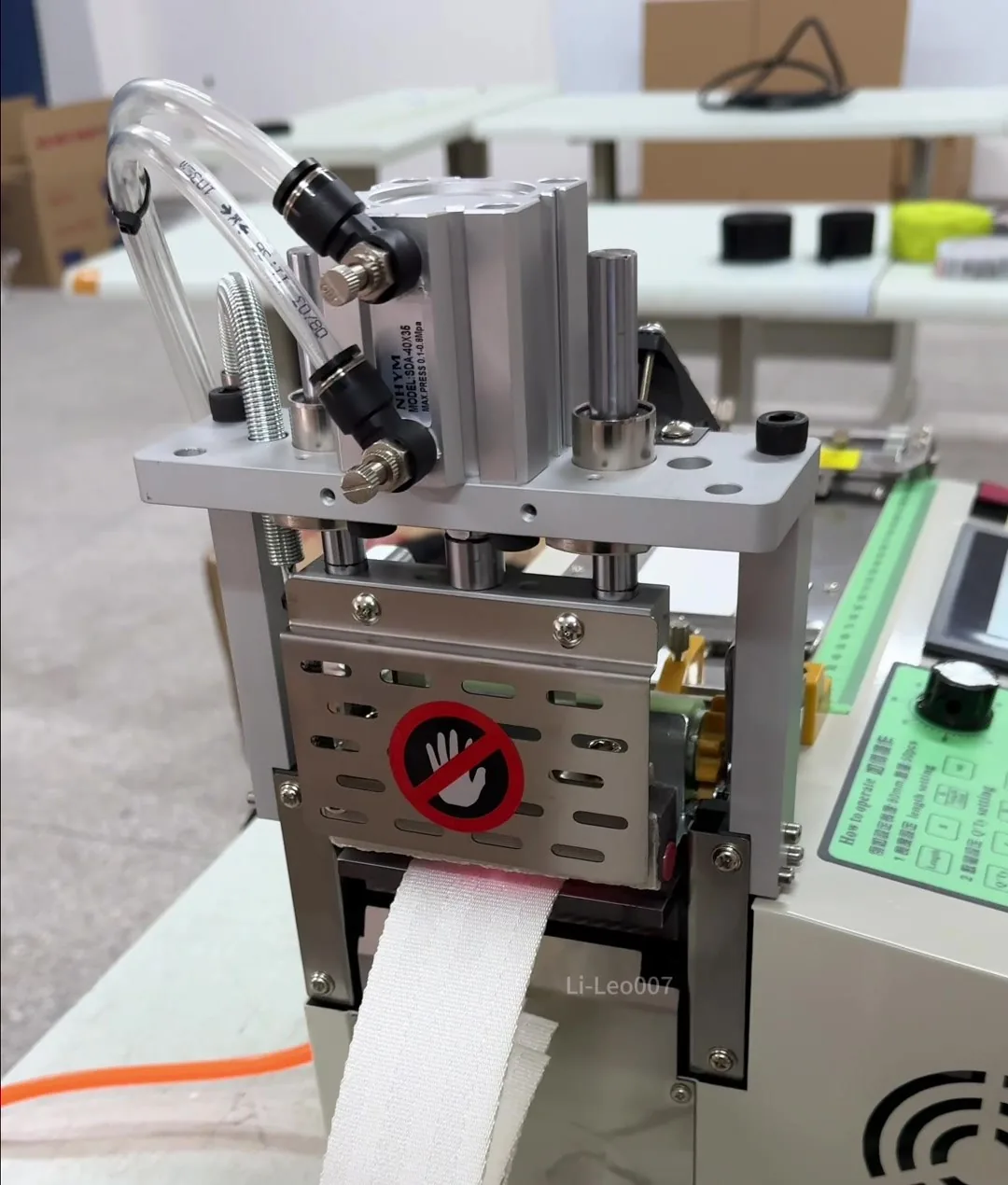
For a buyer, the useful point is to move beyond “How hot can it get?” and ask whether the cutting arrangement suits the actual strap. Check whether it cuts completely and produces a suitable end. The words “pneumatic” or “custom blade” alone do not establish the result.
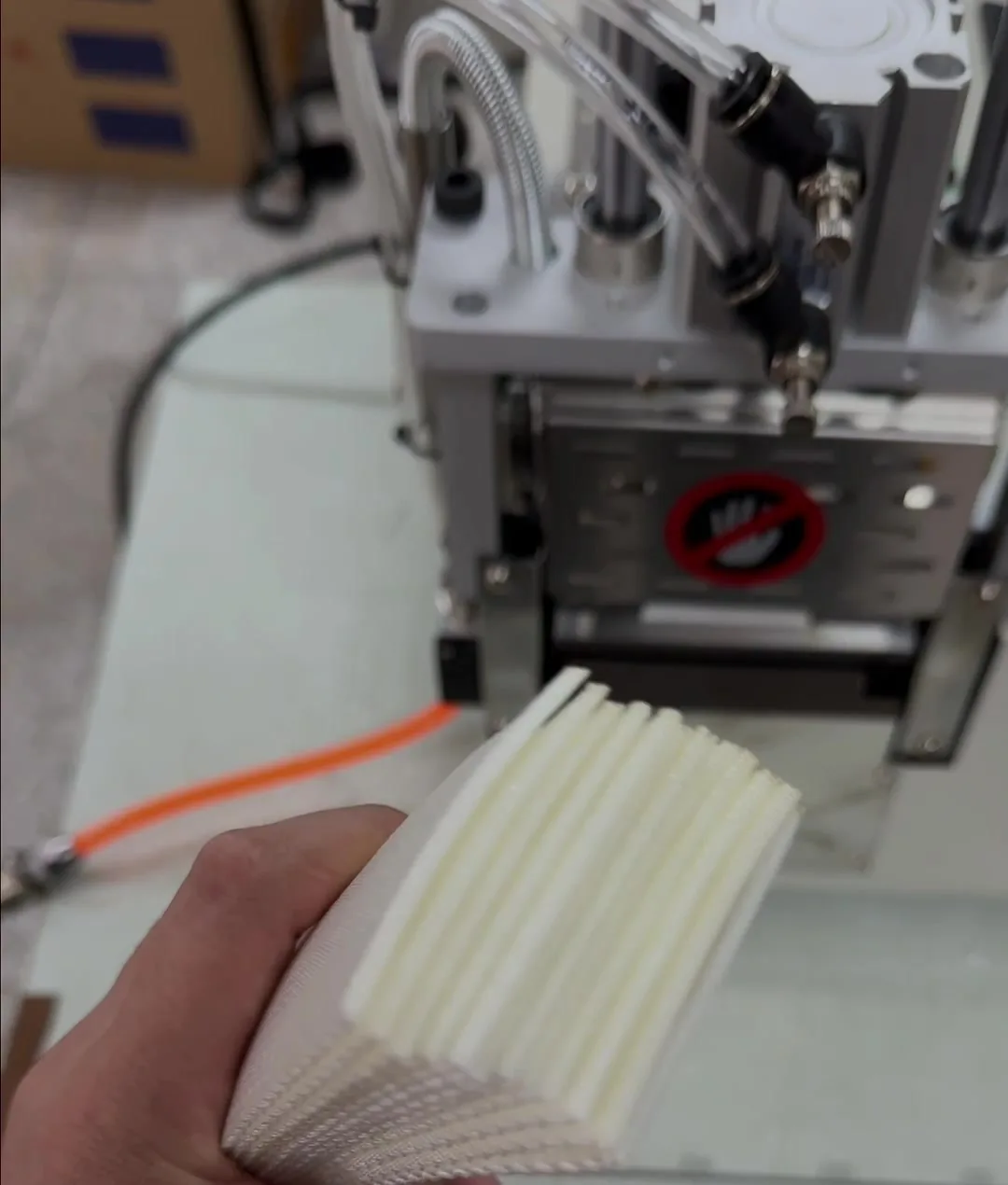
The ends shown later look relatively tidy, without obvious long loose fibres or black scorching. The next useful comparison is a series of pieces cut from the same material under the planned production conditions: do any threads remain, do cooled ends loosen, and will edge hardness interfere with the next operation?
Judge samples in the process they are meant for
Let the pieces cool, then gently bend and rub the ends to help identify edges that loosen easily. Look across several pieces for joining threads, noticeable shrinkage or a hard, brittle edge. Shine alone does not prove overheating; compare it with the original material and other signs such as scorching or distortion.
If the strap will pass through a buckle, try threading it and see whether a hard edge gets in the way. If it will be sewn, check whether the sealed edge affects folding and sewing. For load-bearing uses such as lifting slings or cargo straps, an intact end is only one processing check. Pulling a sample by hand cannot replace the strength and application testing required for the finished product.
Hot-knife sealing depends on the material being able to fuse. Many nylon and polyester webbings can be considered for hot cutting and sealing; pure cotton does not form the same melted seal. Blends, coatings and other constructions need assessment with the actual material. Identifying the fibre composition is more useful than guessing a temperature.
Bring the problem sample and the finish you need
If thick webbing still needs manual trimming, or frays after cutting, send HESPER a problem piece, some uncut material and an example of the end finish you want. Include the composition, width, thickness, cut length and daily quantity. That makes it easier to discuss whether the starting point should be the cutting arrangement, cutting conditions or edge-treatment process.
The aim of a trial is more than a good-looking photograph of a cut end. It is to help the pieces move into the next operation with less recutting and tidying. Agree on the sample length and quantity before shipping, then use the actual material to assess a suitable setup.
Explore HESPER tape cutters and discuss a setup for your material
Discuss your thick-webbing cutting problem with HESPER · sales@hespermachine.com