
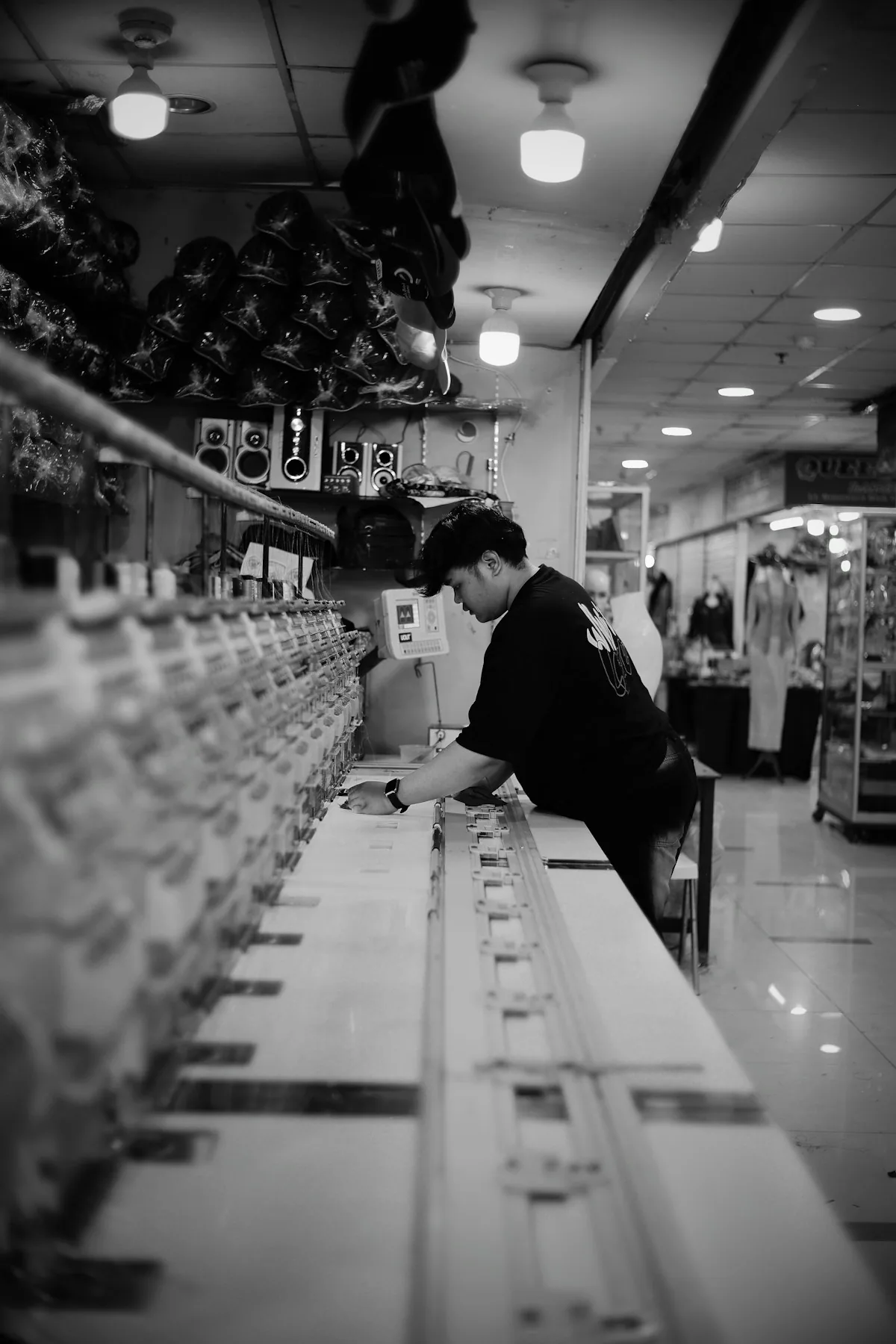
Imagine a workshop that cuts elastic or webbing straps partly by hand and partly with an existing machine. Orders are growing, so the team looks at an automatic strap cutter. But there are three complications: the operators did not like working with an ultrasonic cutter, the strap arrives loose in boxes instead of on rolls, and the cut length changes between about 14.5 and 16 inches.
This guide works through each point in plain words. It uses example numbers, not data from any specific customer, and only the specifications stated on HESPER product pages.
Step 1: Work out the real output gap
Before choosing a machine, turn your daily target into an hourly number. Here is a worked example (these are example figures, not machine results):
| Item | Example |
|---|---|
| Daily target | 5,000 straps |
| Productive hours per day | 8 hours |
| Total pieces needed per hour | 5,000 ÷ 8 = 625 |
| Total pieces needed per minute | 625 ÷ 60 ≈ 10.4 |
| Retained existing good output per day (example) | Existing machine: 2,000; retained manual work: 1,000 |
| Additional good output needed | 5,000 − 2,000 − 1,000 = 2,000/day |
| Additional hourly / minute requirement over 8 hours | 2,000 ÷ 8 = 250/hour; 250 ÷ 60 ≈ 4.17/min |
Subtract only output that will continue after installation, without double-counting. If the new machine replaces the manual work, do not subtract that manual output. Use good-piece counts for the same working day, and divide the gap by the hours available to the new machine.
Product pages list cutting speeds as ratings. For example, the CXY-160W lists 120–240 pieces/min, and the page states that actual output depends on cut length, material and cutting mode. A listed rating far above your need does not prove the job will be met, because loading the strap, collecting and counting pieces, and stops all take time.
So the useful question is: how many acceptable straps per hour does the machine produce on your strap, at your length, including handling? Measure that in a trial.
Step 2: Strap in a box, not on a roll
The CXY-100CW and hot & cold tape cutter pages describe reel-holder feeding. The CXY-160W page asks for roll diameter and weight. For box-packed strap, have the supplier confirm the complete feeding arrangement with your actual packing and material.
So first check what is in the box:
- One continuous length, packed loose. Confirm whether it can be fed consistently: the strap can twist, tangle or stretch as it leaves the box. For elastic strap, stretch during feeding can change the cut length. Ask the supplier how the strap would be guided from the box to the feed rollers.
- Already-cut pieces. A roll-fed cut-to-length machine is designed for continuous material. Pieces that are already cut need a different discussion with the supplier.
Send photos of how the strap is packed and a sample several metres long, so the feeding setup can be checked in a trial. The hot and cold tape cutting machine page also lists unwinding and material stretch as details to establish. For elastic, see our guide to high-stretch and low-stretch elastic cutting setup.
Step 3: Adjustable length from 14.5 to 16 inches
14.5 in = 368.3 mm and 16 in = 406.4 mm. The machines below all set the cut length on the control panel:
- The CXY-160W hot & cold cut-to-length machine lists a cut length of 1–10,000 mm.
- The cutting and hole punching machine lists a maximum cut-length setting of 99,999.9 mm and a listed cutting tolerance of 0.002 × L mm (L is the cut length expressed in mm). This is a published specification; achievable tolerance on your material must be confirmed in a trial.
- The CXY-100CW ultrasonic cutting machine and the hot & cold tape cutting machine list an adjustable cut length.
Changing length is a setting, but the length you actually get depends on the strap. State the tolerance you need and check several pieces using one agreed measurement method after relaxation, without pulling the strap. If your acceptance method uses a specified load, tell the supplier. This matters when choosing an elastic cutter for stretchy strap.
Step 4: If an ultrasonic cutter is uncomfortable for your team
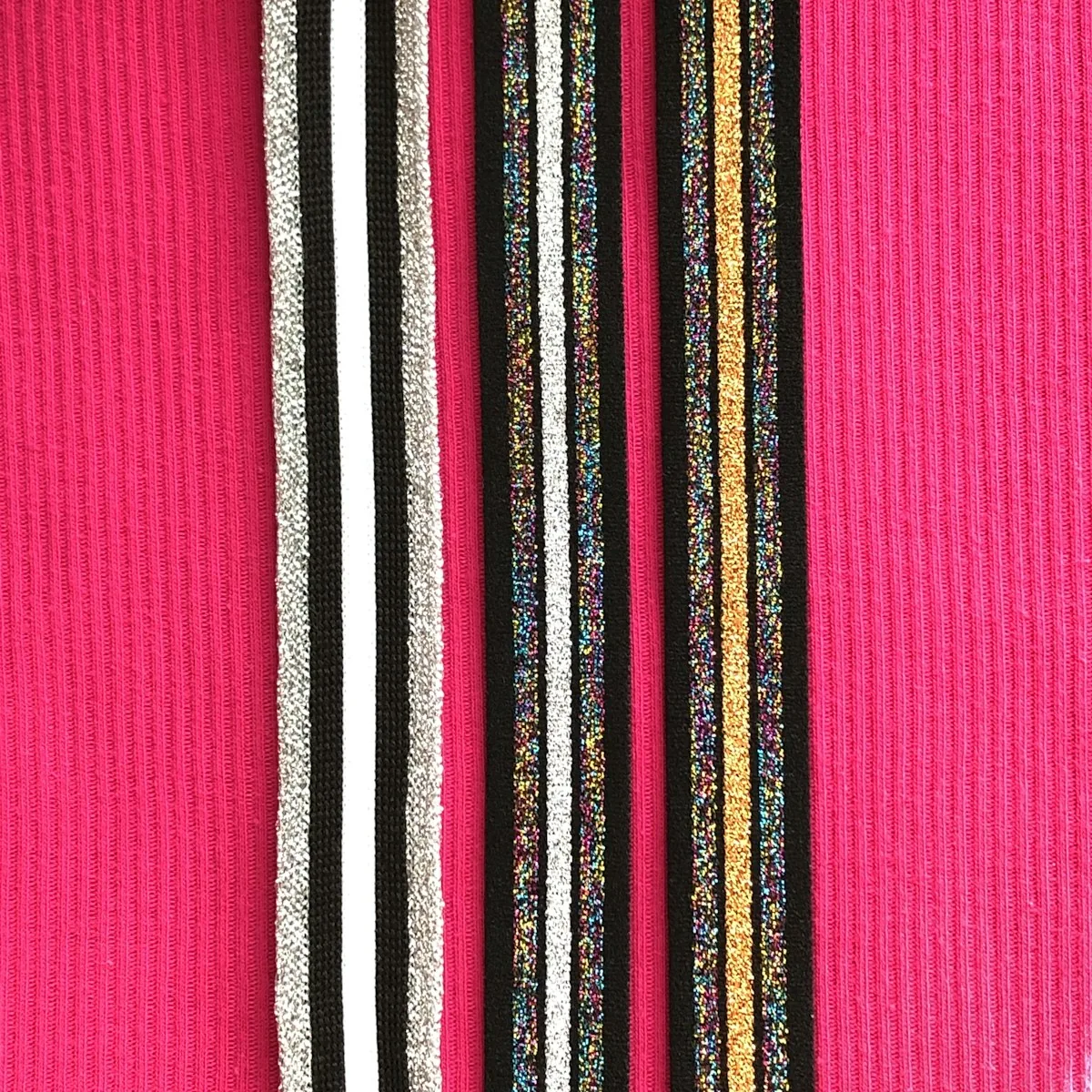
First, ask the operators to describe exactly what they found uncomfortable and share that with the supplier. Do not assume the cause or that changing the cutting method will solve it. Evaluate the alternative and the working arrangement with your operators during a trial.
HESPER lists three cutting methods for strap:
| Method | How it cuts | Edge to check in a trial | Machines to look at |
|---|---|---|---|
| Ultrasonic | Ultrasonic cutting assembly with a separate generator | Whether the edge is sealed and remains suitably soft for this composition and setup | CXY-100CW ultrasonic cutting machine |
| Hot cutting (hot knife cutter) | Heated blade; the CXY-160W lists 0–650 °C adjustment | Whether suitable thermoplastic components seal, and whether the cooled edge becomes hard; blends and coatings can affect the result | CXY-160W; hot & cold tape cutting machine |
| Cold cutting | Cold cutting mode, without a heated blade | Whether the cut edge frays in later steps | CXY-160W; hot & cold tape cutting machine |
The CXY-160W temperature range is a control specification, not a recommended setting for every strap. Select the temperature using material-specific trials.
The hot and cold tape cutting machine page says to test the edge when heat sealing is required, and to evaluate cold cutting where sealing is unnecessary or heat sensitivity matters. In that case, the CXY-160W or the hot and cold tape cutting machine can be tested in cold mode as a cold cutting machine. The CXY-100CW page asks for site power and compressed-air conditions to confirm ultrasonic cutting suitability.
Ask for the trial to be filmed, and if possible let your operators watch or join a trial before you decide. Our article on cold knife, hot knife and ultrasonic cutting for elastic explains how each method affects the edge.
What to send for a strap cutting trial
- A strap sample several metres long, and its composition
- Width, thickness and how much it stretches
- Photos of how the strap is packed in the box
- Cut lengths (for example 14.5–16 in) and the tolerance you need
- Edge requirement: sealed, soft, or plain cut for sewing
- Daily target and productive hours
- What your operators found uncomfortable about the current method
- Site power and compressed-air availability
- A short video of your current process, if you have one
Frequently asked questions
Is there an alternative to an ultrasonic strap cutting machine?
Yes. HESPER lists hot and cold cutting on the CXY-160W and the hot & cold tape cutting machine. Select the mode through trials with your material and operators. If the job also needs holes, assess the cutting and punching machine with a sample and hole-position drawing.
Can an automatic cutting machine feed strap from a box instead of a roll?
The CXY-100CW and hot & cold tape cutter pages describe reel-holder feeding; the CXY-160W page asks for roll details. For a continuous length packed in a box, send packing photos and a representative sample to confirm stable feeding in a trial. Already-cut pieces require a separate feeding assessment.
Can the cut length be adjusted between 14.5 and 16 inches?
14.5 to 16 inches equals 368.3 to 406.4 mm. This falls within the CXY-160W listed 1–10,000 mm cut-length range. The other machines have adjustable length settings; confirm the required range and achievable tolerance in a trial with your strap.
How do I know if one machine can reach my daily target?
Subtract the existing good output you will retain from the daily target, then divide the remaining gap by the new machine’s available hours. Compare this with trial-measured good output, including handling and stops. Listed cutting speed alone is not a daily output guarantee.
Comparing strap cutting methods? Send HESPER your strap sample, packing photos, cut lengths and daily target. We will suggest which cutting method and machine to test and discuss a trial with your material. Send an enquiry or email sales@hespermachine.com.