
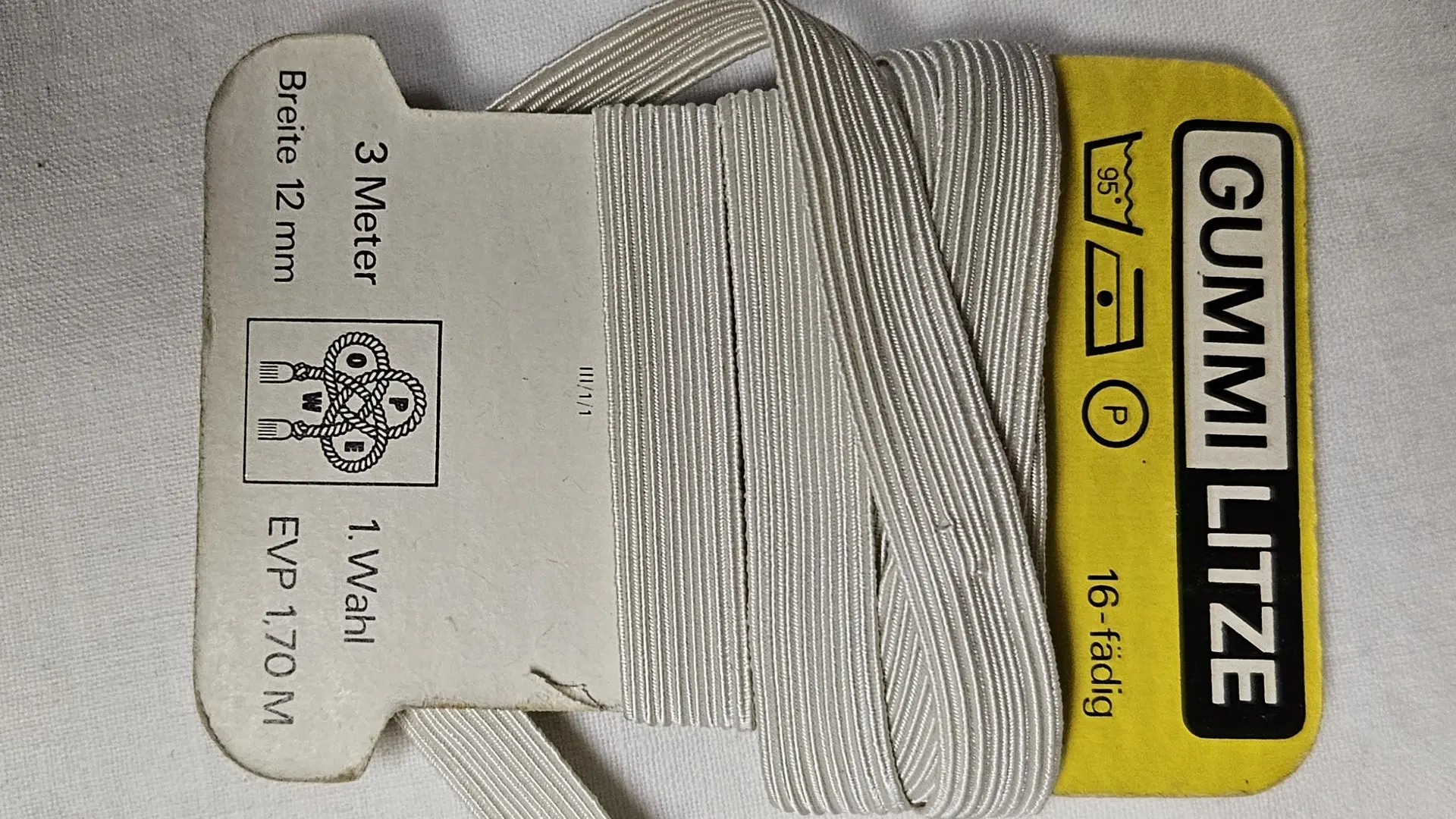
Two elastic bands can be cut at the same screen setting and still produce different finished lengths. The reason may not be the blade or the control panel. One band stretches easily while it is being unwound and fed; the other resists stretching but may wander, curl or drag against the guides.
That is why an elastic cutting setup starts with a simple question: what does the material do before, during and after the cut? “High stretch” and “low stretch” change roll handling, strip travel and finished-piece measurement.
What Do High Stretch and Low Stretch Mean in Production?
For a beginner buyer, the most useful definition is practical. High-stretch elastic lengthens noticeably under modest pulling force and may recover strongly after release. Low-stretch elastic changes less under the same handling, although it can still have some recovery.
Do not classify the material by appearance alone. Two black bands with the same width may use different knitted, woven or braided constructions. Fibre composition, rubber or spandex content, thickness, surface texture and construction all influence how they move.
Before choosing a setup, mark an unstretched sample, pull it as it would be pulled during feeding, then observe its return. This practical check shows the supplier the behaviour that matters on your line.
Why High-Stretch Elastic Can Finish Short
Imagine that the machine feeds 300 mm while the elastic is slightly stretched. The blade cuts at the commanded position, but the piece relaxes after leaving the feed path. Its accepted finished length may then be less than 300 mm.
Unwinding resistance, a tight guide, pressure in the feed path or even the way the operator pulls the leading end can add tension. The error may not be obvious while the machine is running. It appears later, when pieces rest on the table or enter sewing.
A high-stretch setup should therefore avoid unnecessary drag and keep roll release consistent. Guides should control sideways movement without squeezing the band. The operator should not pull the material to “help” it feed. Most importantly, production approval must use a defined relaxed-length method rather than a measurement taken while the piece is still under tension.
Why Low-Stretch Elastic Still Needs Its Own Setup
Low stretch does not mean problem-free. A firmer elastic may carry roll curvature, resist straightening or rub more strongly against a narrow guide. A textured surface may feed differently from a smooth one. Thick woven elastic can also tilt if the guide spacing does not match the strip.
Because length recovery is smaller, alignment may become the larger concern. Check whether the band stays flat, enters squarely and leaves without marks. If it walks sideways, more pressure may create drag or deformation.
The Same Length Setting Is Not the Same Process
The control panel tells the machine what length to feed. It does not know whether the elastic was stretched on the way there. A sound trial separates three checks:
- the length commanded on the machine;
- the piece immediately after cutting;
- the accepted length after a consistent relaxation period and under the buyer’s normal measuring method.
The acceptance rule belongs to the product. Garment elastic may be judged after sewing; a strap may need to pass through a buckle without curling. A visible end may need a different edge from one hidden inside a seam.
Use the same flat surface, measuring tool and “no pulling” rule for every comparison. If your factory measures elastic under a specified load, tell the supplier that instead. The supplier cannot confirm a finished length without knowing which measurement is considered correct.
How HESPER Equipment Fits the Job
HESPER’s automatic hot and cold tape cutting machine is published for automatic feeding and cut-to-length processing of webbing, hook-and-loop tape, zipper tape and elastic bands. It has adjustable material guides and cut length, Chinese/English PLC operation, and material-out stop and alarm.
Those functions support repeated work, but one setting is not correct for every elastic. Confirm the guide arrangement and cutting mode with the real width, thickness, stretch and required edge.
For suitable materials, HESPER also publishes a compact ultrasonic webbing and ribbon cutting machine. Whether ultrasonic, hot or cold cutting is appropriate depends on material composition and the accepted edge; it should not be chosen only because the band has high or low stretch.
What Should a Buyer Send for a Trial?
Send a representative production roll, not only a short loose strip. Include the known material composition and construction, width, thickness, roll diameter, roll weight and winding direction. State the target relaxed length, tolerance, normal batch size and required edge condition.
Also provide one accepted finished part or explain the next operation. Photos or a short video showing how the elastic is pulled, sewn, fitted or measured are often more useful than a generic request for “high accuracy.” If you run both high-stretch and low-stretch bands, send both. The goal is to find out whether each material needs a different approved setup.
Frequently Asked Questions
Can one machine cut both high-stretch and low-stretch elastic?
Potentially, yes, when the materials and required edges suit the machine. Do not assume they can share the same guide and feeding setup. Confirm each representative material with a trial.
Why is my elastic shorter even though the machine setting is correct?
The elastic may be stretching during unwinding or feeding and then recovering after the cut. Compare the commanded length with the relaxed finished length using one consistent measurement rule.
Should I increase feed pressure if elastic slips?
Not automatically. More pressure may change stretch, leave marks or add drag. First check roll release, alignment, guide spacing and the actual contact condition, then confirm the setup with samples.
Approve the Material, Not Just the Machine
The best elastic cutting setup is the one that repeatedly produces an accepted part after relaxation and in the next operation. Send HESPER your high-stretch and low-stretch samples, roll information, target length and measurement rule through the material and cutting enquiry. Ask for each sample to be identified separately in the trial result, so the quotation reflects the materials you actually plan to run.