
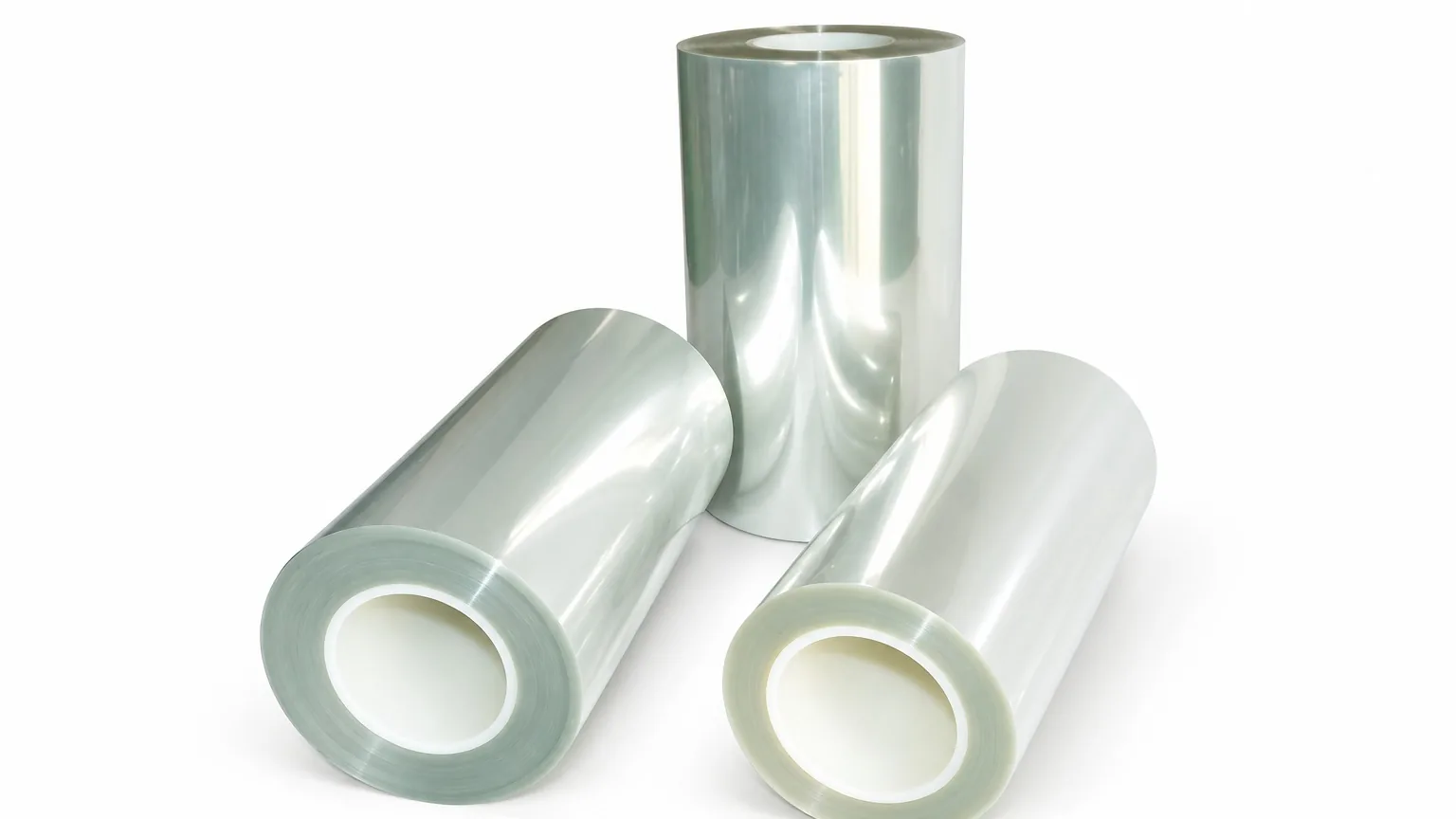
PET film can leave a cutting machine at the programmed length and still fail the buyer’s inspection. A transparent sheet may show feed-roller marks, scratches or edge damage. It may drift sideways, finish out of square, or vary in length as the roll releases. These defects matter in printing, laminating, packaging and later assembly.
A useful machine trial should therefore follow the complete roll-to-sheet process. It should connect each defect to observable evidence instead of treating one short cutting video as proof of stable production.
1. Define the Accepted PET Sheet
Start with the finished sheet, not a machine name. Record target length and width, the measurement datum, permitted variation, squareness method, edge condition and which surfaces must remain cosmetic. If a protective layer, coating or printing is present, identify it and state whether marks, lifting or contamination are acceptable.
| Buyer concern | Trial evidence | Process area to observe |
|---|---|---|
| Length variation | Consecutive measurements in cutting order | Roll release, feeding, programmed length and measurement |
| Skew or poor squareness | Diagonal comparison or an agreed datum method | Roll alignment, guides and entry into the blade |
| Scratches or pressure marks | Both faces under controlled lighting | Roller contact, guides, cutting bed and collection |
| Edge damage | Close photographs and accepted/rejected samples | Blade condition, film support and handling |
Use measurable limits and reference samples. “No scratches” is clearer when the lighting angle, viewing distance and acceptable example are agreed. Keep the programmed length separate from the finished-sheet tolerance; they are not the same claim.
2. Document the Real Film Roll
“PET film” is not a complete input specification. Record supplier grade or construction, thickness, web width, surface finish and winding direction. Add roll outside diameter, core inside diameter, roll weight, edge condition, splice locations and whether the film is coated, printed, laminated or protected.
Send representative production material. A substitute film can have different stiffness, friction, static behaviour or surface sensitivity. Mark the critical face and explain how sheets are handled after cutting. This prevents a trial from solving the wrong problem.
3. Follow the Material Path
Observe the roll holder, roll release, tension guide, lateral guides, feed roller, cross-cutting point and discharge area. The roll should rotate without sudden resistance. Guides should control lateral movement without rubbing a sensitive edge. Feed pressure should grip the film consistently without leaving an unacceptable impression.
Look for gradual sideways movement rather than checking only the first sheet. At discharge, prevent transparent parts from dragging across a rough or contaminated surface. If sheets cling together or are difficult to stack, record the handling time and rejects; usable output matters more than an unloaded cycle count.
4. Run a Diagnostic Cutting Trial
Preserve sample order so a defect can be traced to the process. Use this sequence:
- Inspect the incoming roll for telescoping, edge damage, contamination and splices.
- Record roll orientation, guide positions, roller pressure, feed speed, quantity and programmed length.
- Collect consecutive sheets near the beginning, middle and later part of the test roll.
- Measure every selected sheet from the same datum with the same tool and conditioning method.
- Check diagonals or the agreed squareness method, then inspect both faces under consistent lighting.
- Repeat after a normal stop and restart, and after a size or roll change where relevant.
Report individual measurements, not only an average. A steady offset, gradual drift and isolated outlier indicate different questions. Whenever pressure, speed or guide position changes, record the first affected sample.
5. Match the Test to HESPER’s Documented Configuration
The HESPER Film & Nonwoven Cut-to-Length Machine is documented for automatic feeding and cross-cutting of PET film and other listed roll materials. Its Chinese/English LCD and numeric keypad provide settings for cut length, feed speed and quantity.
The published configuration includes a polyurethane feed roller with pressure adjustment at both ends, a tension guide, adjustable material guides and a separate floor-standing roll holder with bearings. A vacuum heat-treated steel blade performs the cross-cut. The machine uses a 220 V supply and includes cabinet cooling fans plus a grounded, fused power inlet.
Models CXY-100G through CXY-1500G are presented as width specifications from 100 to 1500 mm. Width alone does not confirm that a particular PET construction, roll or finished-sheet tolerance is suitable. Use HESPER’s unwind-roll specification guide to document the complete roll before a model and test plan are confirmed.
6. Separate Cross-Cutting From Extra Requirements
The documented film machine feeds a roll and cross-cuts it to a selected length. If the project also requires longitudinal slitting, printed-mark registration, static-control measures, automated stacking or connection to another line, list each requirement separately. Do not assume these functions are standard equipment.
Describe an extra function by the finished result and operating condition. For example, provide the number and width of strips for slitting, or a printed repeat and mark sample for registration. HESPER can then review whether a different machine category or project-specific solution is required.
Frequently Asked Questions
Does the displayed cut length prove PET sheet accuracy?
No. Roll release, feed contact, alignment, film behaviour and the measurement method can affect the result. Approve consecutive finished sheets against an agreed tolerance.
How should scratches be inspected?
Define the critical face, lighting angle, background, viewing distance and acceptable reference. Inspect sheets from different trial stages and keep their cutting order.
Can one roller-pressure setting suit every PET film?
No universal setting should be assumed. Thickness, surface, coating and roll condition can change grip and marking. Establish settings using representative material.
What should a PET film RFQ include?
Include film construction, thickness, roll width, diameter, core and weight; the sheet drawing and tolerance; surface and edge criteria; batch size; target accepted output; and sample availability.
Send a Measurable PET Film Requirement
Use the HESPER project enquiry to send roll data, a finished-sheet drawing, defect photographs and your inspection method. HESPER can review the material path, width specification and representative cutting trial before the machine configuration is confirmed.