
TAPE CUTTERS · FOLD-OVER ELASTIC
Fold-over elastic is soft, stretchy and often printed, which is exactly why cutting it by hand is slow and uneven. Here is how to set up a tape cutter so binding lengths and hair-tie pieces come out the same every time.
A small brand makes hair ties and baby headbands from fold-over elastic. Every order means unrolling the elastic, measuring, marking and cutting hundreds of short pieces with scissors. The pieces vary a little, some ends are ragged, and printed elastic makes any difference easy to see once the ties are knotted and packed.
The same problem shows up in garment workshops that use fold-over elastic to bind necklines, leg openings and waistbands. The elastic itself is simple. Getting every piece the same length, with a clean end, is the hard part. A tape cutter takes over the measuring and cutting, but fold-over elastic needs the right setup to cut well.
THE SHORT ANSWER
Feed fold-over elastic flat and relaxed, with no pull from the roll. Set the guides to its width so it can't twist, and set the feed roller to grip without stretching. Cut a few test pieces with the cold knife and with the hot knife, and choose the end that suits the next step. Measure pieces laid flat, not stretched. Then set the length and quantity once and run the batch.
- 01 What makes it tricky
- 02 Feed it flat and relaxed
- 03 Hot or cold cut
- 04 Hair ties and short pieces
- 05 Binding lengths
- 06 Printed elastic
- → HESPER machines
- ? FAQ
01 · WHAT MAKES IT TRICKY
Soft, stretchy and made to fold
Fold-over elastic is a flat elastic with a line down the center, so it folds neatly over a raw edge. It is soft and very stretchy, often with a shiny face and a matte face. Those same qualities make it easy to stretch, twist or curl on the way into a machine.
| What you see | Likely cause | What to change |
|---|---|---|
| Pieces shorter than the setting | Elastic stretched as it was fed | Feed from a loose supply; ease the roller grip |
| Pieces vary in length | Tension changes as the roll unwinds, or slipping | Remove pull from the roll; check the feed roller |
| Elastic twists or folds before the cut | Guides too loose for the width | Set the guides to the elastic's width |
| Ends ravel or look ragged | Cut method doesn't suit the elastic | Test the hot knife and the cold knife |
| Ends hard or beaded | Hot knife too hot for the material | Lower the temperature, or switch to a cold cut |
02 · FEED IT FLAT AND RELAXED
Keep the stretch out of the cut
Like any elastic, fold-over elastic springs back after cutting. If it is pulled on the way in, every piece comes out short.
- Take the pull off the roll. Let the elastic come off a loose roll or a box rather than being dragged off a tight core.
- Keep the same face up. Feed shiny side up, or matte side up, every time, so pieces are consistent when they reach sewing or packing.
- Set the guides to the width. Close enough that the elastic can't fold along its center line or twist.
- Grip without stretching. Set the feed roller firm enough not to slip, light enough not to pull the elastic longer.
03 · HOT OR COLD CUT
Choose the end for the next step
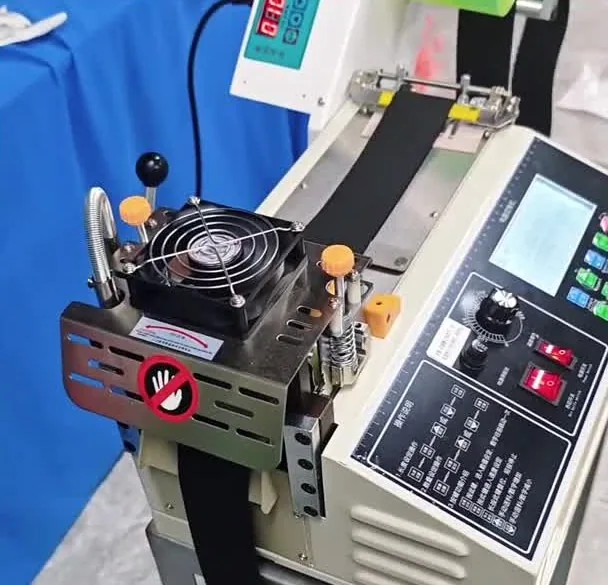
A hot and cold tape cutter can cut fold-over elastic either way. Which is better depends on what happens to the piece next.
- Cold cut. A soft end that stays flexible. A good choice when the end is sewn into a seam or hidden inside a binding.
- Hot cut. On suitable synthetic elastic, the heated blade can seal the end so it doesn't ravel. Useful when the end stays visible, such as on hair ties.
- Watch the temperature. Too hot and the end can turn hard or form a bead. Start low and raise it in small steps.
- Test both. Cut a few pieces each way and check them at the next step: knot them, sew them or pack them.
04 · HAIR TIES AND SHORT PIECES
Hundreds of identical short pieces
Hair ties are one of the most common jobs for fold-over elastic: short pieces, cut in large numbers, then knotted.
- Set length and quantity once. The machine feeds, cuts and counts, so nobody has to measure or count by hand.
- Check the first pieces. Measure a few relaxed and knot one to make sure the length gives the finished size you want.
- Collect them neatly. Short pieces drop fast. A collection box at the outfeed keeps them together and easy to count.
- Recheck during the run. Measure a piece now and then as the roll gets smaller.
05 · BINDING LENGTHS
Pre-cut lengths for necklines and openings
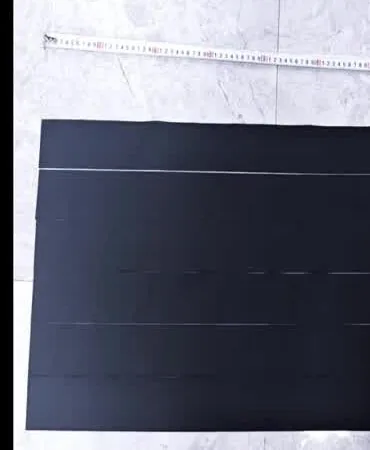
Garment workshops often bind edges straight from the roll. Pre-cutting fold-over elastic to length makes sense when the same size repeats across an order.
- Agree the length relaxed. Pattern lengths for binding are usually given relaxed. Measure cut pieces the same way.
- Keep sizes apart. Run one size at a time and bundle each batch before changing the length.
- Use the cold cut if the end is sewn in. It keeps the end soft inside the seam.
06 · PRINTED ELASTIC
When the print has to line up
Printed and glitter fold-over elastic is popular for hair ties and children's wear. Cutting to a set length works for most jobs. If every piece has to start at the same point in the print, the machine needs to detect a mark on the elastic instead of only counting length. Read how to specify registration marks before you ask for a quote.
HESPER EQUIPMENT
HESPER hot and cold tape cutting machines
Four options, each listed with hot and cold knife cutting, and elastic tape among the listed materials. For more on getting elastic lengths right, see how to cut elastic bands accurately. Details and specifications are on the tape cutter page.
95 MM
95mm EconomyCutting width 1–95 mm. Button control panel for routine cut-to-length work.95 MM
95mm High-SpeedCutting width 1–95 mm. LCD and buttons.210 MM
210mm TouchscreenCutting width 1–210 mm for wider tapes and webbing.310 MM
310mm TouchscreenCutting width 1–310 mm for the widest strips.? FAQ
Fold-over elastic cutting questions
Can a tape cutter cut fold-over elastic?
Yes. Feed it flat and relaxed, set the guides to its width, and test the cut on your elastic before running a batch.
Why are my fold-over elastic pieces too short?
Usually because the elastic was stretched while feeding. Take the pull off the roll and check the feed roller pressure.
Should I hot cut or cold cut fold-over elastic?
Cold cut if the end is sewn into a seam. Hot cut on suitable synthetic elastic if the end stays visible and should not ravel. Test both.
How do I cut fold-over elastic for hair ties?
Set the length and quantity, check the first pieces by measuring and knotting one, then run the batch into a collection box.
How should fold-over elastic be measured?
Laid flat and relaxed, not stretched. Measure several pieces to check consistency.
Can the cut line up with the print?
Not by length alone. If every piece must start at the same point in the print, the machine needs mark detection.
Does it matter which side faces up?
For the cut, no. For consistency later, feed the same face up every time.
FOLD-OVER ELASTIC
Cutting Fold-Over Elastic by Hand?
Send HESPER the elastic's width, the lengths and quantities you cut, and whether the ends are sewn in or left visible. A short sample of your elastic is the quickest way to find the right cut and setup.
Send your elastic details · See the tape cutters · sales@hespermachine.com