
A layering table in a lingerie factory
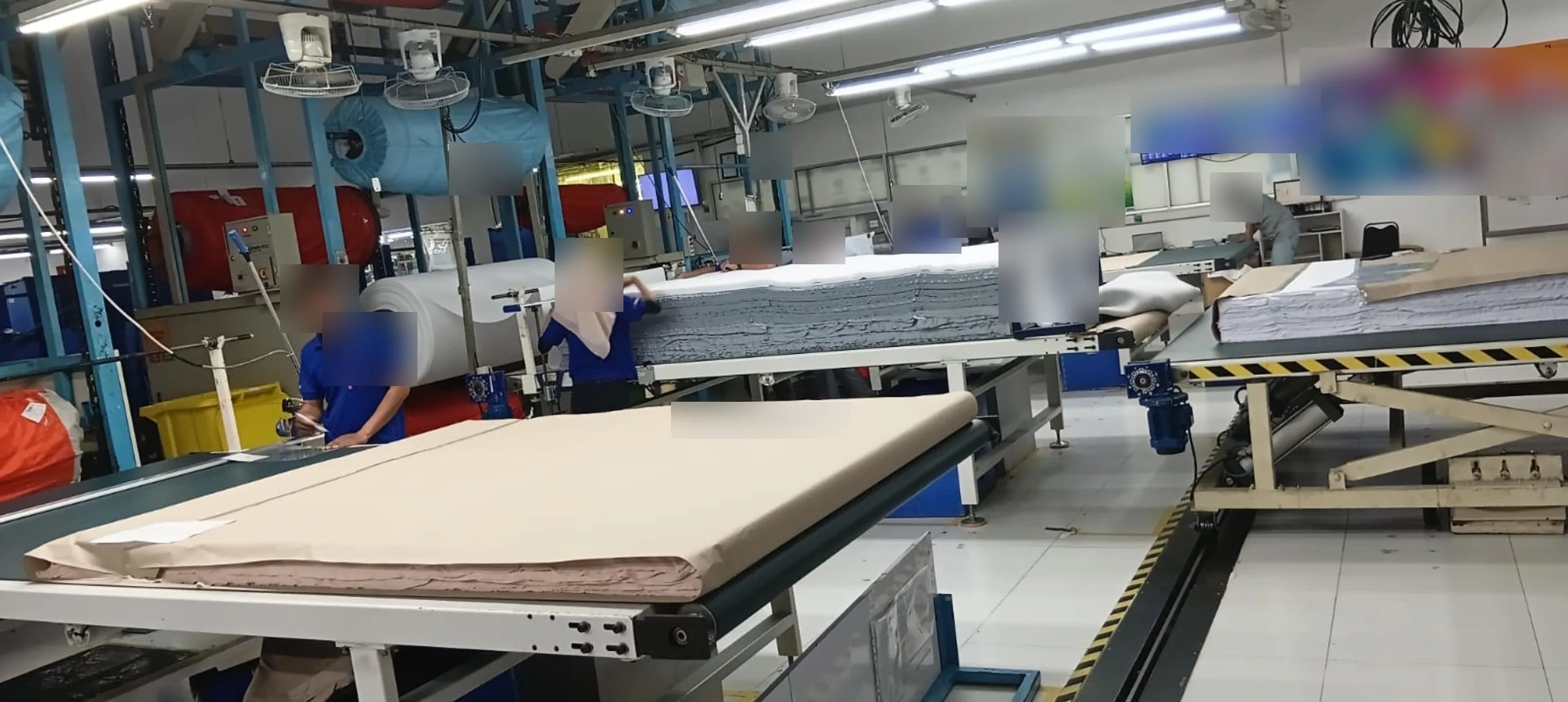
Short answer: yes, a cut to length machine can replace part of manual fabric spreading. It takes over pulling, measuring and cutting. Your workers still stack and align the layers.
Recently, a lingerie factory in Indonesia sent us a video of their cutting room. Workers stood along a long spreading table. They pulled foam off a 1,500 mm wide roll, walked it 3 meters down the table, checked the length, and cut it by hand. Then they did it again. And again. Up to 35 times, until one stack was ready for the cutting press.
Their question was simple: can a foam cutting machine do this for us? And will it fit in our room?
This article walks through what we told them. If you spread foam or fabric by hand, the same answers probably apply to you. Still deciding between a machine and hand cutting? Read Automatic Cutting Machine vs Manual Cutting.
What manual fabric spreading really involves
First, two words. We learned them from this customer, and they help a lot:
- A layer is one piece of material cut from the roll. In this factory, one layer is 3 meters of foam.
- A lay is a stack of layers on the table, ready for cutting. Here, one lay is up to 35 layers.
When people say "manual fabric spreading", they usually mean four jobs done by hand, over and over:
- Pull the material off the roll and along the table.
- Measure it to the right length.
- Cut it straight across.
- Stack and align it neatly on top of the last layer.
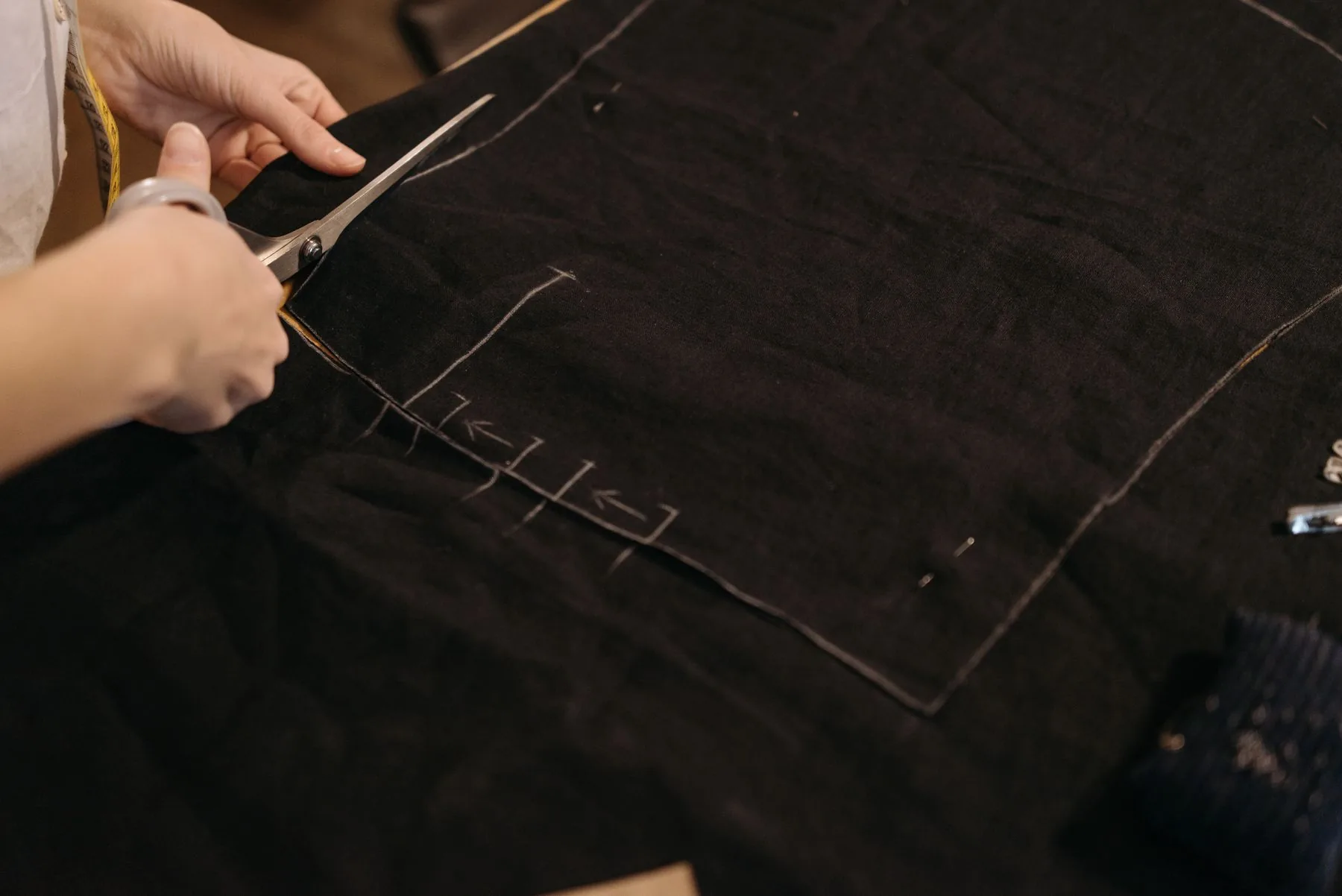
Jobs 1 to 3 are repetitive. Job 4 needs eyes and hands. That difference decides what a machine can take over.
What a cut to length machine replaces, and what it doesn't
A cut to length machine does jobs 1 to 3. Rubber rollers pull the material off the roll. The machine counts the length you set on the panel, for example 3,000 mm. Then a steel blade cuts straight across. It repeats this for as many pieces as you set.
So the worker no longer drags foam down the table, holds a tape measure, or cuts by hand. Every layer comes out the same length.
What it does not do is job 4. Your workers still place each layer on the stack and line up the edges.
"But can't a machine stack too?" Some can. A version with a robotic gripper pulls each layer onto its own table, where layers pile up. We offered this to the factory, and told them two honest limits:
- It needs space. To pull a 3 m layer, the machine must be at least 3.5 m long. It cannot be made shorter.
- Foam doesn't stack well on its own. Foam is soft and springy. With 10 mm foam, only a few layers pile up on the machine before someone has to move them.
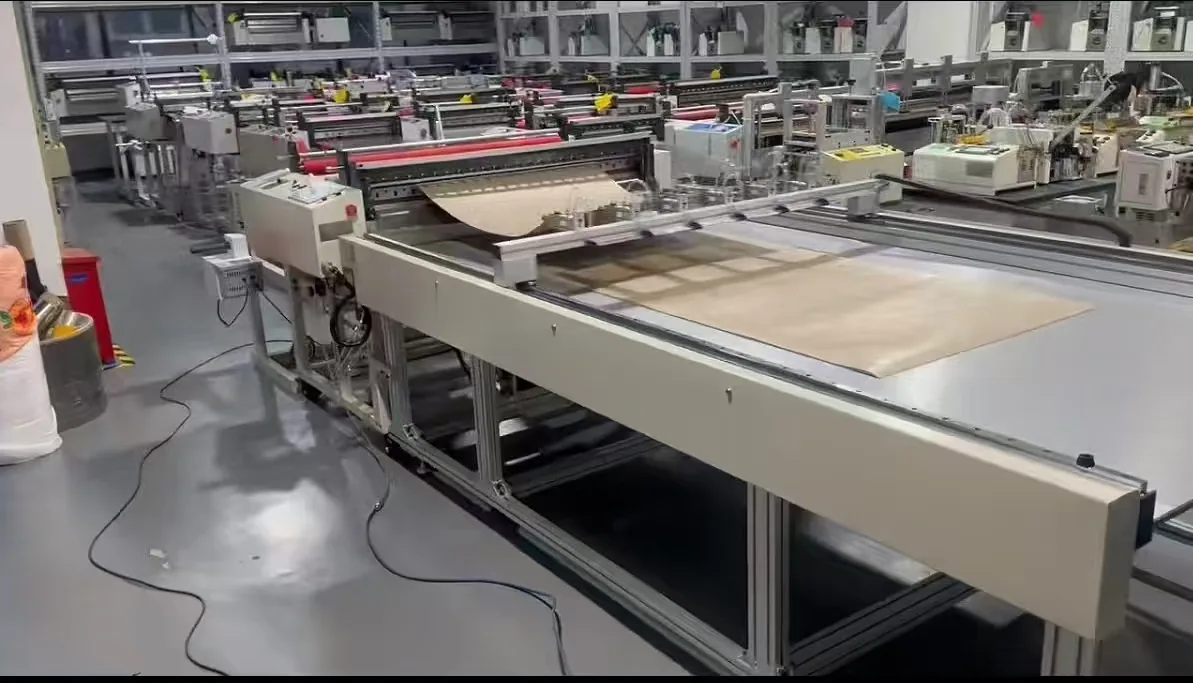
For this factory, space was the bigger problem. So instead of a full automatic fabric spreading machine, they are now looking at a compact automatic cut to length machine that sits at the end of their table.
Is the machine fast enough? A worked example
Yes, by a wide margin. In this case the machine is not the slow part; the person stacking is.
The factory's target was 20,000 pairs per shift. Their cutting team told us that equals about 2,400 meters of foam. With 3 m layers:
- 2,400 m ÷ 3 m = 800 layers per shift
Our HYD-1500 table-top model feeds material at 34 meters per minute. So one 3 m layer comes out in about 5 to 6 seconds.
Now add the worker. Example only: say it takes 30 seconds to lift a layer, place it and line up the edges. Then:
- 1 layer every 30 seconds = 120 layers per hour
- 120 × 8 hours = 960 layers per shift
That is more than the 800 needed. Your real numbers will differ, so time your own workers. The lesson stays the same: when you compare machines, look at how fast your people can stack, not just at the machine's top speed.
Three roll to sheet cutting machine setups compared
For a 1,500 mm foam roll, we offered three setups. The table-top model fits most rooms; the gripper model is for factories with space to spare.
| Setup | Footprint (L × W × H) | Speed | Stacks layers? | Good fit when |
|---|---|---|---|---|
| HYD-1500 table-top foam cutting machine | 710 × 1,870 × 600 mm, 340 kg | Feeds 34 m/min | No, workers stack | Space is tight; it sits on a table at the end of your spreading table |
| HYD-1500S floor-standing roll to sheet cutting machine | 2,100 × 2,000 × 1,300 mm, 700 kg | Feeds 80 m/min | No, workers stack | You want a stand-alone machine with its own steel frame, wheels and 650 mm output table |
| Custom foam roll cutting machine with robotic gripper | At least 3.5 m long, 1.6 m wide | About 15 s per 3 m layer | Yes, but only a few layers of thick foam | You have the floor space and mostly thin material |
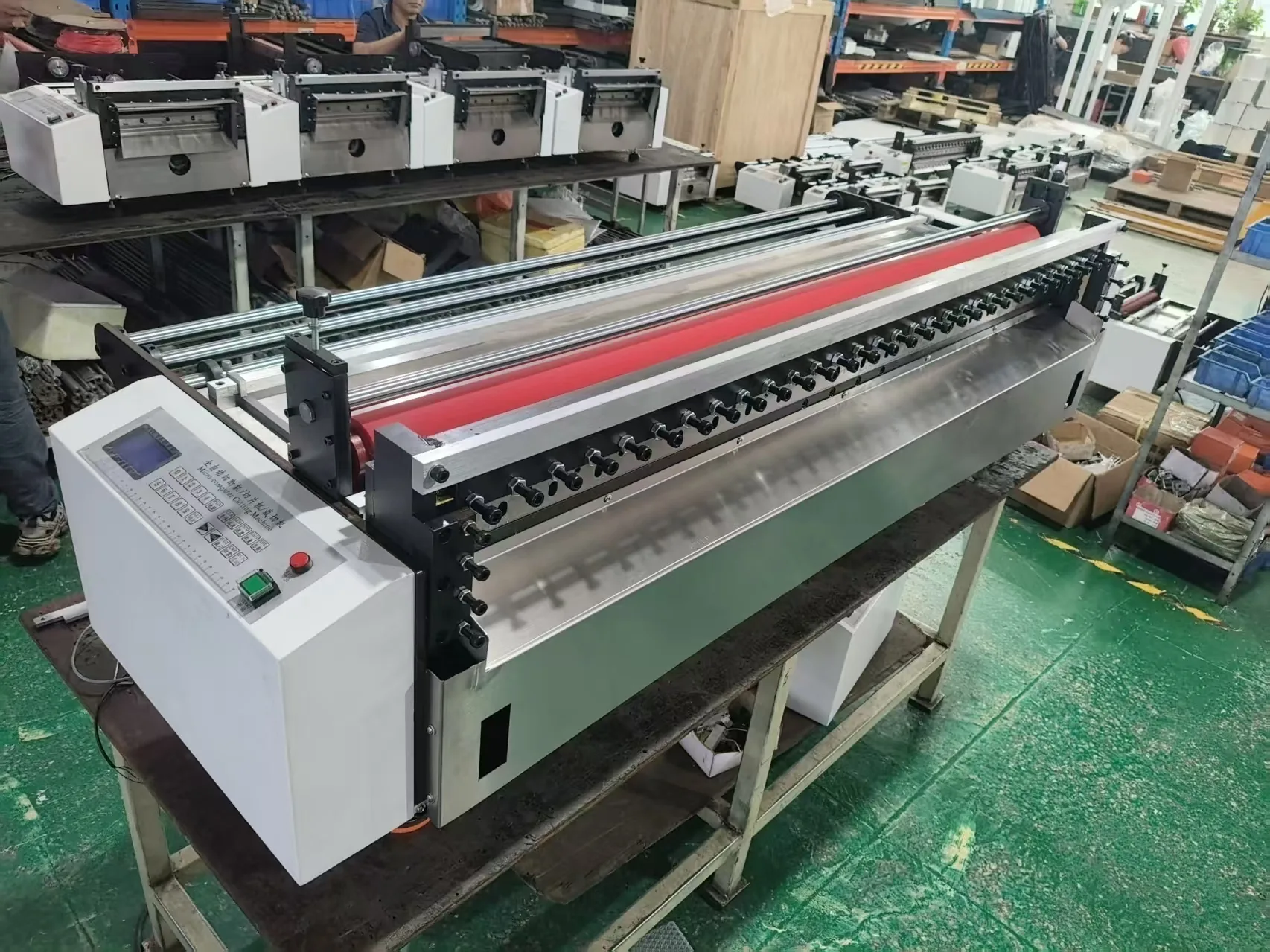
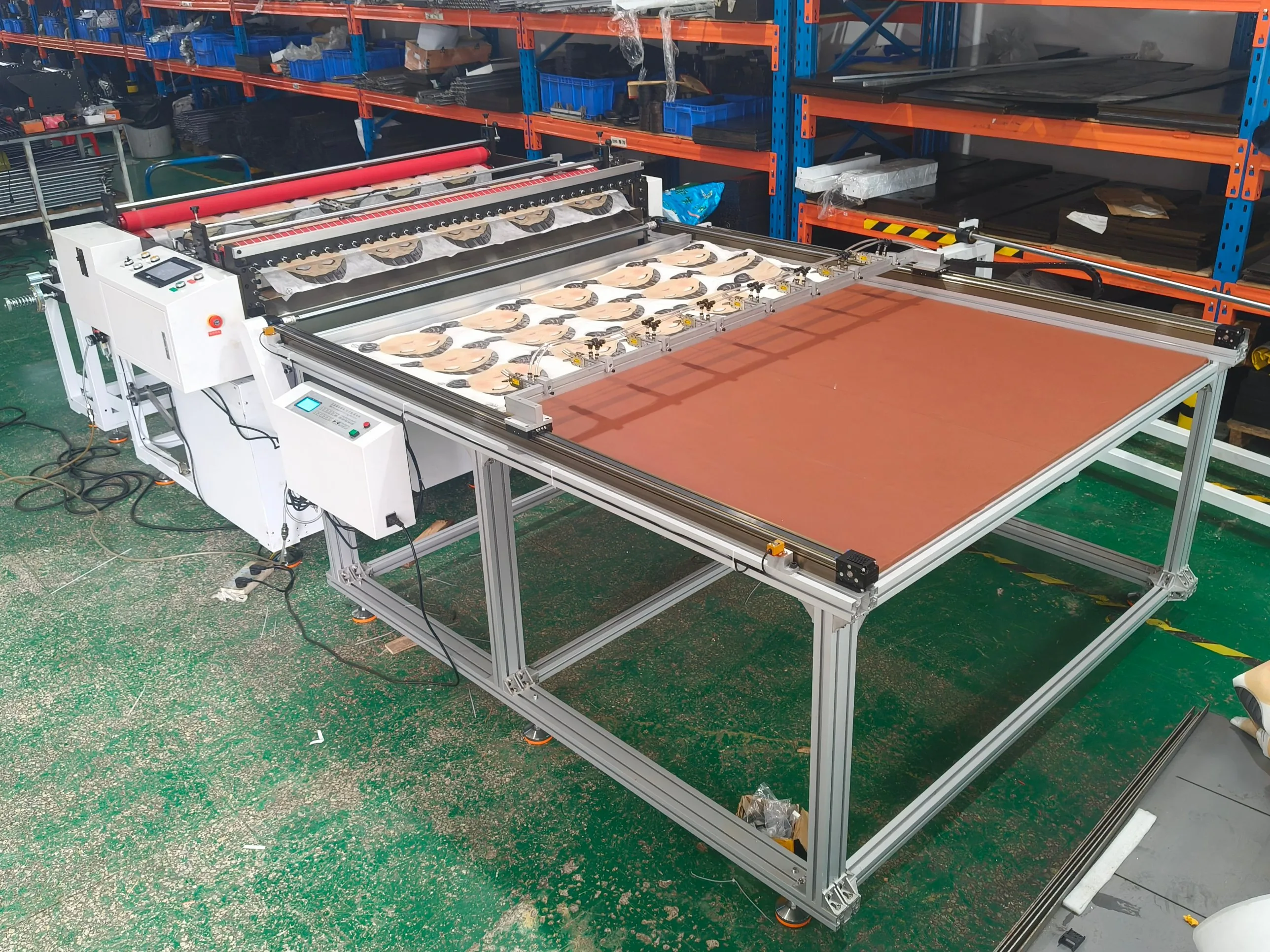
Both HYD models cut up to 1,500 mm wide, run on 220 V and use an SKD-11 high-speed steel blade. Their rubber rollers feed the foam without scratching it.
When a foam cutting machine is not the right buy
A machine is the wrong buy if your real problem is something it can't fix. Skip it, or rethink the plan, when:
- Your foam is thicker than about 10 mm. The blade opening on this type of cutter is limited. In our case, the customer's 11–20 mm foam had to stay with another department.
- Stacking and aligning is your slowest step. The machine speeds up pulling and cutting only. If workers already spend most of their time straightening layers, you will not gain much.
- Your roll is wider than the machine. A 1,500 mm roll needs a machine rated for at least 1,500 mm. If your roll is exactly the maximum, ask the maker to test it first.
- You only cut a few layers a day. Hand cutting may still be cheaper.
Signs it is worth it
- Workers walk the length of the table hundreds of times a shift.
- Layers come out at slightly different lengths, and you waste material at the ends.
- You cut the same length again and again.
- You want to free one or more people for other work.
Before you buy: test with your own samples
The surest check is a test cut on your own material. Send the maker a few meters and ask for a video. Use this list: Big rolls can also cause feeding problems; see Your Fabric Roll Fits. But Will It Feed?
- Send each thickness you use most, including the thickest.
- Send laminated foam too, if you use it. Fabric on one side can behave differently.
- Tell them your roll width, roll diameter and roll weight. (Our customer: 1,500 mm wide, up to 900 mm diameter, 25–50 kg.) For a full list, see How to Specify an Unwind Roll for a Cut-to-Length Machine.
- Tell them your layer length and how many layers go in one lay.
- Ask to see the cut edge up close. It should be straight and clean.
- Ask for the machine size and weight, then measure the space at the end of your table.
- Check your factory power supply. Our machines run on 220 V; a transformer can be added for other voltages.
FAQ
What does a cut to length machine do?
It pulls material off a roll, measures the length you set, and cuts it straight across. It repeats this for the number of pieces you set, so every piece is the same length.
Can a foam cutting machine stack the layers for me?
Some can, using a robotic gripper. But soft foam does not pile up neatly, and the machine needs at least 3.5 m of floor for 3 m layers. Many factories let the machine cut and let workers stack.
Is a roll to sheet cutting machine the same as a fabric spreading machine?
Not quite. A roll to sheet cutting machine cuts the roll into pieces. A fabric spreading machine also lays the material on the table. The first is smaller and simpler.
How thick can an automatic cut to length machine cut?
For the type described here, up to about 10 mm of foam. Thicker foam needs a different machine. Always test your thickest material first.
Will a table-top machine fit next to my spreading table?
The HYD-1500 measures 710 × 1,870 × 600 mm and weighs 340 kg. It can sit on a table at the end of your spreading table. Check that the table can carry the weight.
Do I need a special power supply?
Our machines run on 220 V, 50/60 Hz. If your factory uses a different supply, a transformer can be added.
Send us your layering problem
Tell us your material, thickness, roll width, layer length and the space you have. We will suggest a setup that fits, and we can run a test cut on your samples.
Send an enquiry or email sales@hespermachine.com.