
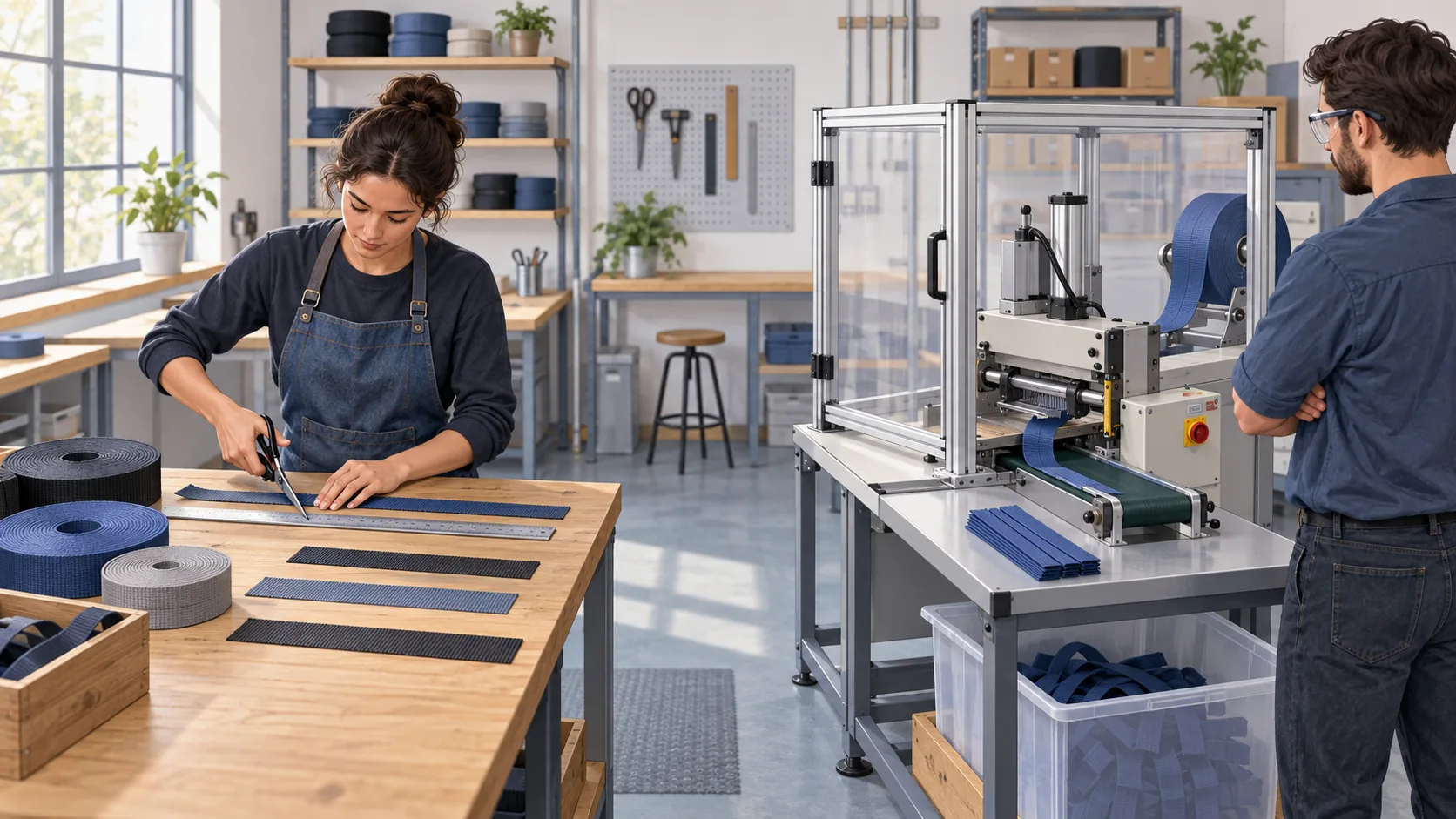
For a small workshop, the choice between manual cutting and an automatic cutting machine depends on the work that repeats each day. A few samples may be quickest to cut by hand. Regular orders of equal-length strips can justify automated feeding and cutting.
The useful comparison is the time and cost per acceptable part, including setup, inspection and rework—not simply the fastest cutting cycle.
When manual cutting makes sense
Manual cutting offers a low initial equipment cost and flexibility for prototypes, irregular shapes and occasional jobs. An experienced operator using suitable guides and sharp tools can produce good results, especially when quantities are small.
The limitation is repeated handling. Measuring, positioning and cutting every piece takes time. As a batch grows, fatigue or changes in technique can affect length consistency. Manual work remains a sensible option when machine setup would take longer than completing the order by hand.
When an automatic cutting machine helps
For repeated cut-to-length work, an automatic cutting machine feeds material and cuts to a preset length. This can improve labor efficiency by reducing repeated measuring and positioning. Operators still need to load material, adjust settings, check output and follow the machine's operating instructions.
Compact equipment can suit small batch production when the same materials and dimensions recur. For narrow roll materials, explore the HESPER hot and cold tape cutting machine. The cutting method and configuration must match the material and required edge finish; one machine should not be assumed to handle every application.
What determines cutting accuracy?
A preset length is a target, not a guarantee of cutting accuracy. Results depend on material stretch, feed grip, roll tension, blade condition and setup. Elastic materials need particular attention because their measured length can change after tension is released.
Compare both methods using your actual material. Check a series of finished pieces against the required tolerance, and inspect edges for fraying, deformation or unwanted heat effects. Agree on how and when parts will be measured before judging a trial.
Compare the whole workflow
- Batch size: count repeat orders as well as pieces in a single batch.
- Changeovers: include loading, adjustment and first-piece checks for each material or size.
- Labor: measure hands-on time, including collecting and inspecting finished parts.
- Cost: allow for equipment, tooling, maintenance, material waste and rework.
- Space: allow room for the roll supply, finished parts and safe access.
A short production trial is more useful than comparing headline speeds. Record total batch time and acceptable output under the same conditions. Automation is worthwhile when the recurring savings justify its purchase and running costs for your workload.
Which should your workshop choose?
Keep manual cutting for occasional samples and jobs that change substantially each time. Consider automation when repeated lengths occupy a significant share of the day or inconsistent parts disrupt sewing, assembly or packing.
Many workshops benefit from using both methods: manual tools for development and a dedicated machine for repeat orders. Start with the most frequent cutting task, then confirm suitability through a material trial.
To discuss an appropriate HESPER configuration, send your cutting requirements, including material type, width, thickness, cut length, tolerance and typical batch quantity.