
Strap and loop makers know the routine: pull a length of webbing off the roll, measure it, cut it, deal with the end so it does not unravel, and repeat. A single-lane cutter takes the measuring away, but each stroke still gives one strap. When an order calls for thousands of webbing straps of the same width and length, the question becomes how many good pieces each cut can produce, while the length and the ends stay right.
This short HESPER video shows one way to approach it. The Model 320 feeds ten strips of grey woven webbing from a row of reels, side by side, and cuts all ten in the same stroke.
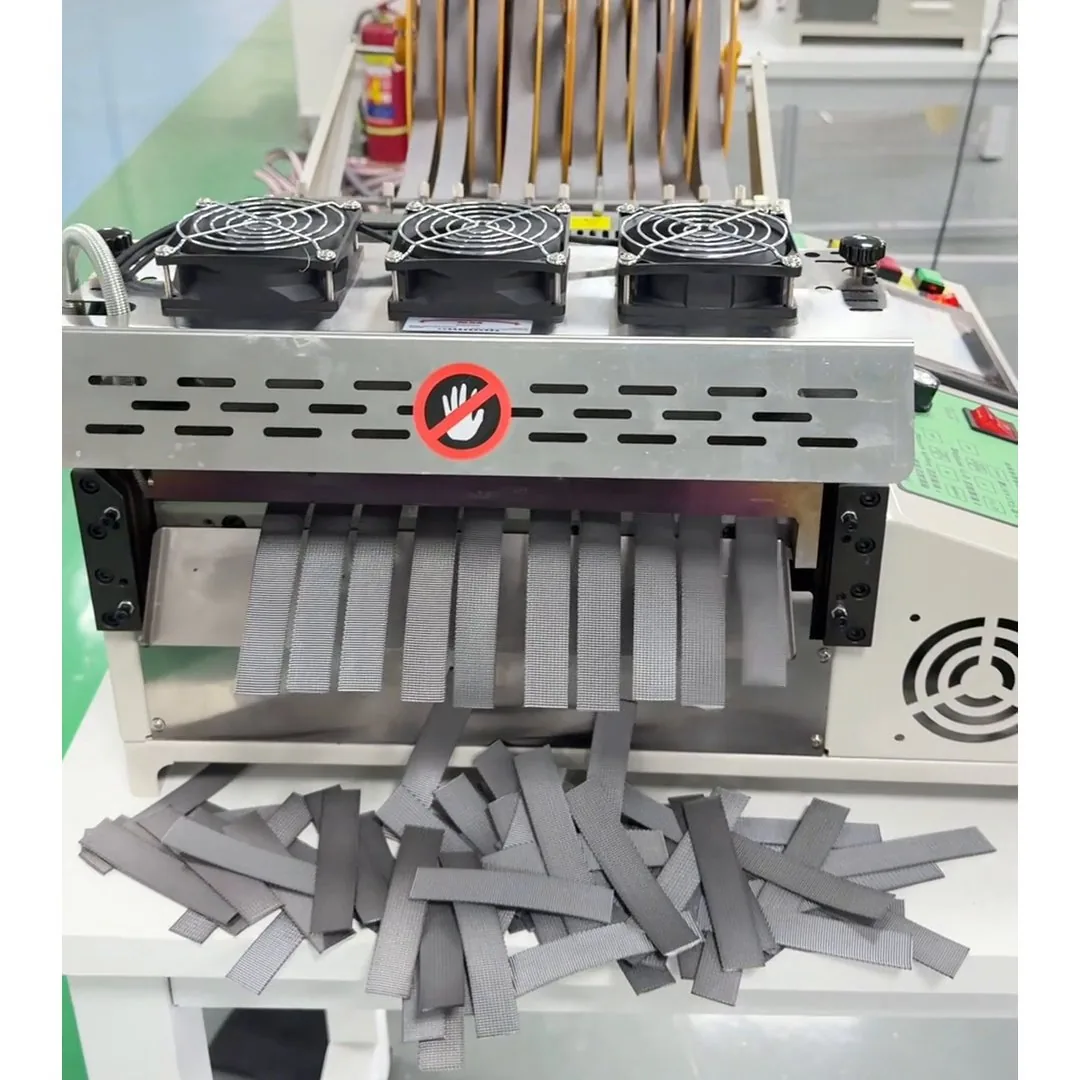
Same strap, ten lanes, one stroke
Parallel cutting suits orders where many straps share the same width and length. Each reel sits on its own holder behind the machine, and the strips pass through feed guides that keep every lane separate on the way to the blade. When the knife comes down, each lane gives one piece; in the video, that is ten straps per stroke.
How many lanes you can run depends on the width of your straps. The Model 320 lists a cutting width of up to 310 mm. That figure is the total across the machine, not the width of each lane, so add up the strap widths and the space the guides need between them before deciding how many reels to load. Narrow webbing loops and tabs leave room for more lanes than wide bag straps.
The end of the strap matters as much as the length
Nylon webbing and polyester webbing can fray at a cold-cut end, depending on the weave and finish. For webbing that responds well to heat sealing, the Model 320 can seal the ends as it cuts. Combining cutting and sealing can reduce the work of finishing each strap separately.
The machine also offers a cold knife for materials that should not be melted at the edge. Ribbon and other narrow fabrics vary in fiber and finish, so not every one seals the same way. Start with whether your strap needs a sealed end, then compare samples cut with suitable methods. Look at how neat and stiff the ends are, and whether they suit the sewing or assembly that follows.
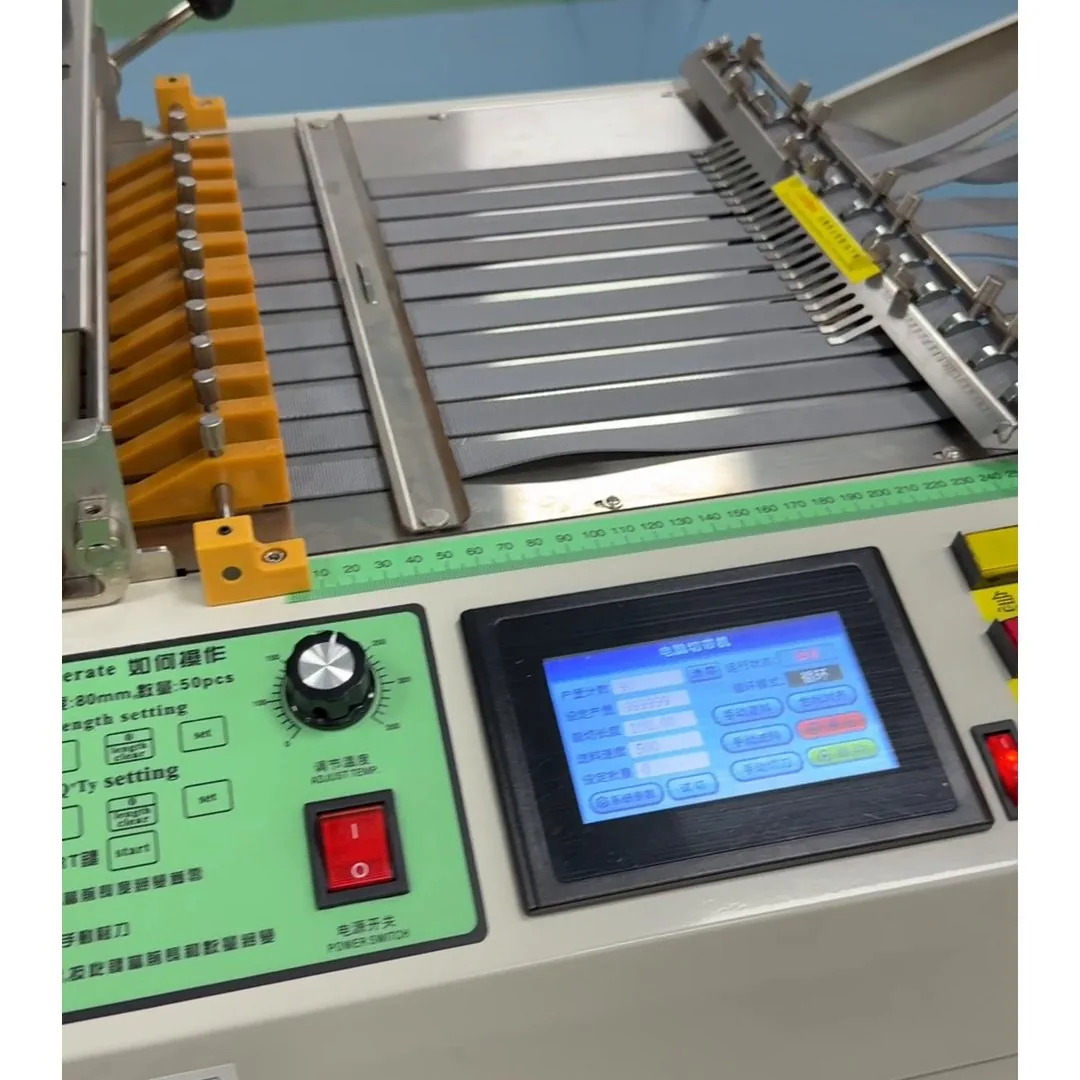
Setting up a repeat order
Cutting length, cutting speed and quantity are set on the touchscreen, which makes the Model 320 a practical webbing cutter and cut to length machine for repeat work: once a strap size has been set and checked, a later order for the same size can start from that setting. After changing reels, check the first pieces from every lane for length and edge quality. Reusing a setting reduces setup work, but smooth feeding and consistent cuts across the lanes are what make parallel cutting save time.
Speed, and where the straps go
The product information gives 110 pieces per minute, with a 50 mm cut length as the example. Treat it as a reference point, not a forecast for your job. Piece length, webbing thickness, hot or cold cutting and the number of lanes all change the real rate, and ten lanes do not simply multiply that figure by ten.
Collection deserves the same attention. In the video, the cut straps fall loosely at the outfeed, and with ten lanes they arrive quickly. Plan how they will be gathered, checked and packed, then run your own straps for a set time, count the good pieces, and include the collection time. That gives a working rate you can plan around.
Start with your own strap
Parallel cutting is worth considering for repeat orders of matching handles, tabs or webbing loops. The useful question is not just how many reels fit on the machine, but whether feeding, cutting and collection deliver consistent pieces ready for the next operation.
Send HESPER the material, its width and thickness, the cut length, the quantity per order and per day, and whether the ends must be sealed. Add a few meters of each strap for a test cut; the result shows how many lanes and which knife suit your order.
Discuss your webbing cutting job with HESPER · sales@hespermachine.com