
A clean cut means little if your material has already been stretched out of shape before it reaches the blade.
If you work with thin film, lightweight fabric or delicate nonwoven material, your first question may be simple: will the cutting machine pull my material too hard and damage it?
It can happen when the feeding conditions do not suit the material. But thinness alone does not tell you whether a machine will damage it. The material’s behaviour, the way it unwinds and the forces applied during feeding all need to be considered.
The most useful answer comes from a trial with your material—not from a general promise that a machine handles “thin materials.”
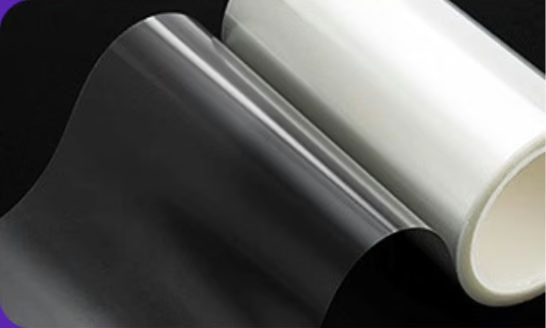
Look Beyond the Cutting Blade
When evaluating a cutting machine, watch the material’s entire path.
How does it leave the roll? Does it move smoothly through the guides? What happens when the feed starts, stops and starts again?
In roll processing, the pulling force applied along the material is called web tension. Excessive tension can stretch or break a web, while insufficient tension can allow slipping or unstable handling. The appropriate operating conditions depend on the material and process. Technical reference: Montalvo
That is why web tension control belongs in the equipment discussion, even when your main requirement is simply cutting to length.
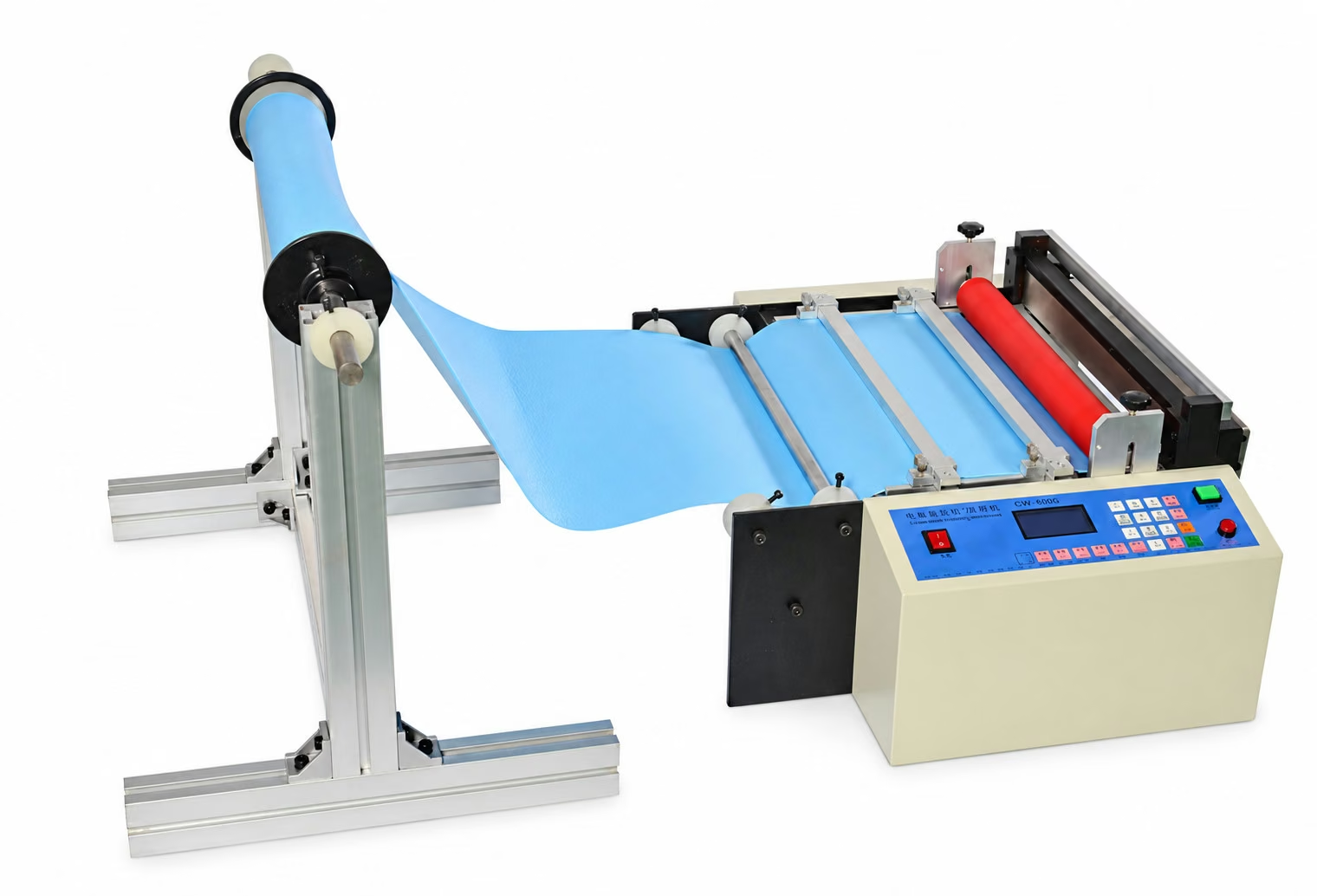
“Very Thin” Is a Starting Point, Not a Specification
Two materials with the same thickness may behave differently when pulled.
Before requesting a machine recommendation, provide the material name, thickness, width and roll dimensions. Mention any coating, adhesive backing or laminated structure. If the material stretches easily or arrives with damaged edges, include that information too.
Also explain what “damage” means for your product. A complete tear is easy to identify, but your acceptance criteria may also exclude permanent stretching, visible marks, creases or a change in finished dimensions.
A clear definition helps the supplier test the result you actually need.
Ask How the Machine Handles Your Material
Instead of asking only, “Can it cut this thickness?”, ask the supplier to explain the proposed feeding arrangement.
Useful questions include:
- How is material released from the supply roll?
- How are feeding pressure and pulling force managed?
- Which settings can be adjusted for this material?
- What happens during repeated starts and stops?
- How will the trial demonstrate that the material remains acceptable?
Do not assume that every automatic cutting machine includes measured, closed-loop tension control. Ask which functions are included in the proposed configuration and which require additional equipment.
For thin substrates, excessive or unstable tension can cause stretching and dimensional problems. Simply reducing tension as far as possible is not a universal solution either; the material still needs controlled handling. Technical reference: Dover Flexo Electronics
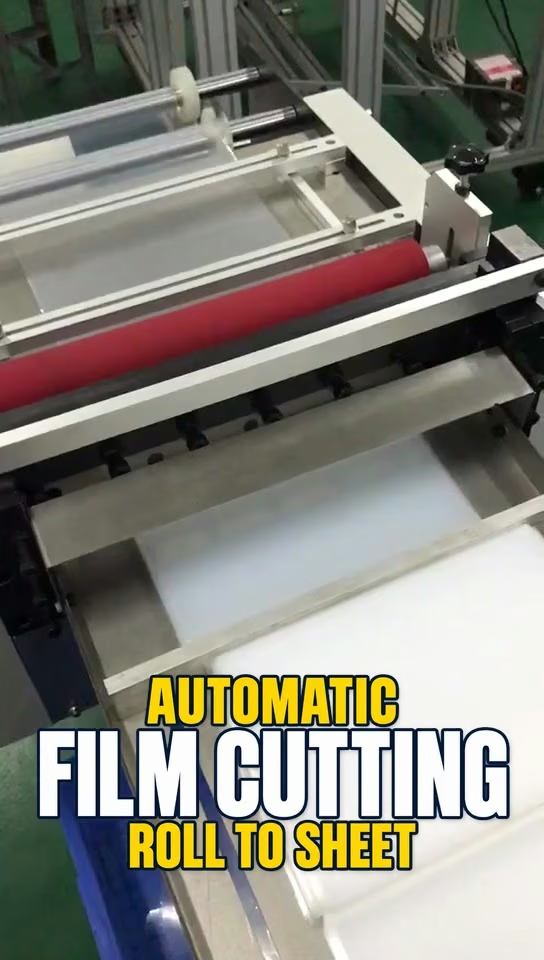
Inspect the Finished Piece After Feeding
A material can pass through a machine without tearing and still fail your requirements.
During the trial, inspect several consecutive finished pieces. Check their dimensions, surface condition and edges. Where stretching is a concern, agree on whether measurements should be taken immediately or after an agreed relaxation period.
Ask to see normal production conditions, including repeated feeding cycles. A single carefully selected sample does not show how consistently the machine will process a batch.
Record the settings used and the acceptance criteria. This makes the result easier to review and discuss.
Send a Sample Before Choosing a Configuration
For a HESPER equipment enquiry, send a representative material sample together with your required finished dimensions, tolerances and target output. Include photographs of any damage you currently experience.
Ask for a trial that shows both the feeding process and the finished pieces, so you can assess more than the cut edge.
Your material being thin does not automatically rule out machine cutting. The question is whether the proposed setup can feed and cut your actual material while keeping the finished part within your requirements.