
TAPE CUTTERS · STATIC
Narrow ribbon or tape that cuts fine on a humid day can start clinging to the blade, the outfeed and each other when the air is dry. The cause is static, and there is a cheap fix and a permanent one.
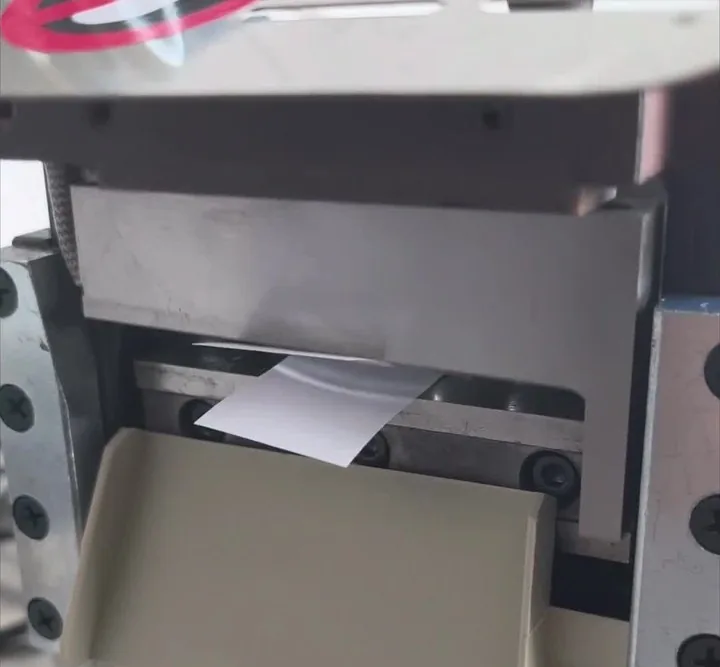
A tape cutter is chopping narrow red ribbon into short pieces. The length is right and the blade is sharp, but the pieces won't fall. They cling to the blade, hang off the outfeed, and stick to each other. Every so often one jams and the operator has to stop and clear it.
In the video, the cause is simple: the material is carrying static. That makes cut pieces stick to the blade and jam the outfeed. The video shows two ways to deal with it. One costs almost nothing and is ideal for trying out. The other is a permanent fix for machines that run this kind of material every day.
THE SHORT ANSWER
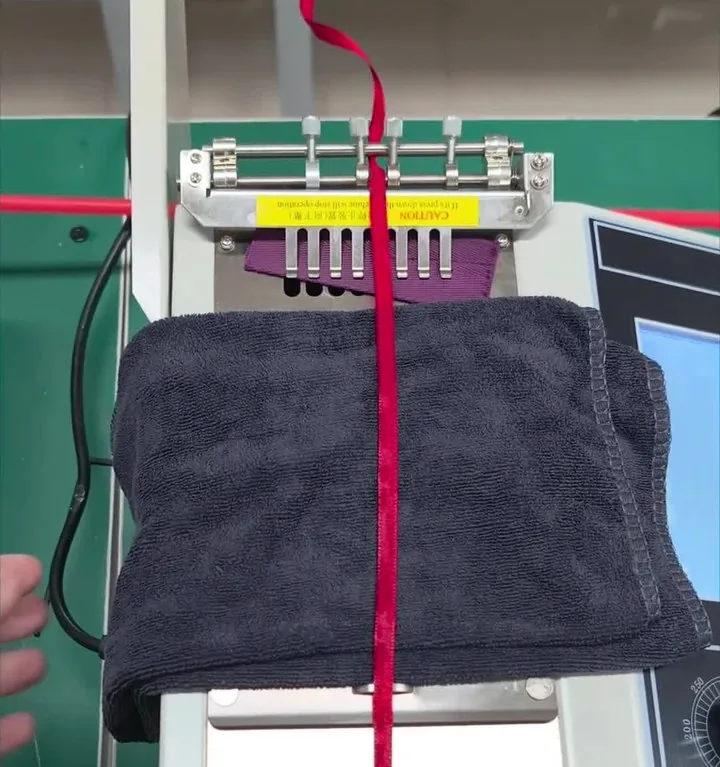
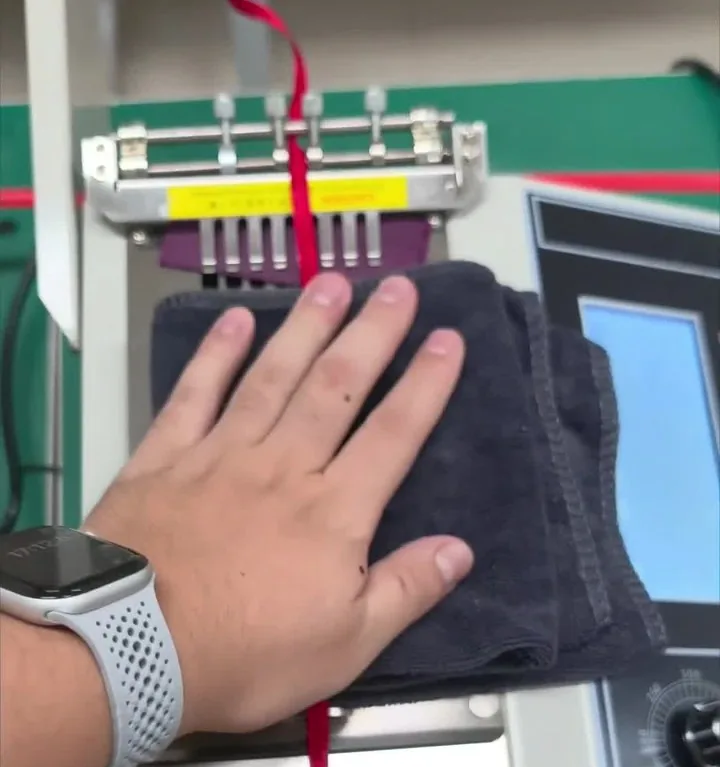
For a quick, low-cost fix, wet a towel, wring it out well, lay it under the strip at the feed side and fold it over so it wraps the material. The slight surface moisture lets the static dissipate, and the cut pieces release cleanly. For regular production, fit an ionizing bar near the cutting area. In the video it is mounted on the fan guard and neutralizes static continuously. Choose by material and how often you run it.
- 01 What static does
- 02 Why the strip charges
- 03 Fix 1: damp cloth
- 04 Fix 2: ionizing bar
- 05 Which to choose
- 06 Other checks
- → HESPER machines
- ? FAQ
01 · WHAT STATIC DOES
Pieces that won't let go
Static doesn't spoil the cut itself. It spoils what happens after the cut.
| What you see | Likely cause | What to change |
|---|---|---|
| Cut pieces cling to the blade | Static charge on the strip | Damp cloth at the feed side, or an ionizing bar |
| Pieces hang off the outfeed instead of dropping | Charged pieces attracted to the machine | Neutralize the charge before the cut |
| Pieces stick together in the box | Charged pieces attracting each other | Same fixes; check the air is not very dry |
| Occasional jams at the blade | A clinging piece is caught by the next cut | Clear the jam, then deal with the static |
| Problem worse on dry days | Low humidity lets charge build up | Plan for static control in dry seasons |
02 · WHY THE STRIP CHARGES
Friction, light material and dry air
As a strip unwinds and runs over guides and rollers, friction builds up a static charge. Light, narrow and synthetic materials show it most, because a small piece has little weight to pull it away from whatever it clings to. Dry air makes it worse, since there is less moisture to let the charge leak away.
03 · FIX 1: DAMP CLOTH
A wet towel at the feed side
This is the first method in the video, and the one to try first.
- Wet a towel and wring it out. It should be damp, not dripping.
- Lay it under the strip. Place it at the feed side, before the material reaches the rollers.
- Fold it over the material. Wrap the towel around the strip so it touches both faces as it passes through.
- Run and watch the outfeed. In the video, the material picks up a little surface moisture, the static drops, and the pieces now release cleanly.
The video calls this the more cost-effective method and suits temporary use. Keep the towel well away from the control panel, wiring and any heated knife, and re-wet it when it dries out. Check that your material can tolerate a little moisture before you rely on it.
04 · FIX 2: IONIZING BAR
A permanent static eliminator
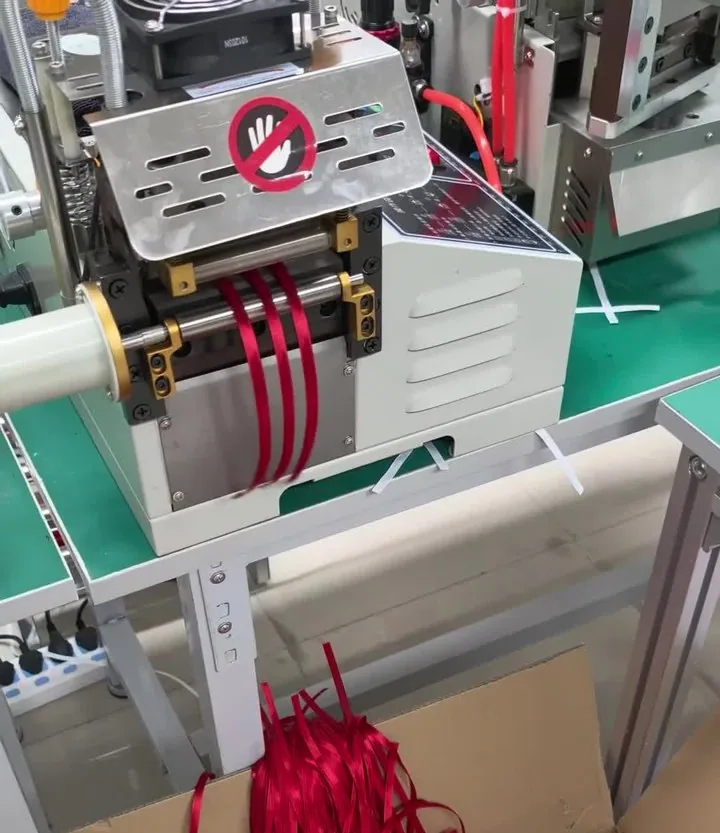
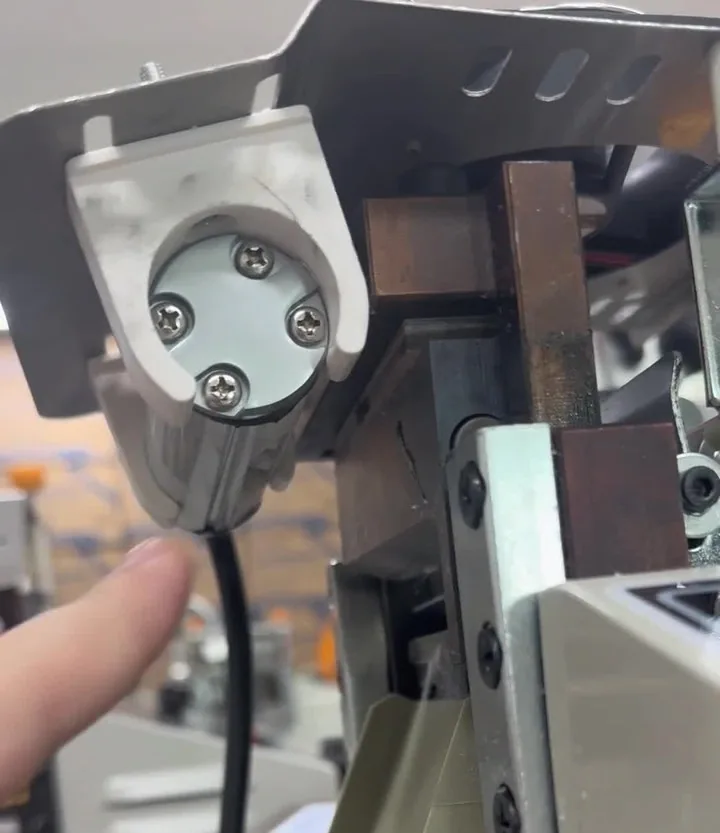
If you don't want to wet a towel every time, the video's answer is to buy a static eliminator once: a negative-ion bar, often called an ionizing bar or static bar.
- Mount it near the cut. In the video it is fitted to reserved mounting holes on the machine's fan guard.
- Let it run. Once installed, it neutralizes static continuously, so there is nothing to re-wet.
- Ask about mounting. Before you buy one, ask your machine supplier where it can be mounted and how it is powered.
An ionizing bar costs more up front than a towel, but for a machine that runs static-prone material every day, it removes the daily routine.
05 · WHICH TO CHOOSE
Match the fix to the job
The video's advice is to choose according to your actual needs.
- Occasional jobs or a first test. Use the damp cloth. It costs almost nothing and shows whether static is really the problem.
- Daily production of static-prone material. Fit an ionizing bar and stop worrying about it.
- Materials that mustn't get damp. Go straight to the ionizing bar.
06 · OTHER CHECKS
A few things that help either way
- Earth the machine properly. Make sure the machine is connected to a properly grounded outlet.
- Watch the room. Static is often worse in dry, heated or air-conditioned rooms.
- Keep the outfeed clear. A short drop into a collection box gives pieces less chance to cling.
- Test with your material. Some tapes charge far more than others. Run a short batch before a long one.
HESPER EQUIPMENT
HESPER hot and cold tape cutting machines
Four options, each listed with hot and cold knife cutting. Details and specifications are on the tape cutter page.
95 MM
95mm EconomyCutting width 1–95 mm. Button control panel for routine cut-to-length work.95 MM
95mm High-SpeedCutting width 1–95 mm. LCD and buttons.210 MM
210mm TouchscreenCutting width 1–210 mm for wider tapes and webbing.310 MM
310mm TouchscreenCutting width 1–310 mm for the widest strips.? FAQ
Tape cutter static questions
Why do cut pieces stick to the blade of my tape cutter?
Usually because the material is carrying static. Charged pieces cling to the blade, the outfeed and each other, and can cause jams.
How do I reduce static on a tape cutter quickly?
Wrap a damp, well-wrung towel around the strip at the feed side. The surface moisture helps the static dissipate.
What is an ionizing bar?
A static eliminator that neutralizes charge on the material as it passes. In the video one is mounted on the fan guard near the cutting area.
Damp cloth or ionizing bar: which is better?
The damp cloth is cheaper and suits temporary use. The ionizing bar costs more but works continuously, so it suits daily production.
Is it safe to use a wet towel on the machine?
Wring it out so it is only damp, and keep it well away from the control panel, wiring and any heated knife.
Why is static worse in winter?
Dry air holds less moisture, so charge has less chance to leak away.
Which materials are most affected?
Light, narrow and synthetic strips, such as thin ribbon and some tapes. Test your material with a short batch.
STATIC
Pieces Still Clinging?
Send HESPER a short video of the outfeed, with your material, its width and thickness, and the cut length. Seeing where the pieces cling is often the quickest way to choose the right fix.
Send your cutting video · See the tape cutters · sales@hespermachine.com