
Explore hot and cold tape cutting machines
Some orders call for thousands of short pieces rather than long straps: belt loops, hanging tabs, pull tabs and small webbing loops for bags and outdoor products. Each piece is short, but there are many to prepare. Cutting one strip at a time means repeating the same blade stroke for every piece. When the sewing line is waiting for those loops, cutting becomes a preparation bottleneck.
This demonstration shows an approach worth considering: feed two narrow strips side by side through one tape cutter and produce two pieces with each cut. For large batches of short webbing of the same length, saving time is not only about making the blade move faster. It can also mean getting another piece from each cutting cycle.
Shorter pieces still need the same number of cuts
A shorter piece reduces the distance fed in each cycle, but it still needs a cut. As the order quantity grows, those repeated cycles add up to a substantial part of preparation time.
Adding a second strip allows a cycle to produce two pieces instead of one. That is the value of cutting two strips together for short-piece orders. How much time the entire batch saves also depends on stable feeding, roll changes and collection. The useful comparison is how soon the same batch of acceptable pieces can reach the next process.
Two strips need to feed steadily, not just fit
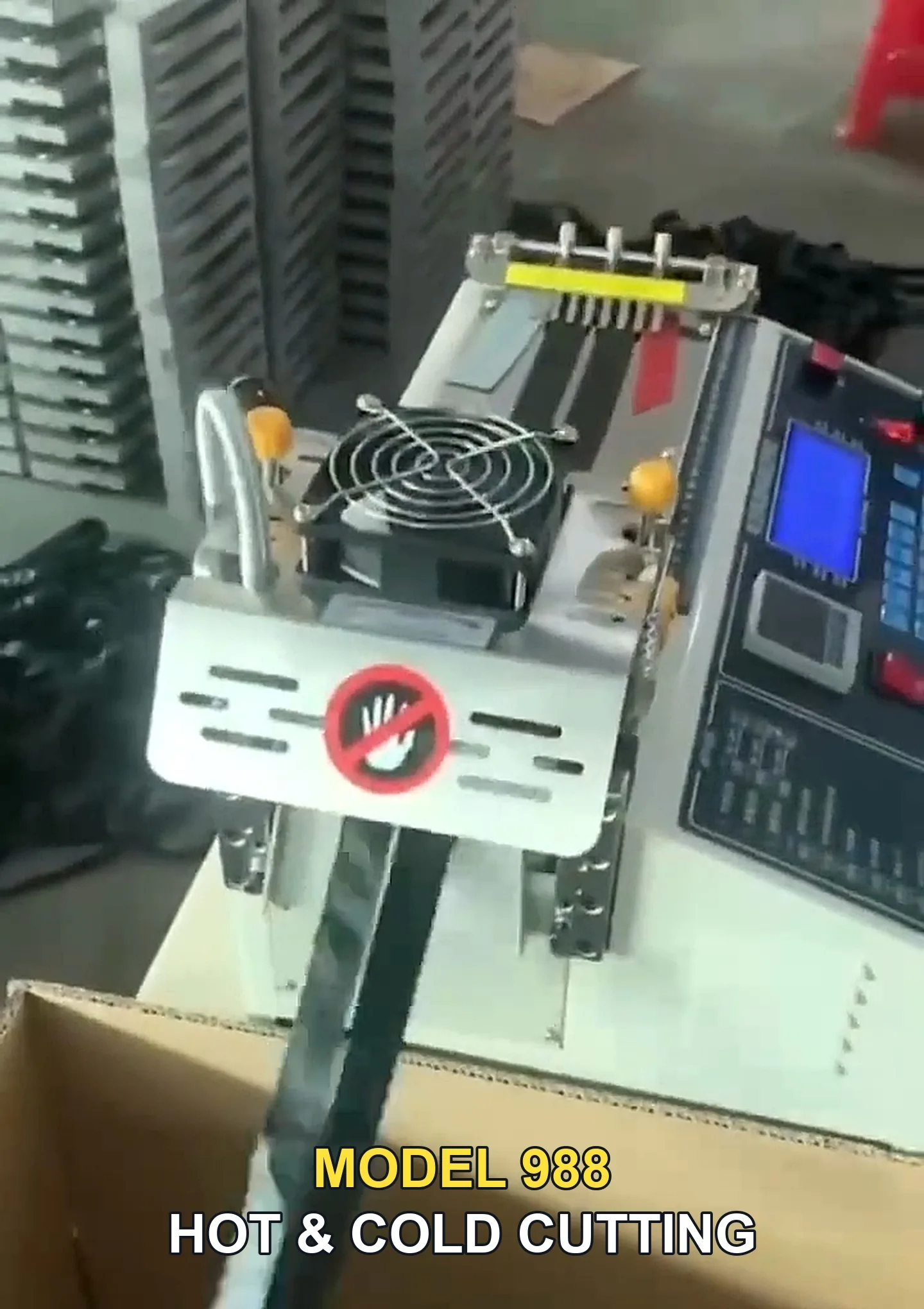
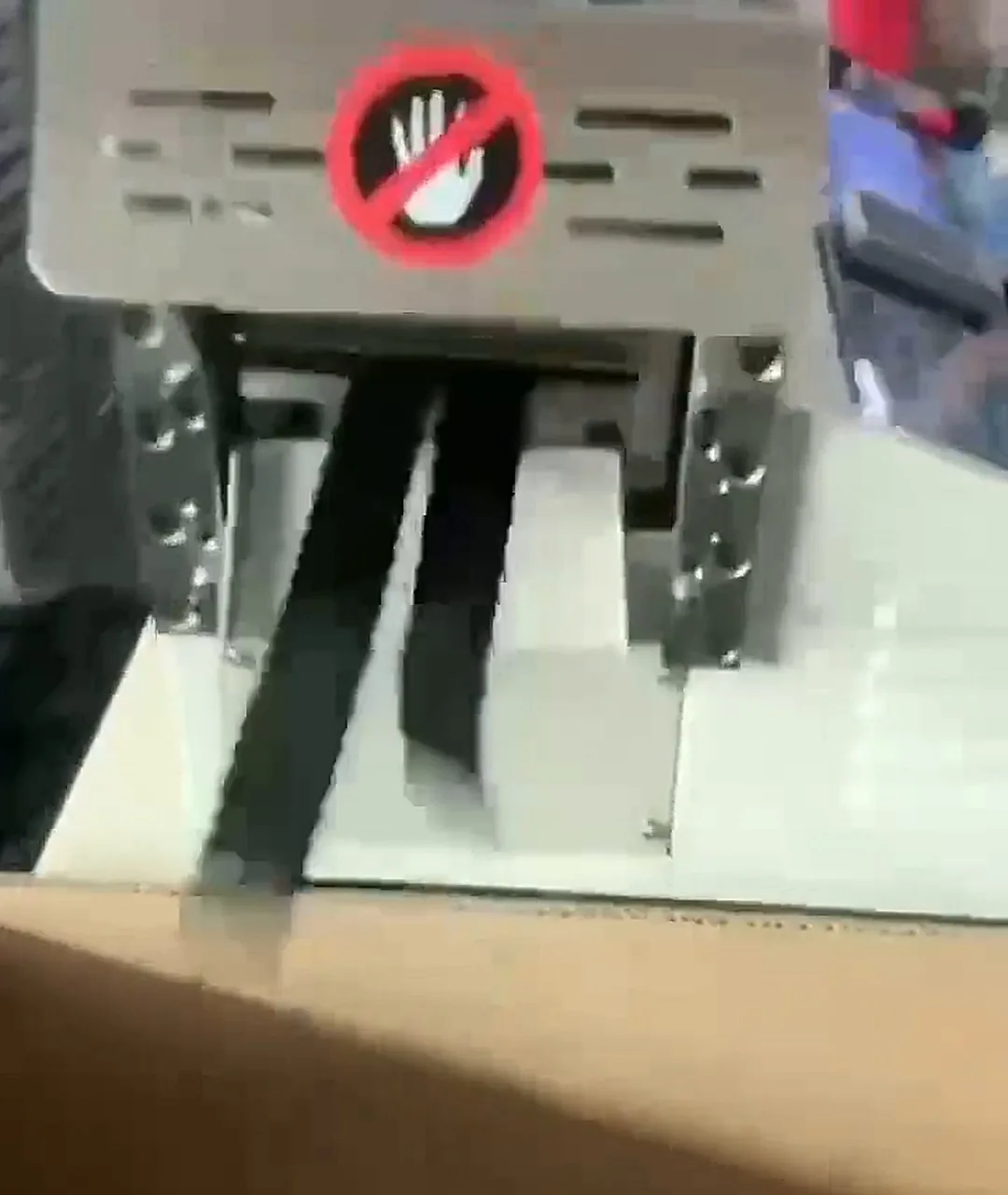
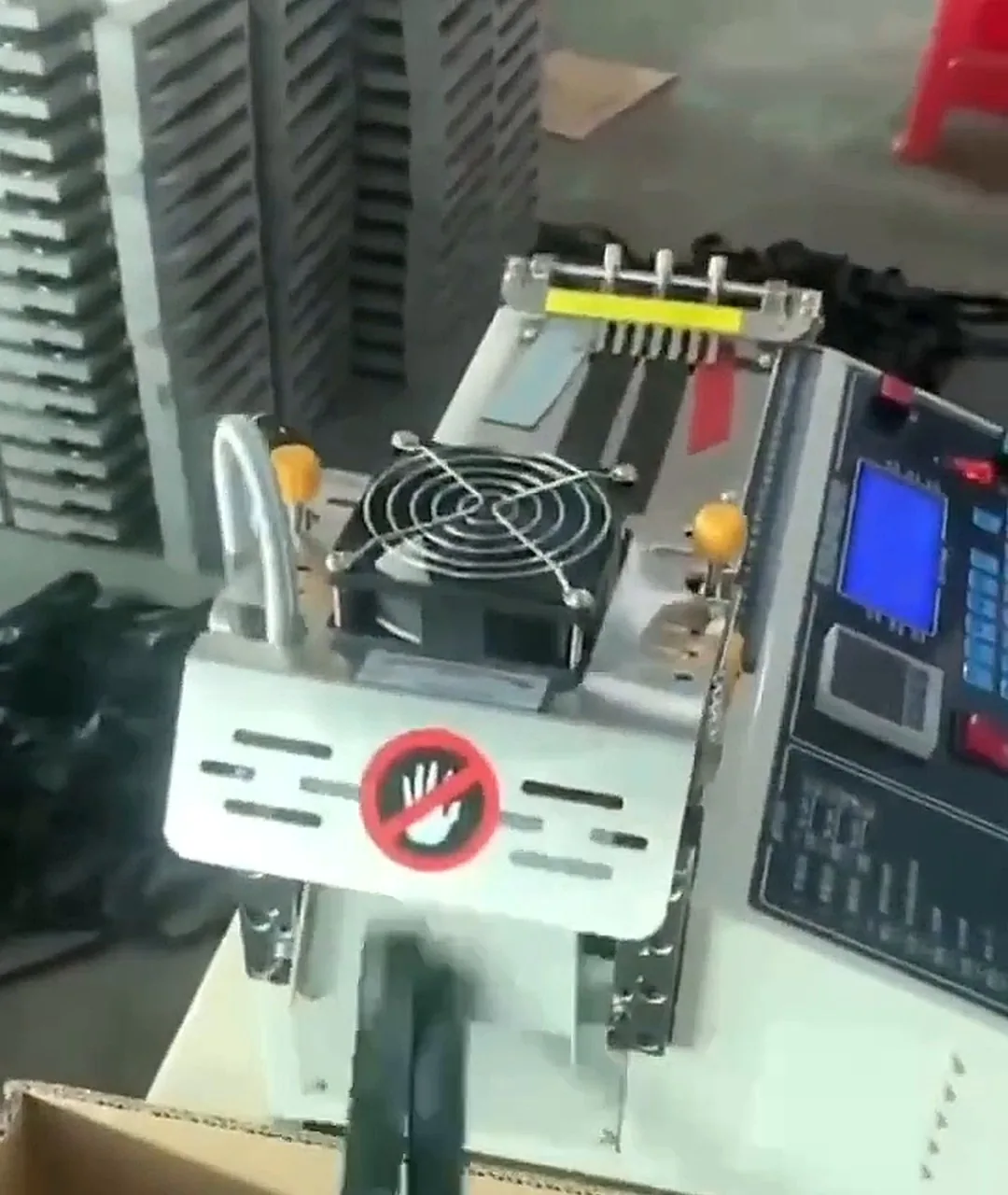
The demonstration shows a yellow guide bar at the infeed, two strips running side by side and a collection box below the outlet. This arrangement lets both strips share a feed movement and a cut.
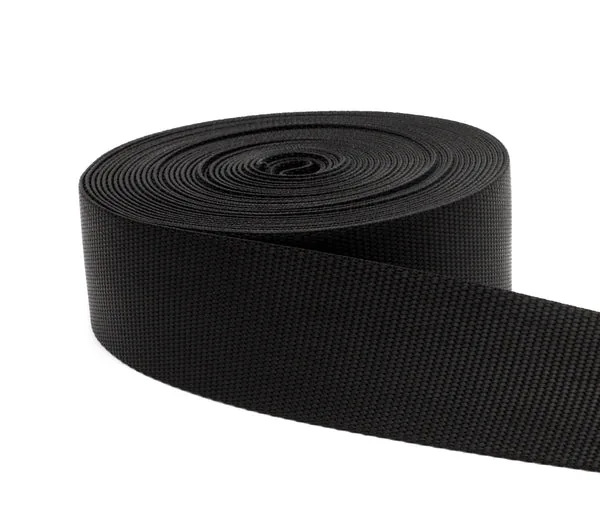
Narrow webbing takes up less space across the infeed, making it easier to fit two strips while leaving room for guides and a gap between them. Fitting is only the first consideration. Similar material and thickness make it easier for both strips to use the same feeding settings. If one strip is stiffer, thicker or prone to slipping during feeding, the two may behave differently.
This makes the approach more suitable for repeat orders with the same target length. If each strip needs a different cut length, a shared feed movement and blade stroke will not suit that requirement. Even with one setting, pieces from both feed positions need to be measured to see whether feeding or material recovery affects their actual length.
The cut ends must work for the sewing process
Short pieces often have to be folded into loops, threaded through hardware or sewn into a seam. Their ends affect the next operation, so the choice between cold and hot cutting should follow the finished application.
On suitable heat-sealable synthetic webbing, a hot knife can seal the ends as it cuts, helping reduce fraying. This can matter for exposed pull tabs that are handled frequently. Cold cutting is also worth considering when the ends will be folded into a seam: whether the material frays during handling and folding matters more than how the fresh cut looks beside the machine. With hot cutting, the stiffness of the fused edge also matters if it affects folding or needle penetration.
Trying a few sample pieces at the actual sewing station often makes it easier to decide which finish suits the order than looking at the cut edge alone.
Keep the saving from disappearing into rework and sorting
The same length variation represents a larger share of a short piece and may affect the seam allowance left after folding. When a new roll is loaded, measuring several pieces from each feed position and checking both ends can help reveal a difference between the two feeds.
Collection also affects efficiency. If two strips of different colours or from different orders fall into one box, they may need sorting later. Planning separate collection helps preserve the time saved at the cutter. This is simpler when both strips are the same material, size and order.
Start with the short pieces your order actually needs
If preparing large quantities of identical loops, tabs or short straps is the bottleneck, send HESPER the webbing's fibre composition, width and thickness, target cut length, acceptable length variation and approximate daily quantity. Include material photos, the finished application and whether the ends need sealing to help assess side-by-side feeding.
We can then agree on a sample length and measure, fold and sew pieces from both feeds. The question is not just whether one stroke can cut two strips. It is whether the batch can move more smoothly into the next operation.
Send your webbing requirements to HESPER · sales@hespermachine.com