
When a batch of webbing needs to be cut to the same length, the cutting stroke is not always what takes the most time. It is often the repeated preparation: pull out a length, line it up, cut it, set it aside, and start again. Meanwhile, the sewing or assembly station is waiting for material.
Several strips of webbing can be cut side by side. When the materials and cutting requirements suit the same batch, separate rolls can feed into the cutting area together and be advanced and cut in one cycle. For work that regularly calls for equal-length straps, it is worth considering how many strips can be processed together, as well as how fast the blade moves.
Bring repeated preparation into one operation
In the demonstration, several gray strips unwind from the rear roll stand and enter the feeding area side by side. As the machine runs, they advance together, are cut at the same blade, and fall into a cardboard collection box below.
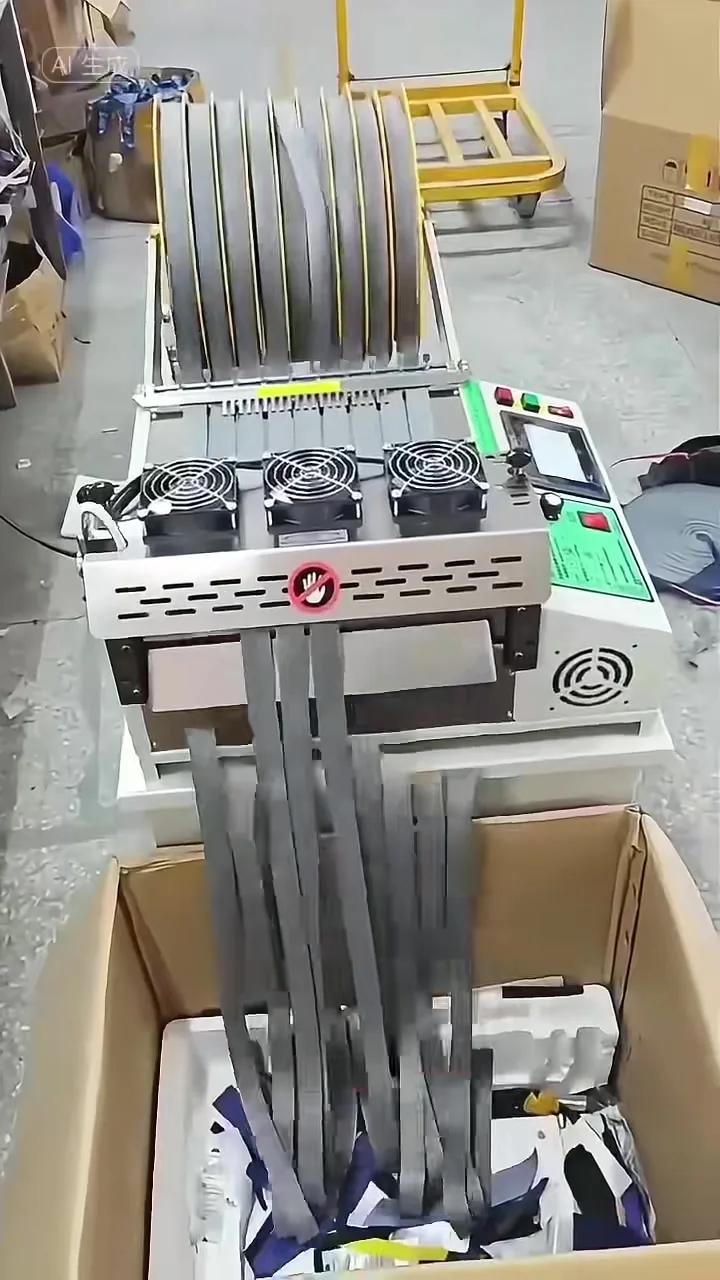
This is the value of parallel cutting: feeding and cutting operations that would otherwise happen separately can happen together. It is particularly relevant when a batch needs one length before moving on to sewing or assembly.
For example, when preparing a batch of connecting or fastening straps of the same size, the question is not simply whether the machine can cut them. The operator also needs a steady supply of material, manageable collection, and pieces that the next workstation can readily use. Cutting several strips together should serve those needs, rather than merely put more rolls behind the machine.
How many strips fit depends on the feeding layout
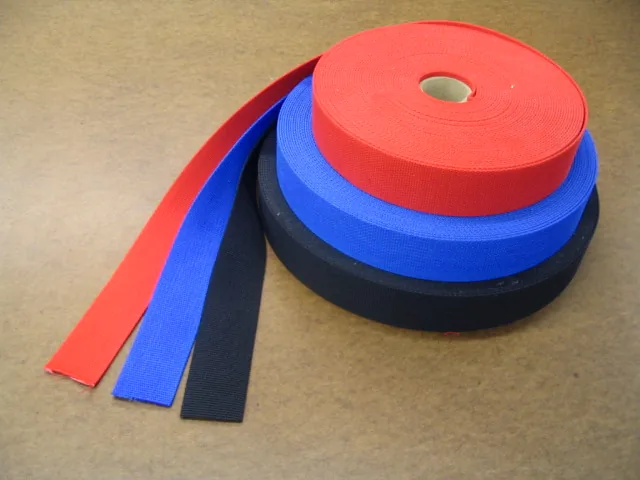
One demonstration describes cutting nine strips at once. That illustrates the possibility of parallel processing, but the number that fits your own material still depends on strap width and the feeding arrangement.
Narrow and wide straps take up different amounts of space. The guides and the gaps between strips also need room. If strips are crowded together or overlap during feeding, fitting them into the machine at the start will not be enough to keep the batch running smoothly.
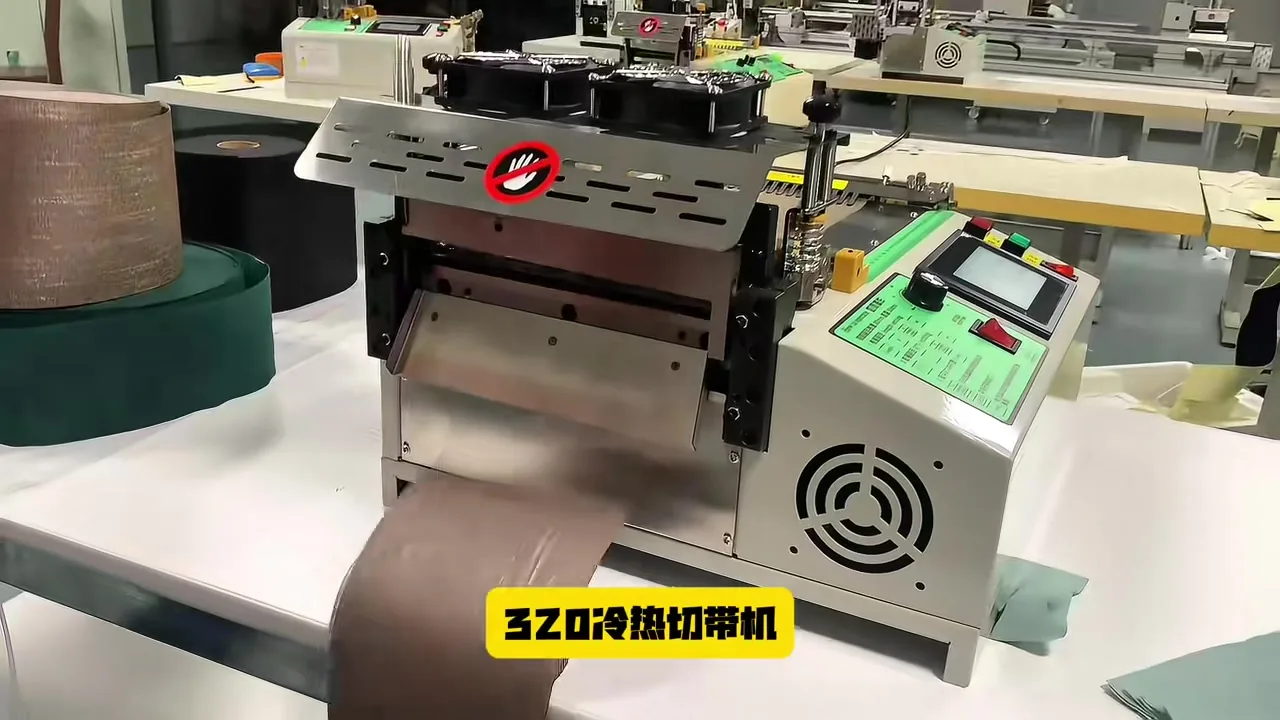
The video describes a cutting width of 30 cm. When choosing a machine, consider the webbing widths, the gaps between strips, and the space needed for the guides together, then compare that layout with the machine's effective working space.
The strips shown share the same feeding and cutting rhythm, so the arrangement suits a common target length. When different lengths are needed, preparing separate batches by length is more practical. Materials processed together should also have similar feeding and end-finishing requirements.
Every strip needs to feed smoothly
Once strips are feeding side by side, pay attention to each individual lane.
One roll may unwind freely while another is held back by a folded edge, a guide, or resistance at the roll. The strips may then feed differently. With elastic material, tension during feeding can also affect the relaxed length after cutting. It is therefore useful to look beyond the neat row in front of the blade and check how freely the material unwinds behind it.
At the start of a new batch, collect pieces from each lane and check their lengths and ends separately. Then observe whether continuous running requires frequent attention to the rolls. This helps establish whether the chosen number of lanes works well, or whether feeding one or two fewer strips makes the whole batch easier to complete.
What matters is obtaining pieces that the next process can use. If cutting is followed by extensive sorting, recutting, or regrouping, the extra lanes may not deliver the time saving you wanted.
The cut end must suit the next process
Even with webbing, different uses call for different edge finishes.
Some pieces pass through buckles, some fold back for sewing, and others retain exposed ends. For synthetic webbing suitable for heat sealing, a hot knife can finish the edge as it cuts and help reduce fraying. For material requiring a mechanical cut without heat, cold cutting may be appropriate. The choice should reflect the actual fiber composition, webbing construction, and intended use of the end.
When discussing parallel cutting, explain both the required length and what happens to the pieces afterward. Length alone may not establish the right cutting method. Sewing, threading through buckles, or assembly requirements help define the finish the material needs.
For more on end finishing, see how to choose hot or cold cutting for webbing. Parallel feeding addresses batch preparation; hot or cold cutting addresses the needs of the cut edge. Both decisions belong in the same discussion.
Measure time savings across the whole batch
The number of pieces falling from one cutting stroke does not, by itself, tell you how much time an entire order will save.
Loading rolls, threading strips, changing rolls, collecting pieces, and organizing them all take time. If batches are small or lengths change frequently, setting up several rolls also requires effort. If you regularly process the same material to the same length, parallel cutting is more worth evaluating.
Compare the work using an actual batch: how long does it take from loading material to having usable pieces ready for the next workstation, and how often does an operator need to intervene? This gives a more useful picture of daily workshop work than blade speed alone.
Collection matters too. Pieces of the same material and specification are easier to collect together. If colors, orders, or uses must remain separate, plan collection and grouping in advance so that time saved during cutting is not lost in sorting afterward.
Start with your webbing and your orders
If preparing large quantities of equal-length webbing one strip at a time is taking too long, start by evaluating the feeding and cutting configuration of the HESPER hot and cold tape cutting machine.
For an enquiry, send photos of your webbing, its material composition, width and thickness, target length, and quantity per batch. Include how many strips you would like to cut together, whether the ends need heat sealing, and whether the pieces will be sewn, threaded through buckles, or used in another assembly process.
Starting with the batch and the needs of the next process makes it easier to choose a suitable number of lanes, feeding arrangement, and cutting method.