
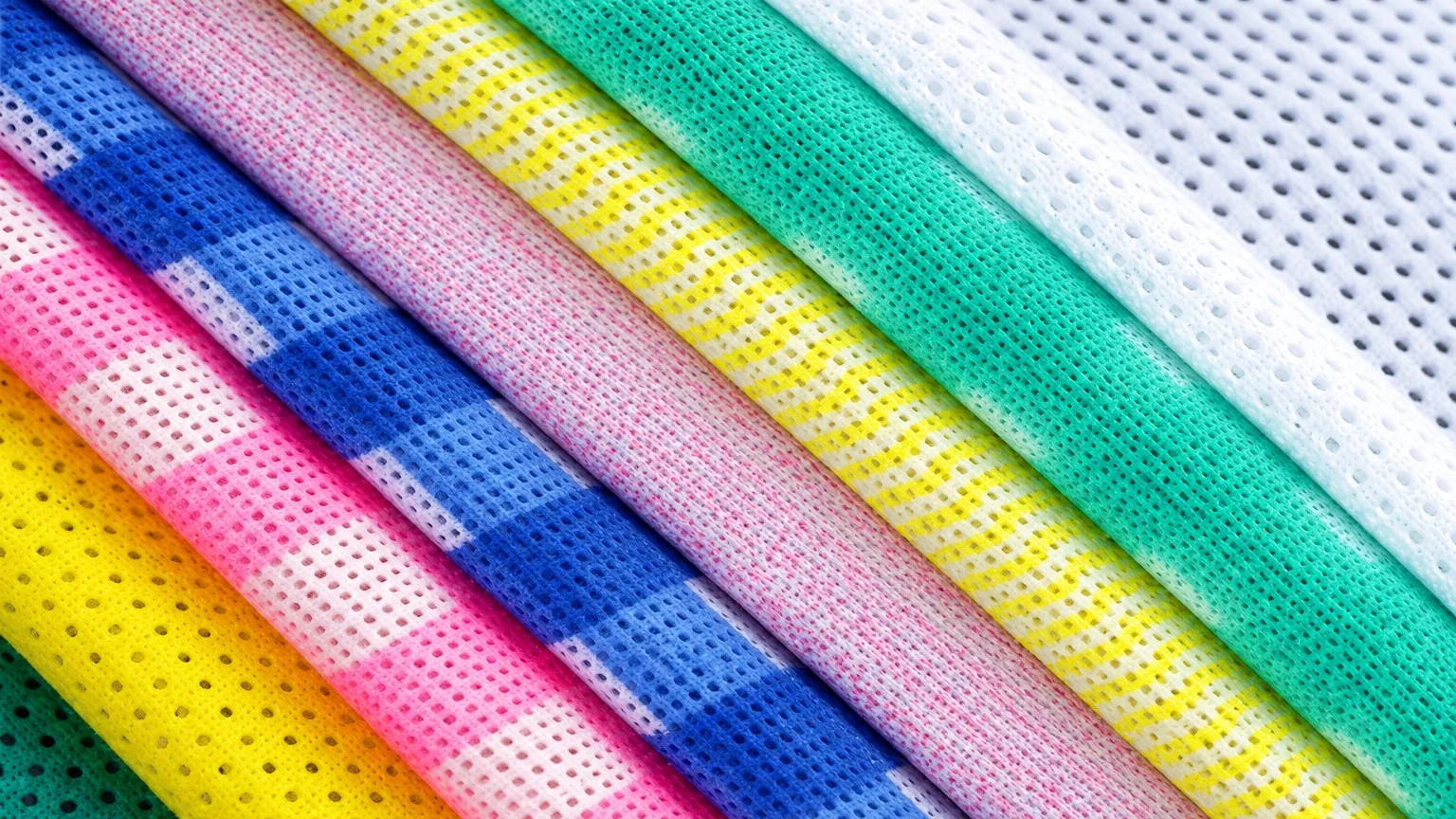
A knitted fabric piece can match the programmed length and still fail in production. An edge may curl, the piece may recover shorter after feeding tension is released, or the courses may sit at an angle to the cut. These are different problems. Treating all three as “inaccurate cutting” encourages random machine adjustments and weak acceptance tests.
A useful buying test starts with the actual roll and defines how the relaxed part will be measured. It should separate material behaviour from roll handling, feeding, cutting and inspection.
1. Name the Defect Before Changing Settings
Place a freshly cut piece on a flat surface without stretching it. Record the time after cutting, machine direction and measuring method. Describe what is visible before assigning a cause.
| Observed condition | What to record | First investigation |
|---|---|---|
| Edge curl | Which edge rolls, direction of curl and time after cutting | Knit construction, edge release and handling after the cut |
| Length recovery | Length immediately after cutting and after an agreed relaxation period | Feed tension, roller pressure and the agreed measurement condition |
| Skewed courses or wales | Angle or offset against the selected datum | Incoming roll alignment, winding condition and lateral guidance |
| Uneven or damaged edge | Edge appearance, pulled loops and repeated location | Blade condition, material support and cutting setup |
Curl can follow release of a knit edge. Skew may already exist in the roll. Length recovery may come from feeding or inspection. A trial should reveal these differences rather than hide them behind an average.
2. Follow the Complete Roll-to-Part Path
Trace the sequence: roll support, pre-feeding, guidance, feed rollers, optional slitting, cross-cutting and collection. Watch at normal speed and during starts and stops. The roll should release without abrupt drag. Guides should control lateral movement without folding a soft edge. Feed contact should advance the web without visible slip or unnecessary extension.
Mark a reference line across the relaxed fabric before the feed zone when practical. Its condition after feeding can help show whether the web is being pulled unevenly. At the outlet, do not stretch the piece to make it lie flat. Support curled parts gently and preserve their production order for inspection.
3. Build a Material Record That Explains Behaviour
“Knitted fabric” is not a complete purchasing specification. Record the construction, fibre composition stated by the material supplier, roll width, thickness, mass if known, surface finish, elasticity in each direction and recovery after extension. Add roll outside diameter, core size, winding direction, splice locations and whether edges are already curled on the incoming roll.
Photograph the roll and a relaxed piece beside a scale. Identify the machine direction and measurement datum. If the fabric is laminated or coated, send the production construction; a plain substitute may behave differently.
4. Run a Sample Test That Can Locate the Cause
Use a representative production roll, not a hand-cut swatch. Agree on target length, edge condition, sample quantity and relaxation time before the trial:
- Inspect and photograph the roll before loading, including existing curl or skew.
- Record roll orientation, guide position, feed pressure, programmed length and cutting arrangement.
- Collect consecutive parts near the beginning, middle and later portion of the roll.
- Measure each part in the agreed relaxed condition, without pulling it straight.
- Record length, width, course alignment, edge curl and cut appearance separately.
- Repeat after one normal roll or size change to check setup repeatability.
Keep individual results. A gradual change through the roll suggests a different investigation from random outliers. Record every setting change and retain before-and-after samples.
5. Match the Evidence to HESPER’s Real Configuration
The HESPER Fabric & Nonwoven Slitting and Cross-Cutting Machine combines a floor-standing bearing roll stand, roll feeding, longitudinal slitting and cut-to-length cross-cutting. Its Chinese/English LCD and keypad allow length, speed, total quantity, batch quantity and pause time settings. The documented feed arrangement uses rubber rollers with pressure adjustment at both ends. Pre-feeding uses a variable-speed AC motor with rotary speed control and photoelectric sensing.
Those controls create useful setup points, but every knit is different. Roll width, thickness, stretch, surface and finished dimensions must be checked against the actual material. HESPER lists width specifications from 300 to 1600 mm; these support initial model selection, not a universal result guarantee.
Use the feeding-system inspection guide to examine guides, roller contact and repeatability during a sample trial. Do not approve the configuration from an unloaded cycle or catalogue maximum alone.
6. Define Options by the Finished Part
Describe any requested function as an output requirement. State whether the job needs longitudinal strips before cross-cutting, a particular collection method, a special end profile or integration with another operation. Supply a dimensioned drawing and acceptable samples. These requests should be reviewed as application requirements; they must not be assumed to be standard equipment.
If curl prevents stable stacking, specify the acceptable collection condition rather than asking vaguely for “anti-curl.” If alignment matters, show the course or printed feature used as the datum. This gives the supplier a measurable problem to evaluate and exposes requirements that a standard length setting cannot solve.
Frequently Asked Questions
Can roller pressure remove knitted-fabric curl?
Not necessarily. Pressure is a feeding variable, while curl may come from the knit construction and edge release. Excess pressure can also mark or distort some fabrics. Evaluate pressure with the real material and inspect the relaxed part.
Should cut pieces be measured immediately?
Record an immediate result if it is useful, but define a consistent relaxation time for acceptance. The buyer and supplier must measure under the same condition.
Does a straight machine cut guarantee straight courses?
No. The cutting line and the fabric structure are separate references. Incoming skew, uneven winding or lateral movement can leave courses angled even when the blade path is straight.
What should I send for a machine trial?
Send a production roll, material specification, roll and core dimensions, target part drawing, tolerance, relaxed measurement method, acceptable edge examples, batch requirement and photos of current defects.
Send HESPER a Measurable Knitted-Fabric Requirement
Use the HESPER project enquiry to share your roll data, finished-part drawing, defect photos and proposed acceptance sheet. HESPER can then review the real material path, model width and trial requirements before a configuration is confirmed.