
TAPE CUTTERS · CHOOSING
Both machines heat the blade, and both can seal a synthetic strip. The difference is how they part the material. One shears it like scissors, and the other melts through it. That decides which materials each one suits and how firm the sealed end will be.
A workshop cuts nylon webbing for bag straps, a run of zipper tape for another order, and hook and loop tape most weeks. The buyer is comparing two tape cutters that look almost the same. Both have a heated blade. Both are described as hot cutters. But the samples come back different, and nobody can say why.
The answer is in how the blade meets the strip. The video puts a hot and cold tape cutter next to a hot-only one and shows the structure of each, and the ends they leave behind. This guide walks through the same comparison, so you can match the machine to your materials rather than to the brochure.
THE SHORT ANSWER
A hot and cold tape cutter shears the strip between an upper and a lower blade, like scissors, while the upper blade is heated. It seals synthetic webbing so it doesn't fray, cuts zipper tape, and can cut materials such as hook and loop tape cold. A hot-only cutter presses a heated upper blade down onto a holder and melts through the strip, leaving a firmer melted end. If you cut many different materials, choose hot and cold. If you cut one synthetic material and the sealed edge matters most, a hot-only cutter is the closer fit.
- 01 Two ways to cut
- 02 Hot and cold
- 03 Hot only
- 04 Compare the ends
- 05 Which to choose
- 06 Material check
- → HESPER machines
- ? FAQ
01 · TWO WAYS TO CUT
Shearing versus melting through
Every tape cutter with a heated blade does two jobs at once: it parts the strip and it heats the cut end. What changes between the two types is the first job.
- Shearing. Two blades pass each other and cut the strip between them. Heat on the blade seals the end as it cuts.
- Melting through. One heated blade presses down onto a fixed holder. The strip is parted by heat and pressure together, so more of the end is melted.
That one difference explains why a hot and cold cutter handles a wider mix of materials, and why a hot-only cutter leaves a firmer edge on the materials it suits.
02 · HOT AND COLD
A heated pair of scissors
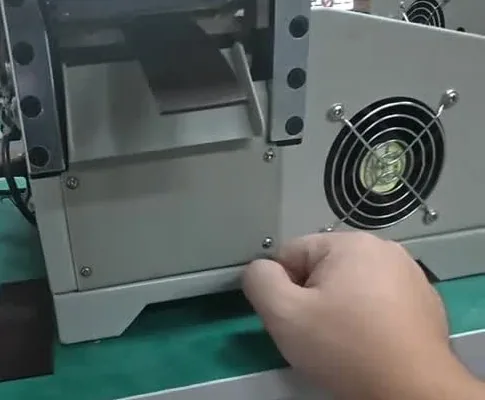
In the video, the hot and cold tape cutter is described as working just like a pair of scissors. An upper and a lower blade close on the strip and shear it, and the blades have a slight arc to them.
- The upper blade heats. It cuts and heats at the same moment, so a synthetic strip comes out with a sealed end.
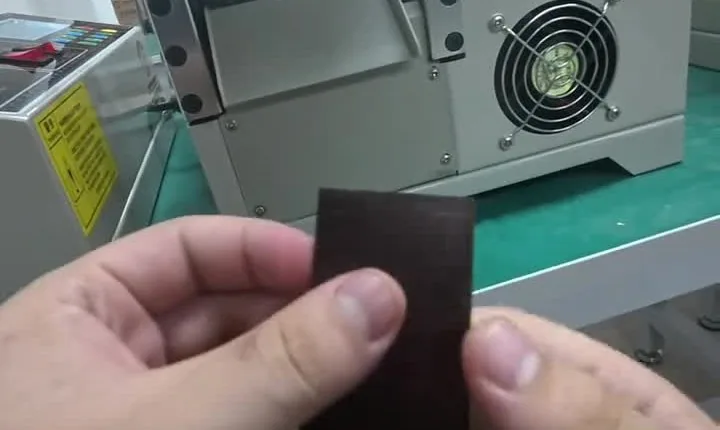
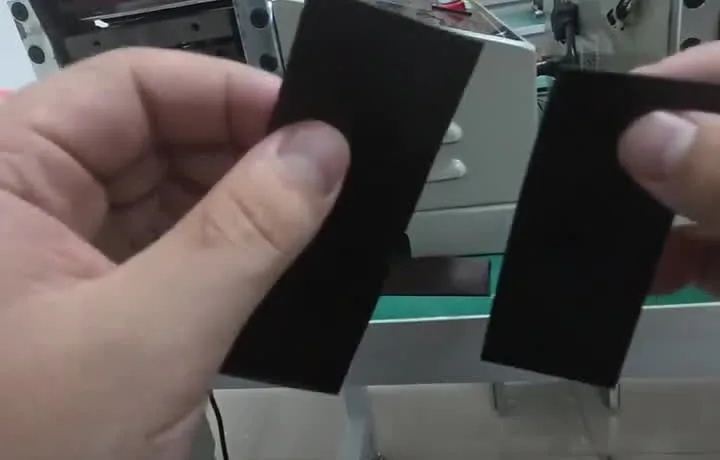
- Webbing doesn't fray. In the video a cut piece of webbing is held up to show the sealed end.
- It cuts zipper tape too.
- Some strips are cut cold. The video's example is hook and loop tape, a material it treats as a cold-cut job.
The strength of this design is range. One machine can seal webbing, cut zipper tape and cold-cut hook and loop, which suits a workshop whose orders change from week to week.
03 · HOT ONLY
A heated blade pressed onto a holder
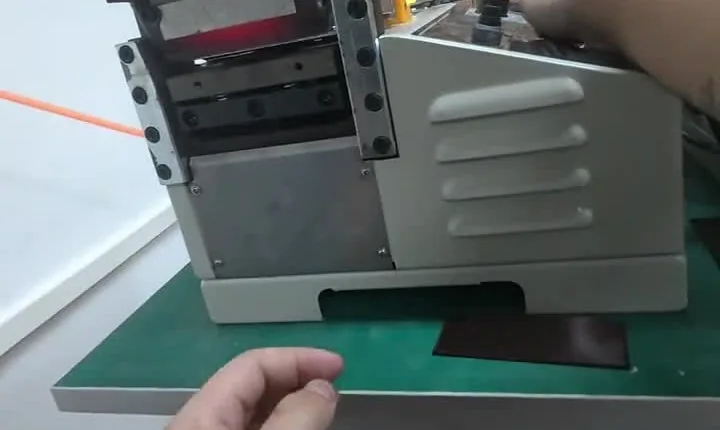
The hot-only cutter in the video is built differently. Instead of a lower blade, the lower part is a knife holder.
- The holder supports the strip. In the video it is described as the part the upper blade presses against.
- The upper blade heats. It comes down onto the holder and presses through the material.
- The cut is a melt. As the video puts it, you can think of the strip as being scalded through rather than cut.
04 · COMPARE THE ENDS
What the two ends look like
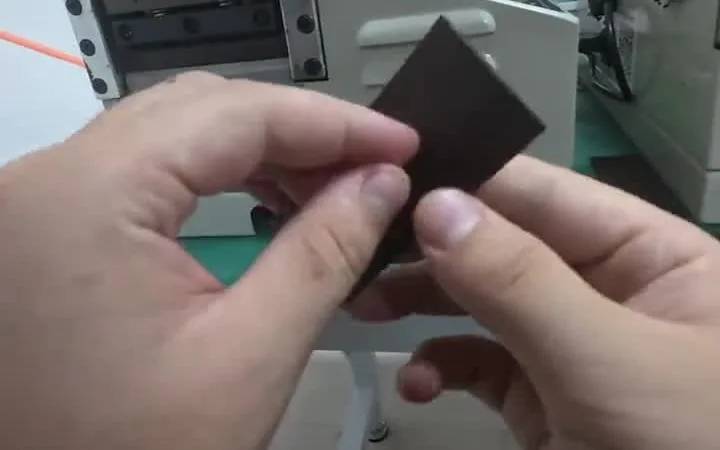
In the video, the end left by the hot-only cutter is held up and compared with the hot and cold cut. The melted end from the hot-only cutter is described as firmer than the hot and cold seal.
The video sums it up in one line: one machine cuts the strip off, the other melts it off.
| What you need | Better fit | Why |
|---|---|---|
| Many different materials on one machine | Hot and cold | Shears like scissors, seals synthetics and can cut cold |
| Webbing that must not fray, plus other jobs | Hot and cold | Cuts and heats at once, so the end is sealed |
| Hook and loop tape | Hot and cold | Can be cut cold, as in the video |
| Zipper tape | Hot and cold | Shown cutting zipper tape in the video |
| One synthetic material, with the firmest sealed edge | Hot only | Melts through, leaving a firmer melted end |
05 · WHICH TO CHOOSE
Start with your material list
The video's advice is simple, and it is the right place to start.
- Many materials, choose hot and cold. It suits most materials, and it gives you both hot and cold cutting.
- One material and a perfect sealed edge, choose hot only. If you run a single synthetic strip and the edge finish is what your customer judges, the melt-through cut is the closer fit.
Before you decide, list what you cut now and what you expect to cut next year. A machine bought for one material often ends up running three.
06 · MATERIAL CHECK
Will your strip seal at all?
Heat only seals a strip that melts. That is worth checking before you compare machines.
- Synthetics such as nylon, polyester and polypropylene are thermoplastics. They soften with heat, so a heated blade can seal the end.
- Cotton doesn't melt. A heated blade won't seal cotton tape or cotton webbing the same way, so the cut and the finish matter more than the heat.
- Blends and coated strips behave somewhere in between. Test a sample of the exact material.
The quickest way to settle it is a sample cut. Send the strip, and judge the end you actually get.
HESPER EQUIPMENT
HESPER hot and cold tape cutting machines
Four options, each listed with hot and cold knife cutting. Details and specifications are on the tape cutter page.
95 MM
95mm EconomyCutting width 1–95 mm. Button control panel for routine cut-to-length work.95 MM
95mm High-SpeedCutting width 1–95 mm. LCD and buttons.210 MM
210mm TouchscreenCutting width 1–210 mm for wider tapes and webbing.310 MM
310mm TouchscreenCutting width 1–310 mm for the widest strips.? FAQ
Hot and cold vs hot-only questions
What is the difference between a hot and cold tape cutter and a hot-only cutter?
A hot and cold cutter shears the strip between an upper and a lower blade while the upper blade heats. A hot-only cutter presses a heated upper blade onto a holder and melts through the strip.
Which one seals webbing better?
Both seal synthetic webbing. In the video, the melted end from the hot-only cutter is described as firmer than the hot and cold seal.
Can a hot and cold tape cutter cut hook and loop tape?
Yes. In the video hook and loop is treated as a cold-cut material on the hot and cold cutter.
Can it cut zipper tape?
The hot and cold cutter in the video is shown cutting zipper tape as well as webbing.
Will a hot knife seal cotton?
No. Cotton doesn't melt, so heat won't seal it the way it seals nylon or polyester. Test the exact material before you decide.
I cut several materials. Which should I choose?
A hot and cold tape cutter. It suits most materials and gives you both hot and cold cutting on one machine.
When does a hot-only cutter make sense?
When you cut one synthetic material and the finish of the sealed edge matters most.
CHOOSING
Not Sure Which Cut Your Strip Needs?
Send HESPER the materials you cut, their width and thickness, and the edge your customer expects. A sample strip is often the quickest way to show which cut gives you the end you want.
Send your materials · See the tape cutters · sales@hespermachine.com