
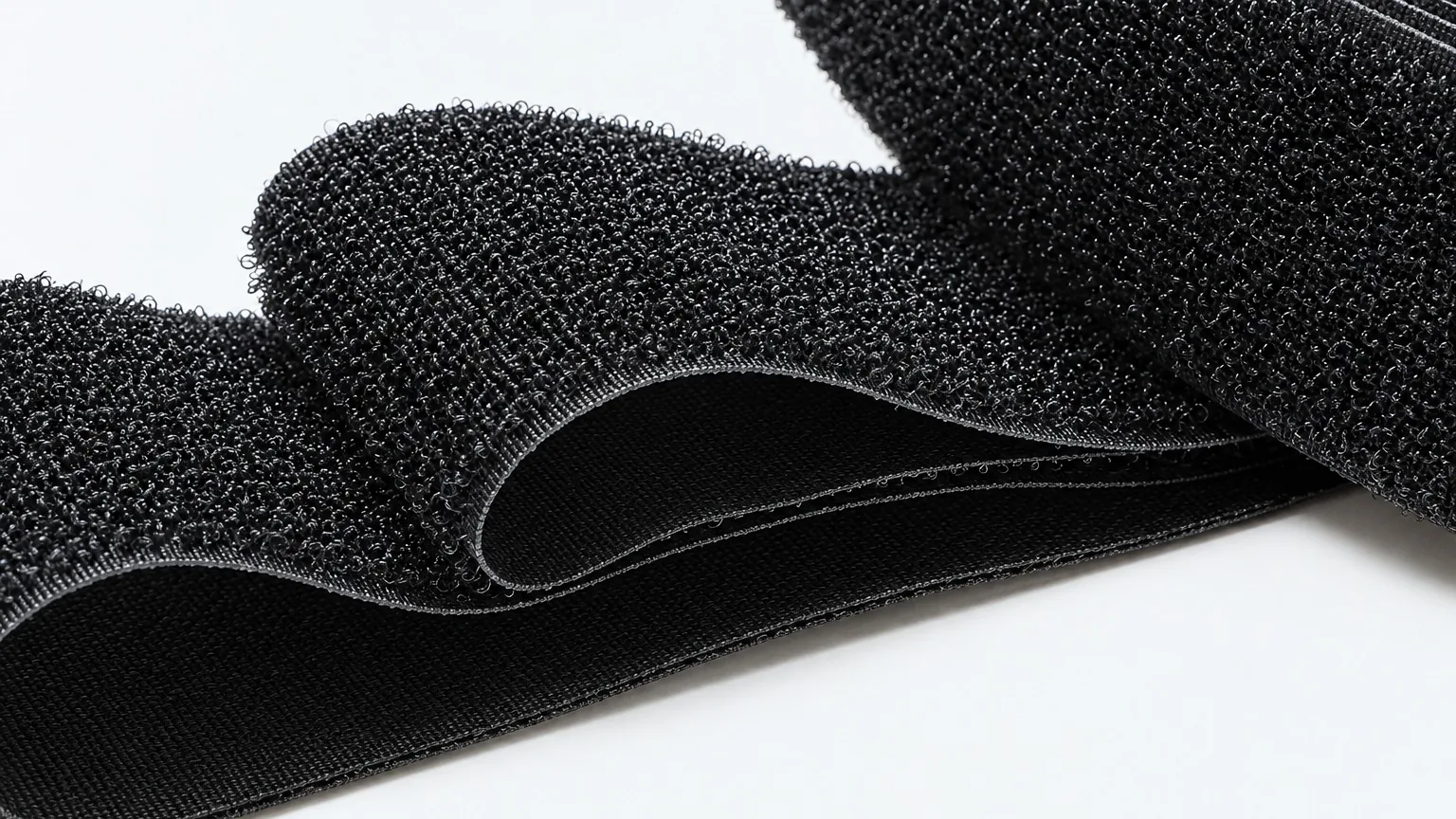
Hook-and-loop tape looks simple, but it is not a uniform strip material. Hook tape and loop tape compress differently, pile height changes the way a guide contacts the surface, and laminated or adhesive-backed versions can behave differently from plain sewn-on tape. A buyer who specifies only width and finished length may receive a machine that can cut the sample, yet cannot hold the required result across several rolls.
The safer purchasing method is to define the material, process route and acceptance test before discussing production speed. This guide explains the information HESPER needs to evaluate an automatic hook-and-loop tape cutting project without assuming that one cutting method suits every construction.
1. Start With the Production Problem
Common complaints include inconsistent finished length, a strip that twists during feeding, compressed pile near the cut, loose fibres at a cold-cut edge, or heat marks after hot cutting. These are different problems and should not be combined into one vague request for “clean cutting.”
Describe how the cut piece will be used. A short closure tab for a garment, a longer securing strap and a component prepared for later sewing can have different edge, appearance and handling requirements. Also state whether hook and loop sides are processed separately, supplied as paired rolls, or temporarily engaged during feeding. That detail affects guiding, compression and sample testing.
2. Map the Cutting Process
A typical route is roll support, material guiding, automatic feeding, length measurement, cutting and collection. Each stage can influence the result. A roll that unwinds with changing resistance can pull against the feed system. A guide set too tightly can flatten the pile or increase drag. A strip that enters the blade at an angle may produce a slanted end even when the programmed length is correct.
Collection also matters. Short pieces can fall freely, but ordered batches may require a receiving table or automatic collection arrangement. If operators must keep hook and loop pieces paired, explain that workflow before equipment selection rather than after installation.
3. Specify the Real Hook-and-Loop Material
Send production samples, not only a catalogue description. Record tape width, total thickness, roll outside diameter, core size and approximate roll weight. Identify the fibre or polymer composition when known, and state whether the tape is hook side, loop side, mixed construction, elastic, laminated or adhesive-backed.
For adhesive-backed tape, include the liner and adhesive condition in the trial. Heat, blade contact and feeding pressure may affect the liner or leave residue, so compatibility must be confirmed with the actual material. For unusually thick or compressible tape, measure both the free thickness and the thickness under the normal guiding pressure used in production.
Define finished length and tolerance in writing, but do not assume one universal tolerance for every tape. Test several pieces at the beginning, middle and end of a roll. Record whether length is checked relaxed, flattened or engaged with its mating side, because the inspection method can change the measured result.
4. Choose the Edge Process by Sample
Cold cutting separates the tape mechanically and avoids intentional heat at the edge. Depending on construction, however, loose fibres may remain. Hot cutting can help seal compatible thermoplastic materials, but excessive heat may harden, darken or deform the end. Ultrasonic processing is another possible route for compatible synthetic materials, but it should also be approved through actual sample trials.
Do not choose hot, cold or ultrasonic cutting from the material name alone. Ask the supplier to produce trial pieces using the proposed process, then inspect edge stability, colour change, stiffness, pile damage, adhesion and sewing performance. If the component contacts skin or a visible garment surface, include appearance and touch in the acceptance rules.
5. Match the Requirement to a Real Configuration
The HESPER Webbing & Hook-and-Loop Tape Hot & Cold Cutting Machine provides automatic feeding, adjustable cut length, material guides, PLC operation in Chinese and English, material-out stop and alarm, cooling fans, and selectable hot or cold cutting. These are verified product features, but suitability still depends on the submitted tape and required edge.
Where cut pieces must be placed in order rather than dropped together, the HESPER CXY-140RS hot cutting and automatic collection machine is a relevant configuration to evaluate. Its product page lists hook-and-loop tape among the intended materials, while also requiring confirmation of thickness, width and edge finish.
Options or modifications should be treated as engineering requirements, not assumed standard equipment. Examples include a particular roll holder, a special guide for compressible tape, a collection method, or integration with the next operation. Ask HESPER to confirm each item in the quotation and sample report.
6. Run a Purchase Acceptance Test
Prepare more than one roll when normal production includes different suppliers, colours or pile constructions. Test the shortest and longest required lengths and at least one typical batch. Check feeding alignment, repeated length, cut angle, edge finish and the condition of the hook or loop surface near the blade.
Agree how many consecutive pieces will be measured and which defects cause rejection. Photograph accepted edges and keep approved samples as references. Production rate should be recorded only after the machine produces acceptable pieces; a fast test with damaged edges is not a useful purchasing benchmark.
FAQ
Can one machine cut both hook tape and loop tape?
Potentially, but the two sides may feed and compress differently. Submit both materials and approve both during the trial.
Is hot cutting always better for hook-and-loop tape?
No. Hot cutting depends on material composition and the permitted edge appearance. Cold or ultrasonic cutting may be evaluated where appropriate.
What should be sent with an enquiry?
Send representative rolls or samples, width, thickness, roll and core dimensions, finished lengths, tolerance, batch quantity, required edge condition, power supply and preferred collection method.
Send HESPER Your Actual Tape Sample
Use the HESPER cutting-equipment enquiry form to share the hook-and-loop construction, dimensions and finished-part requirements. A real sample trial gives both sides a clearer basis for confirming the cutting process and machine configuration.