
TAPE CUTTERS · ELASTIC
Elastic is easy to cut and hard to cut to the right length. Pull it even slightly on the way in and every piece springs back shorter. Here is how to feed, set and check a tape cutter so wide, stretchy elastic comes out at the length you set.
A garment workshop cuts black waistband elastic into long pieces. The machine is set to one length, but when the pieces are laid out, some are short and none are quite the same. Nothing is wrong with the blade. The elastic was stretched slightly as it was pulled into the machine, and after the cut it relaxed.
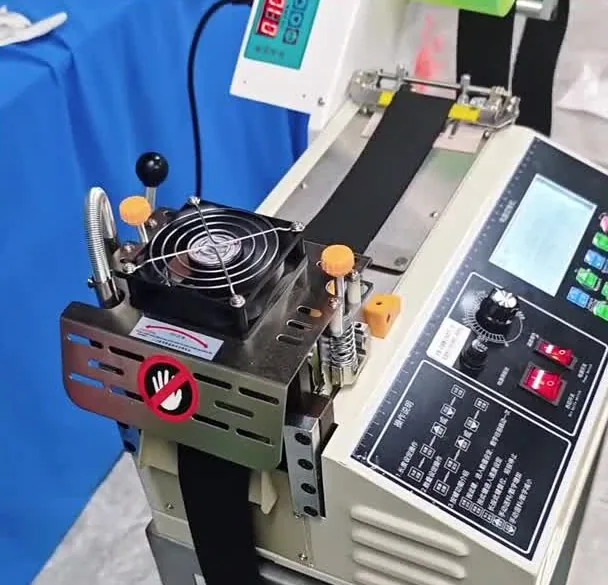
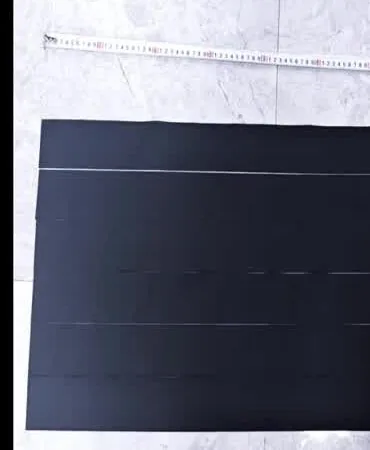
The video shows a tape cutter set up for elastic materials, with a customer trying out wide black elastic. Its captions make three promises: that it cuts elastic however stretchy it is, that the elastic doesn't stretch or slip, and that long pieces are no problem. Then the cut pieces are laid flat next to a tape measure. This guide explains what makes that possible and how to check it on your own material.
THE SHORT ANSWER
Feed the elastic in relaxed. Let it come from a loose supply rather than being dragged off a tight roll, and set the feed roller to grip without stretching. Set the guides to the elastic's width so it can't twist. Then cut a few pieces, lay them flat without pulling, and measure them. For long batches, check pieces from the start, middle and end. If they come out short, look first for tension on the feed side.
- 01 Why elastic comes out short
- 02 Feed it relaxed
- 03 Grip without stretching
- 04 Wide elastic
- 05 Long pieces
- 06 Measure it right
- → HESPER machines
- ? FAQ
01 · WHY ELASTIC COMES OUT SHORT
It is cut stretched and measured relaxed
A tape cutter feeds a set length and cuts. With most tapes, what goes in is what comes out. With elastic, anything that pulls on it during feeding stretches it, so the machine feeds the right length of stretched elastic. After the cut, the piece springs back and is shorter than the setting.
| What you see | Likely cause | What to change |
|---|---|---|
| Every piece a little short | Elastic stretched on the way in | Remove tension from the supply side |
| Pieces vary in length | Tension changes as the roll unwinds, or the strip slips | Feed from a loose supply; check roller grip |
| Wide elastic twists or runs off-center | Guides too loose for the width | Set the guides to the elastic's width |
| Long pieces less consistent than short ones | Small errors add up over length | Check pieces from the start, middle and end |
| Pieces measure differently each time | Measured while stretched | Lay them flat and measure relaxed |
02 · FEED IT RELAXED
Take the pull off the supply side
The biggest cause of short elastic is tension before the feed rollers.
- Use a loose supply. Elastic drawn from a box or a loose pile goes in with less pull than elastic dragged off a tightly wound roll.
- Let it settle. Elastic that has been tightly rolled can be slightly stretched. Unwinding a working length and letting it rest helps.
- Clear the path. Make sure nothing catches or drags the elastic between the supply and the machine.
03 · GRIP WITHOUT STRETCHING
Set the feed roller pressure
The feed roller has to grip the elastic firmly enough that it doesn't slip, but not so hard that it stretches it. The video's caption puts it simply: no stretching and no slipping.
- Too light. The elastic slips and pieces come out short and uneven.
- Too heavy. The rollers can stretch soft elastic as they pull it.
- Even across the width. On wide elastic, uneven pressure from one side to the other makes it drift.
- Test after every change. Adjust a little, cut a few pieces and measure them relaxed.
04 · WIDE ELASTIC
Keep wide elastic flat and straight
The elastic in the video is wide black waistband elastic. Wide elastic needs a little more care than narrow cord.
- Check the cutting width. The elastic must fit comfortably within the machine's cutting width.
- Set the guides to the width. Close enough that it can't twist or wander, not so tight that the edges curl.
- Look at both edges after cutting. A square cut across the full width shows the elastic fed straight.
05 · LONG PIECES
Cutting long lengths
The video ends with long pieces laid side by side on a table, and the caption says however long, it can cut. Long pieces show any small error, because it adds up over the length.
- Support the outfeed. Long pieces hanging off the machine can pull on the elastic still being fed. Give them somewhere to lie.
- Check through the batch. Measure a piece at the start, one in the middle and one at the end, as the supply unwinds.
- Compare side by side. Laying several pieces next to each other, as in the video, shows any difference at a glance.
06 · MEASURE IT RIGHT
How to judge accuracy on elastic
The video's caption claims accuracy within 1 mm. Whatever a machine promises, elastic should be judged the same way: by measuring the finished pieces relaxed.
- Lay it flat. Put the piece on a table, smooth it out without stretching it.
- Wait a moment. Give a freshly cut piece a little time to relax fully.
- Measure several pieces. One piece tells you the length. Several tell you the consistency.
- Agree how it's measured. If your customer has a length tolerance, agree that it applies to relaxed pieces.
HESPER EQUIPMENT
HESPER hot and cold tape cutting machines
Four options, each listed with hot and cold knife cutting, and elastic tape among the listed materials. Details and specifications are on the tape cutter page.
95 MM
95mm EconomyCutting width 1–95 mm. Button control panel for routine cut-to-length work.95 MM
95mm High-SpeedCutting width 1–95 mm. LCD and buttons.210 MM
210mm TouchscreenCutting width 1–210 mm for wider tapes and webbing.310 MM
310mm TouchscreenCutting width 1–310 mm for the widest strips.? FAQ
Elastic cutting questions
Why are my elastic pieces shorter than the set length?
Usually because the elastic was stretched as it was fed. After the cut it relaxes and shrinks back. Remove tension from the supply side and check the feed roller pressure.
How do I stop elastic from stretching in the machine?
Feed it from a loose supply, keep the path clear, and set the feed roller to grip firmly without squeezing hard.
Why do the lengths vary?
Changing tension as the roll unwinds, or the elastic slipping at the feed roller. A loose supply and the right roller grip fix most cases.
Can a tape cutter cut wide waistband elastic?
Yes, if it fits within the cutting width. Set the guides to the elastic's width so it feeds flat and straight.
How should elastic be measured?
Laid flat and relaxed, not stretched. Measure several pieces to judge consistency.
Hot knife or cold knife for elastic?
It depends on the elastic. A cold cut is common; a hot knife can seal the ends of suitable synthetic elastic. Test both on your material.
Can it cut long pieces?
Yes. Support the outfeed so long pieces don't pull on the elastic being fed, and check lengths through the batch.
ELASTIC
Elastic Still Coming Out Short?
Send HESPER the elastic's width and type, the lengths you cut, and how far off the pieces are when measured relaxed. A short video of the feed side is often the quickest way to see where the stretch comes from.
Send your elastic details · See the tape cutters · sales@hespermachine.com