
Customers who sew garments, masks, bags and sports gear often ask the same thing about elastic bands: the cutter is set to one length, so why don't the pieces match? Lay a batch side by side and some ends stick out past the others. Waistbands sew up a little loose or a little tight, pairs of straps don't match, and someone ends up sorting or recutting.
Before repeatedly changing the cut length, look at how the elastic reaches the blade. Does it alternate between being pulled tight and hanging loose? Differences in stretch during feeding can turn into differences in relaxed length after cutting.
Why elastic pieces vary
Every tape that goes through feed rollers can slip or stretch a little. Webbing, ribbon and hook and loop tape do it too, especially when they are pulled off a heavy roll or have a slick surface. Elastic takes the same effect much further, because stretching is what it is made to do.
When a cutter feeds elastic, the pull on the band at that moment decides how much of the fed length is real material and how much is stretch. If the cutter has to drag the elastic off a roll or out of a box, that pull can change as the material releases. The band slides free on one stroke, then snags, twists or catches on the loops below it on the next. After the cut, each piece relaxes, and at the same feed length and under otherwise similar conditions, pieces fed with more stretch can relax to a shorter length.
That is a common pattern, not the only one. Roller grip, a worn or slipping feed, variation along the roll itself and even the way the pieces are measured can all show up as uneven lengths. But when elastic is fed straight from a loose pile or a roll that the cutter has to pull on its own, uneven pull is the first thing worth looking at.
Feeding the elastic at a steady pace
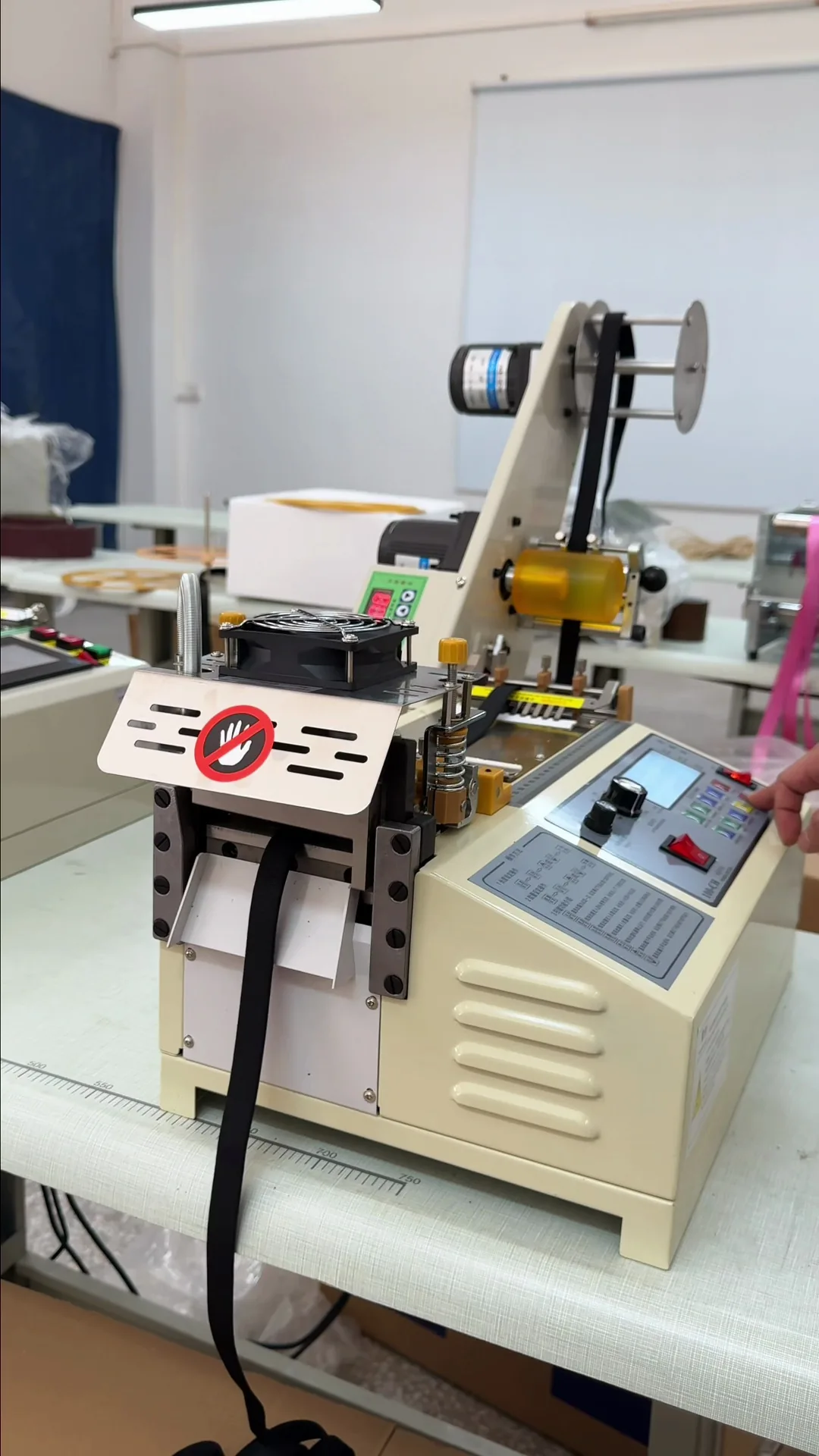
The answer in the HESPER video is a feeding device mounted behind the cutter. A motor brings the elastic down from above at a steady pace, so the cutter no longer has to drag the band off the roll by itself.
The purpose of the feeder is to make material release and cutting work together more smoothly, reducing stretch variations caused by the cutter pulling directly on the supply. Its pace still needs to match the cutting cycle. A cutter waiting for material, a band held taut or material bunching up ahead of the feed all deserve attention. What matters for your job is whether a continuous batch meets the required length when the pieces are measured in the same relaxed condition.
The same idea explains why cutting elastic by hand is slow to get right. Pulling elastic along a ruler stretches it, and no two people pull quite the same way. Letting the band lie relaxed before marking it helps reduce differences caused by stretching it while measuring.
Checking the pieces you actually get
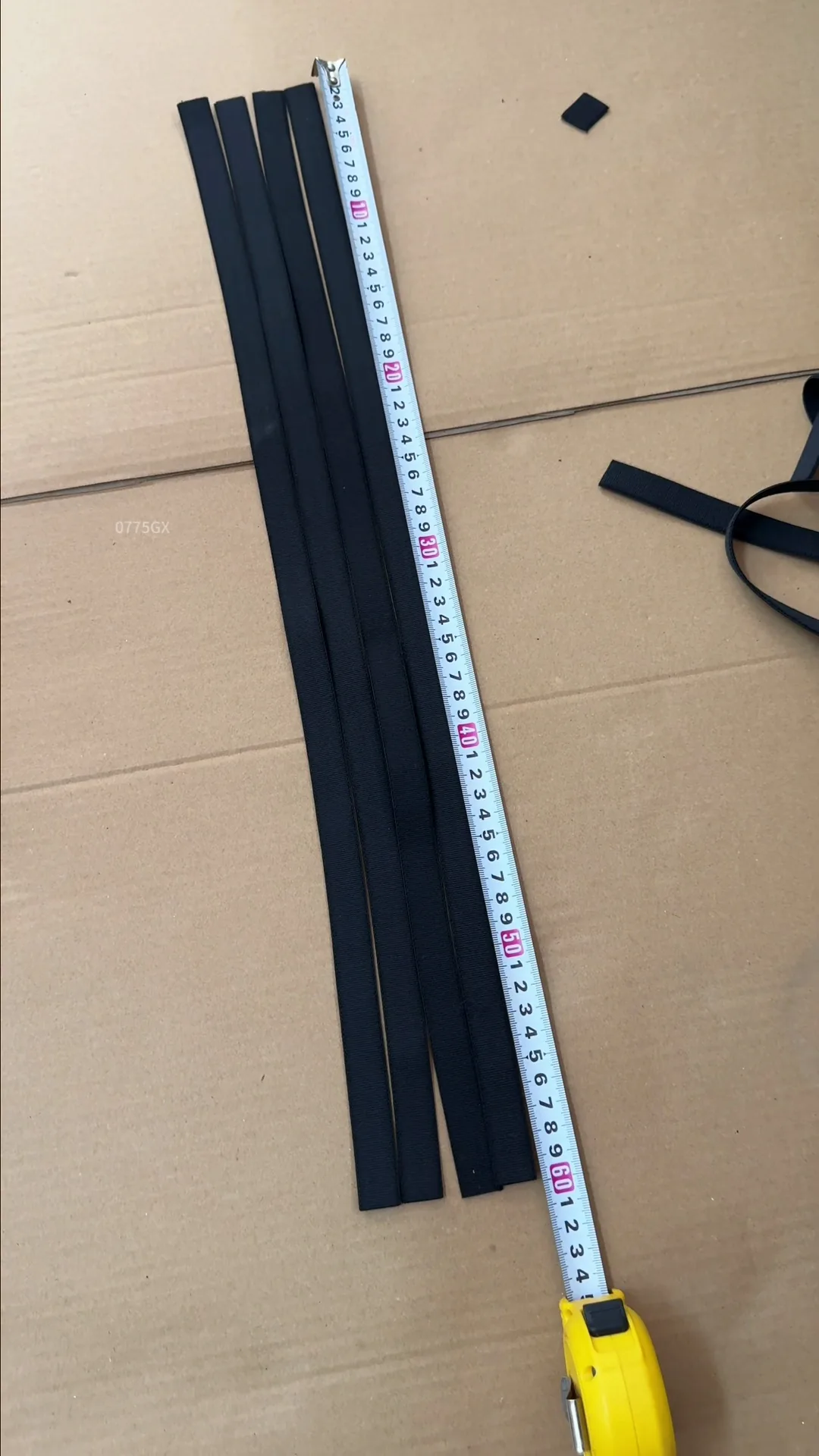
Elastic needs a moment after cutting before it settles at its relaxed length. Lay several pieces flat, give them time, and then measure them side by side against a tape, as the video does.
Pieces that line up are consistent, but that alone does not mean they are the right length. Compare them with your target length and the tolerance your sewing line can accept. If they are all short by about the same amount, first make sure they were fully relaxed when measured and that the elastic is not being fed under steady extra pull. Change the length setting only once the feed is settled; otherwise you are adjusting for stretch that may change again. If the pieces vary from one to the next, look at the feed and the roll before touching the setting.
A new roll, a different supplier or a different width can behave differently, so a quick check at the start of each lot saves sorting later. If non-stretch tapes vary in length too, our guide to webbing cut length variation covers other causes.
Hot knife or cold knife for elastic
The machine in the video is a hot and cold tape cutting machine, so it can cut with a heated blade or a cold one. A hot knife can melt and seal suitable thermoplastic yarns such as many nylon and polyester tapes, which helps the ends resist fraying. It does not suit every synthetic material, though, and elastic adds its own question: the stretch comes from rubber or spandex core threads, which can react to heat differently from the outer yarns. A heat-sealed end can turn hard, glossy or slightly misshapen.
When the cut end will be sewn into a seam or waistband, first check whether a cold-cut edge meets the sewing requirements. Braided, knitted and woven elastic also behave differently under the blade. The reliable way to decide is to choose methods suitable for the material and cut samples of your own elastic and look at the ends and lengths side by side.
Send us your elastic
If uneven elastic straps or waistband pieces are slowing down your sewing line, tell HESPER the elastic type, width and thickness, the relaxed length you need and the tolerance you work to, whether the ends are sewn in or must be sealed, and roughly how many pieces you cut per day. A few meters of your own elastic is the best way to see how it runs through the cutter and the feeding device.
See the HESPER hot and cold tape cutting machines · Ask HESPER about cutting your elastic · sales@hespermachine.com