
Your strip is cut to the right length. But if it still needs holes, is the job really finished?
For manufacturers processing webbing, elastic bands or bag handle cords, cutting may be only the first operation. The finished part may also need a defined hole pattern before it is ready for assembly.
That raises a practical question: can one cutting and punching machine complete both operations?
Yes—a machine designed for both functions can combine cutting to length and hole punching in one setup. The important step is confirming that the selected machine, tooling and material can produce your required finished part.
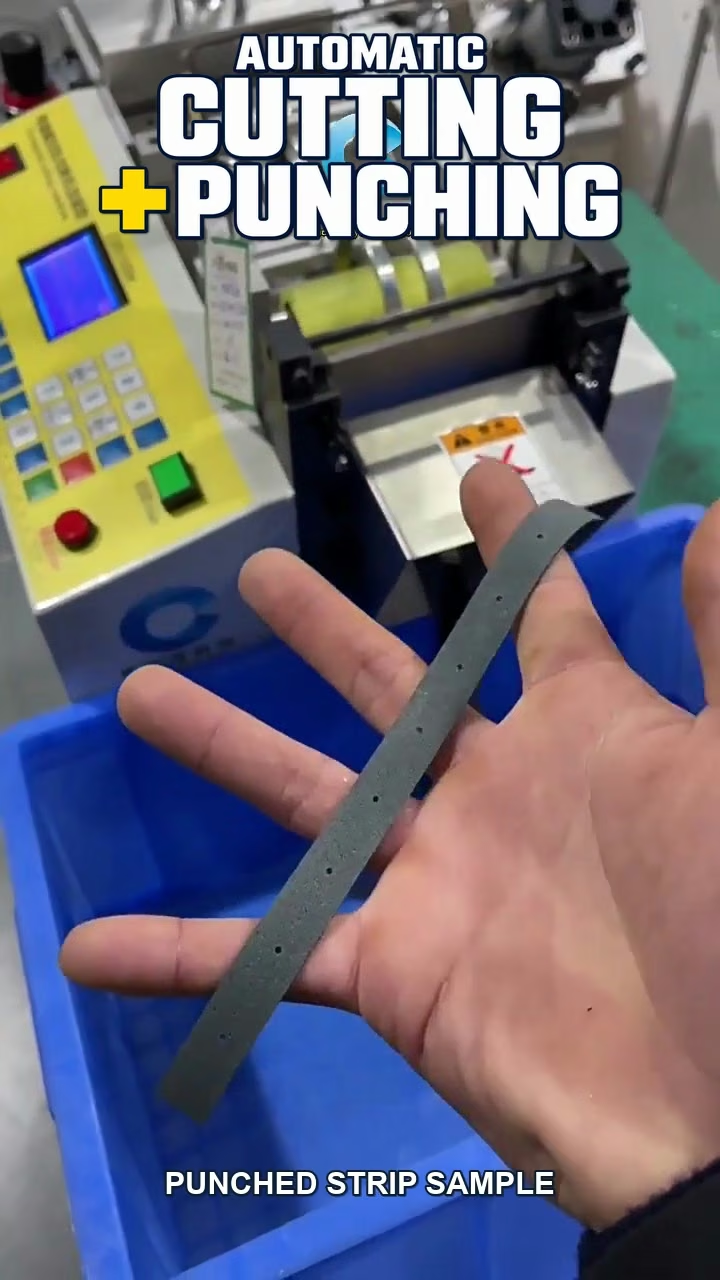
Does “Cutting and Punching” Mean Both Happen at the Same Instant?
When discussing a combined machine, distinguish between two requirements: completing both operations on one machine, and performing both actions at exactly the same moment.
The words “cutting and punching machine” establish the intended functions. They do not, by themselves, establish the timing of each action.
If simultaneous movement is important to your production process, ask the supplier to demonstrate the complete operating cycle. Watch how the material advances, where the holes are made and when the finished piece is cut off.
For most equipment enquiries, a useful starting point is the finished part: does it leave the machine with the required length and holes, or does it still need another operation?
What Can a Combined Machine Process?
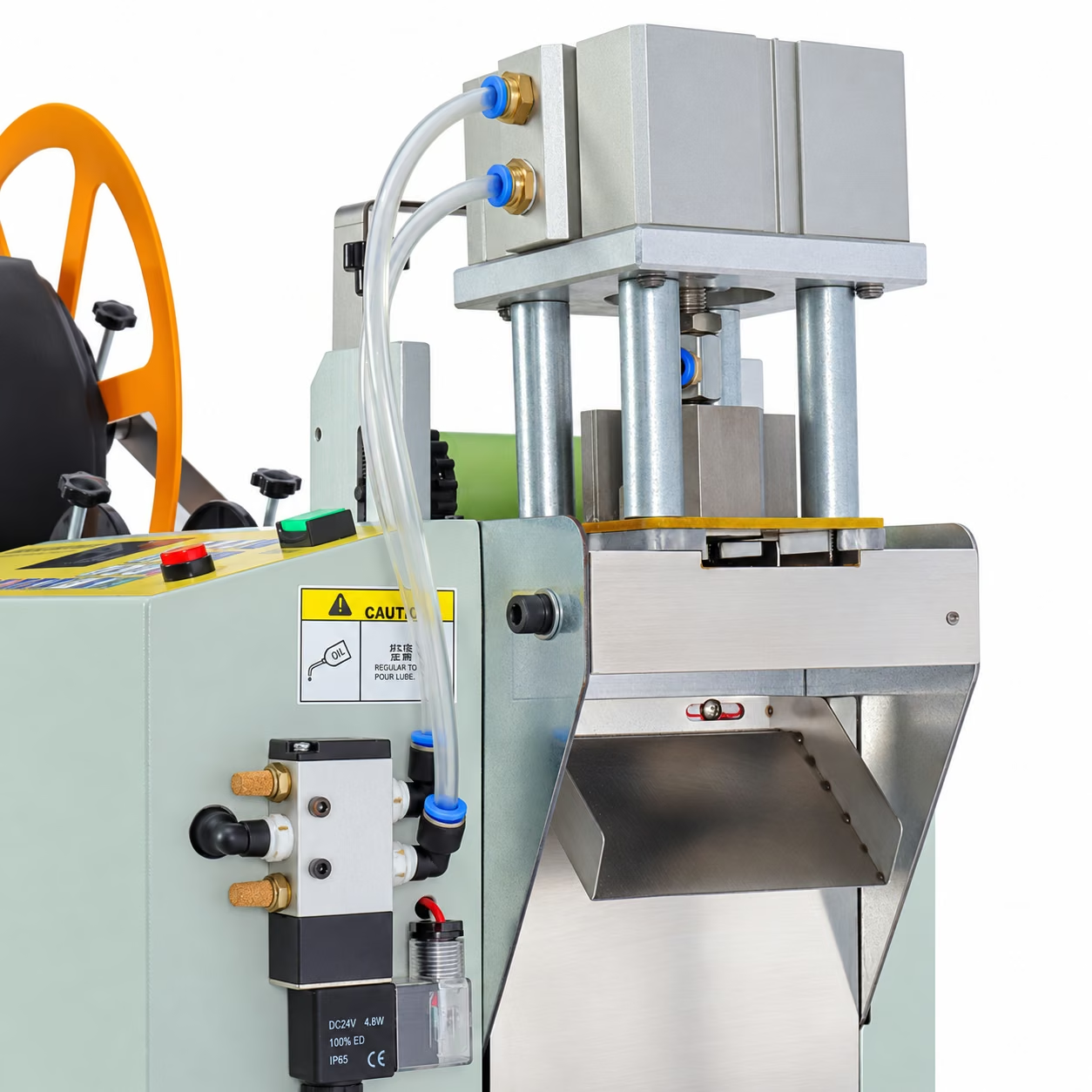
HESPER’s Webbing & Handle Cord Cutting and Punching Machine lists automatic cutting to length and hole punching for webbing, elastic bands and bag handle cords. Its controls provide settings for length, speed and total quantity. Material suitability and punching tooling need to be confirmed using a sample and hole-position drawing. View the machine and its specifications.
An ultrasonic configuration is another option for suitable applications. HESPER’s CXY-80T combines ultrasonic cutting and punching for webbing, ribbon and belting, with touchscreen settings for cut length, batch quantity, hole count and hole spacing. Angle cuts and V-notches depend on the selected configuration and tooling. View the CXY-80T cutting and punching machine.
These are specific equipment configurations. A webbing cutting machine should not be assumed to include punching simply because it can feed and cut the material automatically.
Start With a Finished-Part Drawing
Before comparing machines, draw the part you actually need.
A sketch showing only the overall length leaves important questions unanswered. Show the hole locations as well as the cut ends, and identify where each measurement starts.
For example, if a strip needs two holes, specify whether their positions are measured from the ends or from another reference point. Include the required hole size and the distance between the holes.
The drawing should make it possible to check a finished sample without guessing what “correct” means.
If your production includes several hole patterns, submit each pattern separately. Ask which changes can be made through the controls and which require a tooling change.
Check the Cut and the Holes Together
A useful sample trial should produce the complete part you intend to use.
Review the overall length, the cut ends and the punched holes together. A piece can look acceptable at first glance while still failing to match its drawing.
Prepare a simple inspection checklist:
- Does the finished length match the requirement?
- Are the holes the required size and shape?
- Are the holes correctly positioned relative to the cut ends?
- Is the appearance around the holes acceptable?
- Does the finished piece fit the next assembly operation?
Ask to inspect several consecutive pieces, rather than relying on one selected sample. Agree on the measurement method and acceptance criteria before evaluating the trial.
Compare the Complete Production Cycle
If you currently cut and punch at separate stations, list the steps between them. These might include collecting pieces, moving a batch, positioning each strip and checking the finished parts.
Then ask the supplier to show which steps the proposed machine would combine and which would remain manual.
This gives you a more useful comparison than looking at a machine’s headline speed alone. For purchasing decisions, ask for the number of acceptable finished pieces produced during a timed trial using your material and hole pattern.
Include setup and changeover requirements in the discussion. A combined machine should be assessed against the jobs you run, the frequency of pattern changes and the finished result you need.
Send the Material and Hole Pattern Together
To assess a cutting and punching application, prepare the material sample alongside the finished-part drawing. Include the strip dimensions, cut profile, hole pattern, tolerances and target output. These are the details HESPER requests when reviewing a suitable configuration. Send your cutting and punching requirements.
One machine may be able to complete both jobs. The clearest way to confirm it is to see your material processed into your finished part—with the cuts and holes checked together.