
For a few sheets of adhesive film, measuring, marking and cutting may be manageable. As orders grow, unrolling, aligning and measuring every piece becomes repetitive work. The opportunity is not just to make one cut faster, but to stop starting the same routine for every sheet.
For rolls that need repeated cuts to the same length, controlled feeding followed by cross-cutting is worth considering. This HESPER adhesive film demonstration shows material feeding from a roll holder and being cut across the web. Instead of marking every sheet, the operator sets a length, checks samples and then runs the job. Whether your film can be processed consistently still depends on the material and how the sheets are collected.
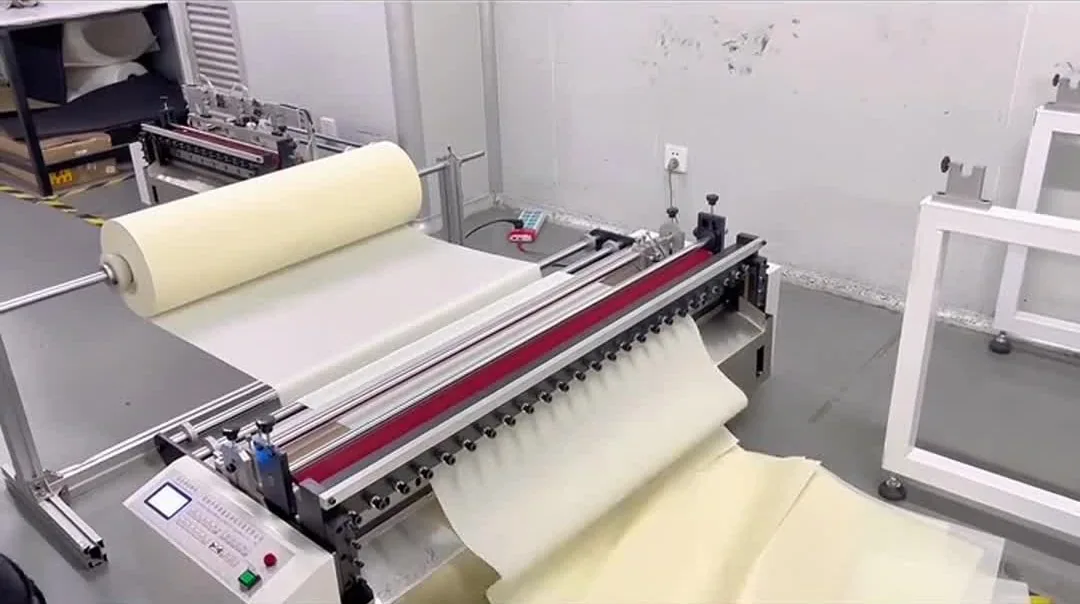
Watch adhesive film cutting in action
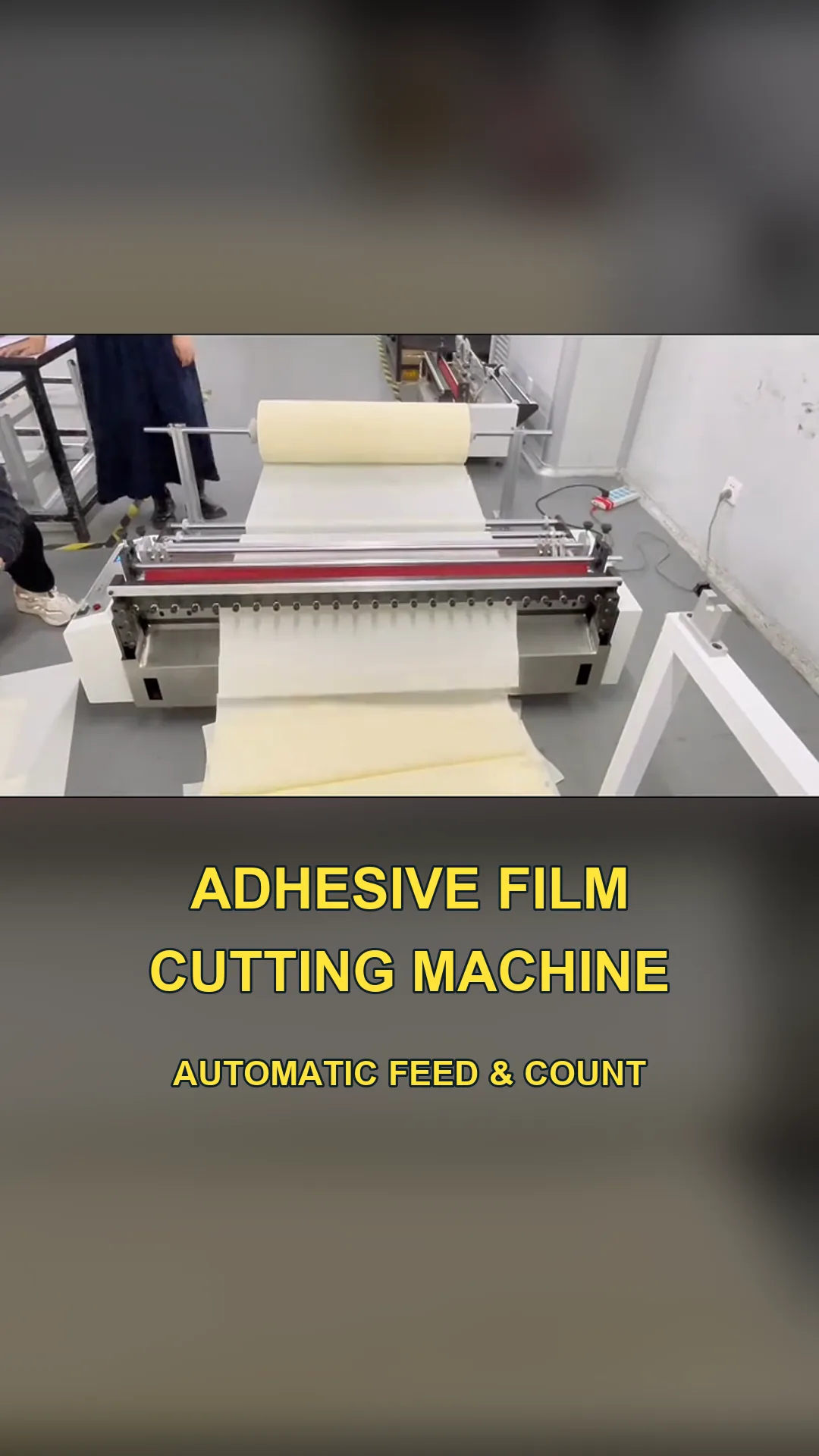 ▶ Watch on YouTube
Let the feed system handle the repeated measuring
When cutting wide film by hand, measuring length is only part of the job. The material also has to be unrolled, held flat and cut along a straight line. A cut to length machine changes that routine: the feed advances the roll by a set length and the cross-cut blade separates the sheet. The operator can focus on sample dimensions and outfeed behavior. Length still needs checking; it no longer needs marking on every sheet.
A separated sheet still needs to be usable
In the video, the film advances and is cut across its width into sheets. For material that will be applied, laminated or assembled, separating a sheet is only the first step. The practical goal is a correctly sized piece whose edges do not stick together and which can move into the next process.
Face materials, adhesive layers and backings vary, and not every adhesive film has a release liner. A change of material calls for another look at the result: is the sheet being stretched, do the edges stick, and, where a liner is present, does it remain attached to the film? Taking trial sheets through the actual application or assembly process is more useful than judging them only as they leave the cutter.
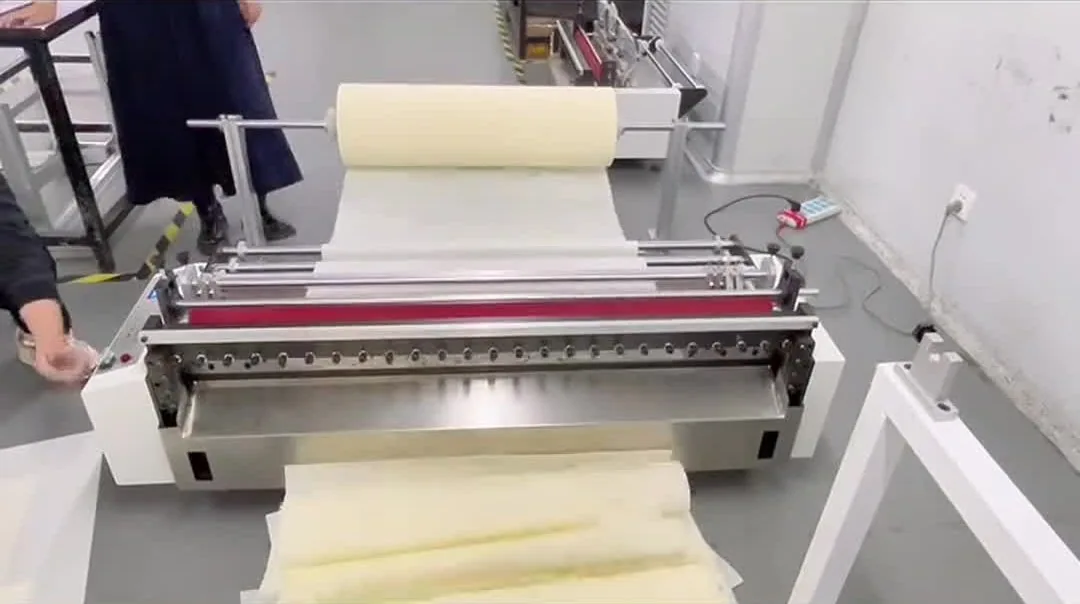
Counting helps, but the sheets still need collecting
Another useful detail in the footage is that the cut film still needs gathering. How it is supported, whether it curls and whether sheets stick together affect stacking and subsequent use. Discussing the collection space and sheet dimensions is more useful than looking only at how many meters a film cutting machine can feed per minute.
Automatic counting can help organize batch quantities and reduce repeated hand counting. For a production run, feeding, cutting and collection need to work together. Longer sheets need more collection space; film that curls or sticks makes the collection arrangement especially worth trying in advance.
Narrower sheets add a slitting decision
If the roll already has the required sheet width, cross-cutting primarily determines sheet length. Producing narrower strips or sheets from a wide roll also requires longitudinal slitting. Where slitting is needed, optional longitudinal blades for slitting and cross-cutting together can be discussed. Providing the required strip widths, number of strips and a material sample helps match the blade arrangement to the job.
The tabletop roll to sheet cutting machine range has separate cutting-width specifications from 300 to 1800 mm; one machine does not cover that entire range. The roll in the video is visibly narrower than the working area, but effective cutting width, guides and feeding arrangements still need checking against your actual roll.
Start with your film, not just its name
“Adhesive film” is not enough information to select a machine. Clear adhesive film, self-adhesive film for decoration or labeling, and surface protection film can have different constructions and processing requirements, even when two rolls look similar. Explaining the film construction helps establish how it should be fed, cut and collected.
If you want to remove repeated measuring without moving the problem into application or assembly, share your current film details and a sample with HESPER for evaluation. Include its type, total thickness, exposed adhesive and liner arrangement, roll width, required sheet dimensions and tolerances, quantities per batch and per day, and photos of your current cut edges. The discussion can then move beyond “Can this machine cut adhesive film?” to “Can this roll be turned consistently into sheets that the next process can use?”