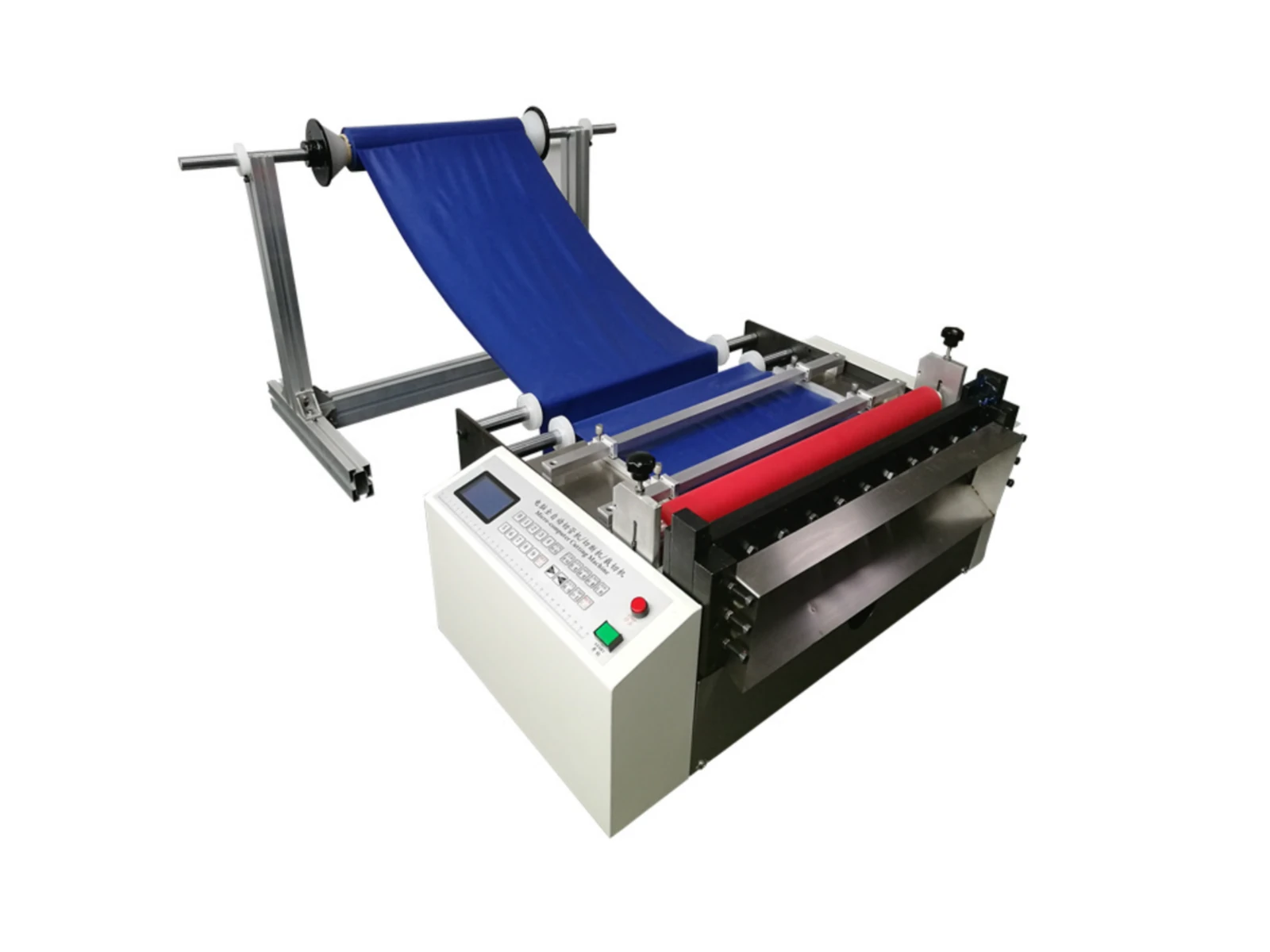
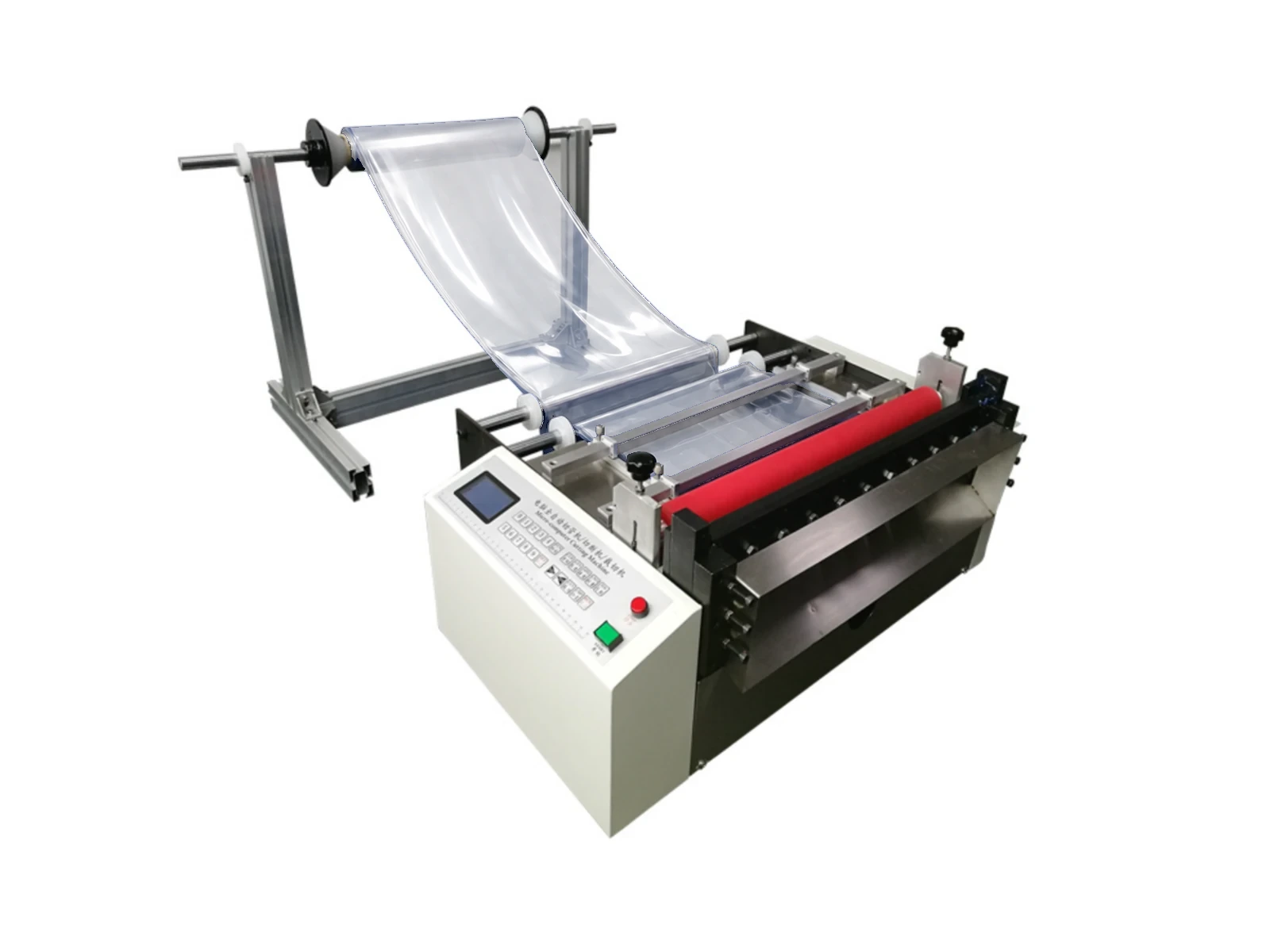
This tabletop PVC film cutting machine automatically feeds PVC film rolls and cross-cuts them into sheets of a set length. Adjustable cutting length, feed speed and quantity settings help operators prepare repeat cutting jobs.
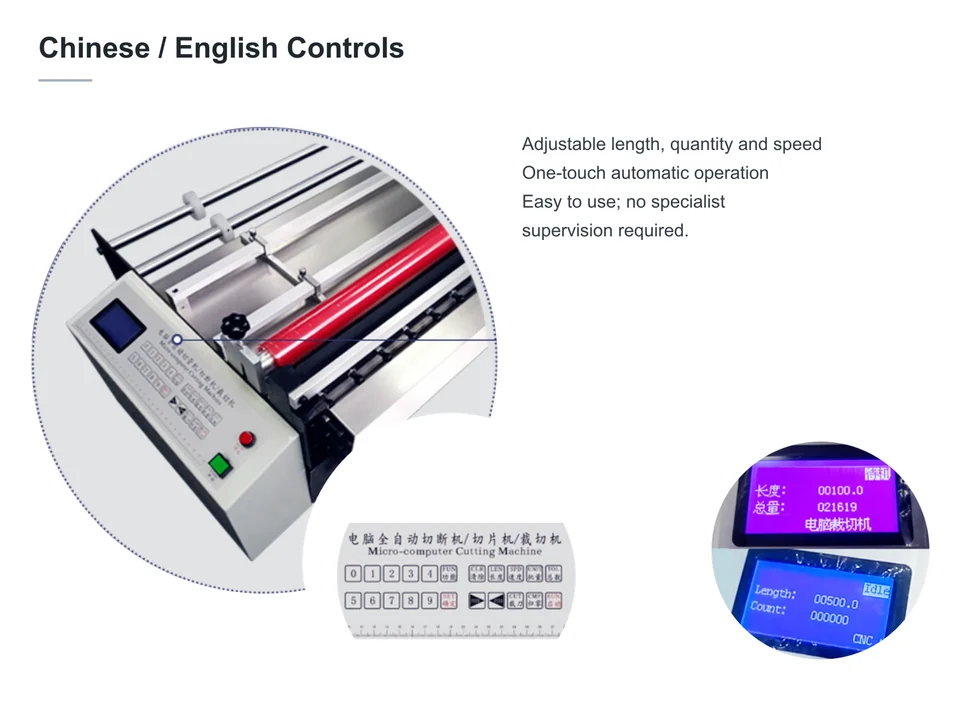
The LCD control panel switches between Chinese and English and includes cutting delay, cutting interval, batch pause and length compensation settings. Optional longitudinal blades add PVC film slitting alongside cut-to-length cross-cutting.
Interface languages
Switchable Chinese / English
Longitudinal slitting
Optional
Send your PVC film thickness, roll width, required sheet dimensions and target output to confirm the configuration.
Convert continuous PVC film rolls into separate sheets for your next production step. The machine feeds the film through the roller system and cuts across its width at the programmed length.
When selecting a PVC film cut-to-length machine, specify the film thickness, flexibility, roll width and required sheet length. These details help determine the feeding setup and whether the configuration suits your application.
02 / PROCESS
Automatic Feeding and Adjustable Cutting Length
Operators can set cutting length, feed speed, batch quantity and total quantity through the control panel. Cutting delay and cutting interval settings provide timing adjustments, while batch pause supports jobs that require pauses between batches.
Length compensation is available for setup adjustments. The achievable cutting tolerance should be confirmed using your PVC film and finished-sheet requirements.
03 / PROCESS
Optional PVC Film Slitting and Cross-Cutting
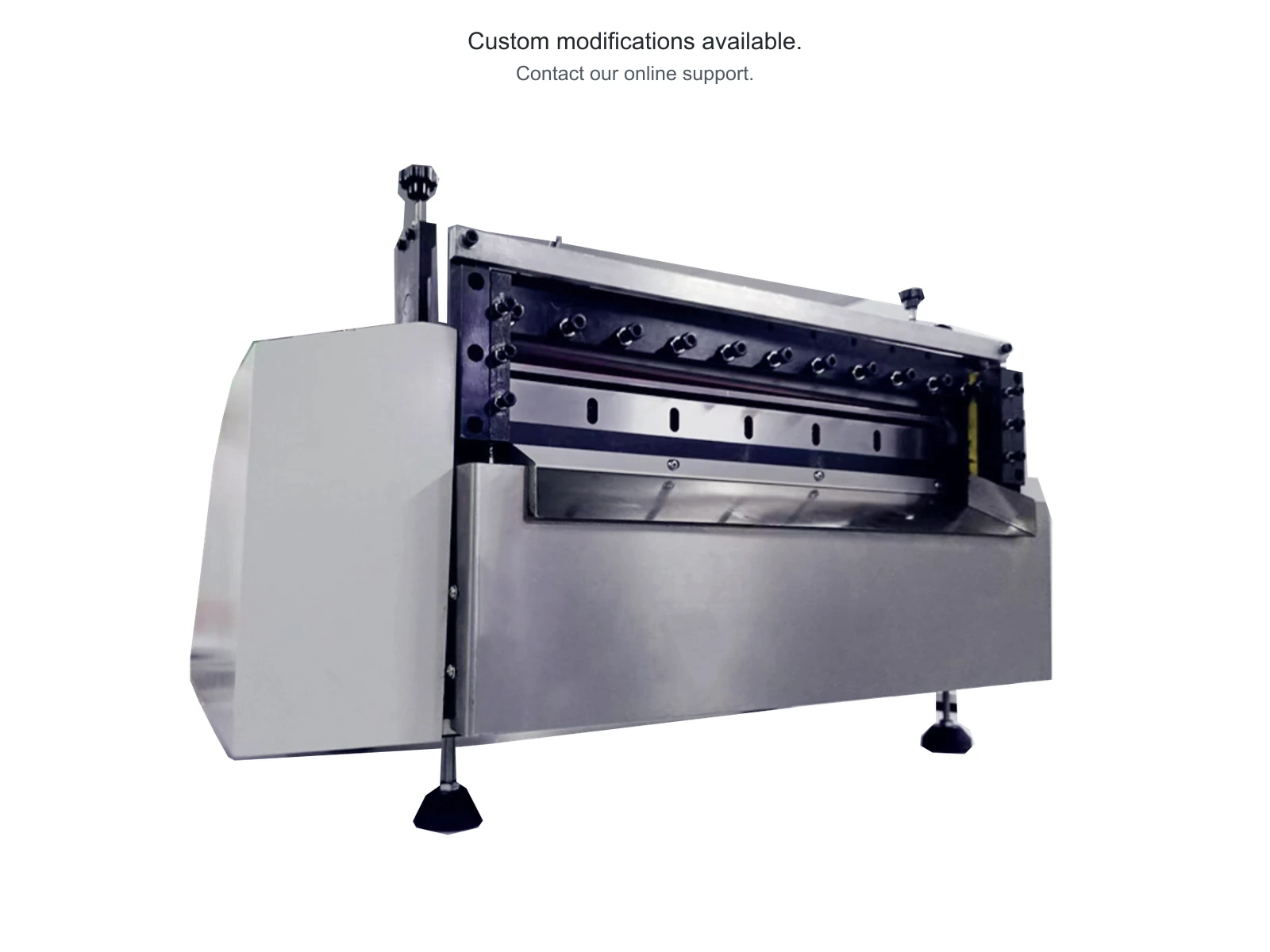
Optional longitudinal blades allow PVC film slitting and cross-cutting to be combined. The longitudinal blades divide the film into narrower widths, and the cross-cutting mechanism cuts it to the set length.
If your application requires PVC film slitting, provide the incoming roll width, required strip widths, number of strips and finished lengths. Blade quantity, blade spacing and film suitability must be confirmed before ordering.
Longitudinal slitting is an optional configuration. Include it in your quotation request if your production requires both width and length cutting.
Switchable Chinese/English LCD Controls
The LCD control panel supports switching between Chinese and English for job setup and daily operation. Available settings include:
Cutting length and feed speed
Set cutting length and feed speed.
Batch quantity and total quantity
Set batch quantity and total quantity.
Cutting delay and cutting interval
Adjust cutting delay and cutting interval.
Batch pause and length compensation
Set batch pause and use length compensation for adjustments.
The control’s 0–80 speed scale is a setting range, not a direct speed reading in metres per minute.
Film Feeding and Surface Requirements
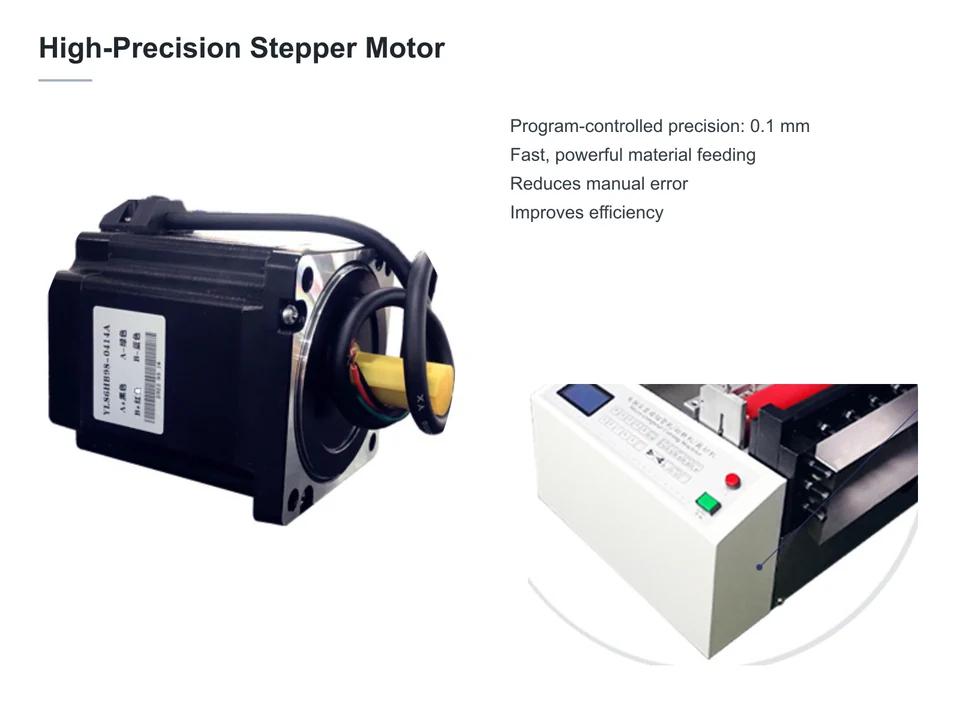
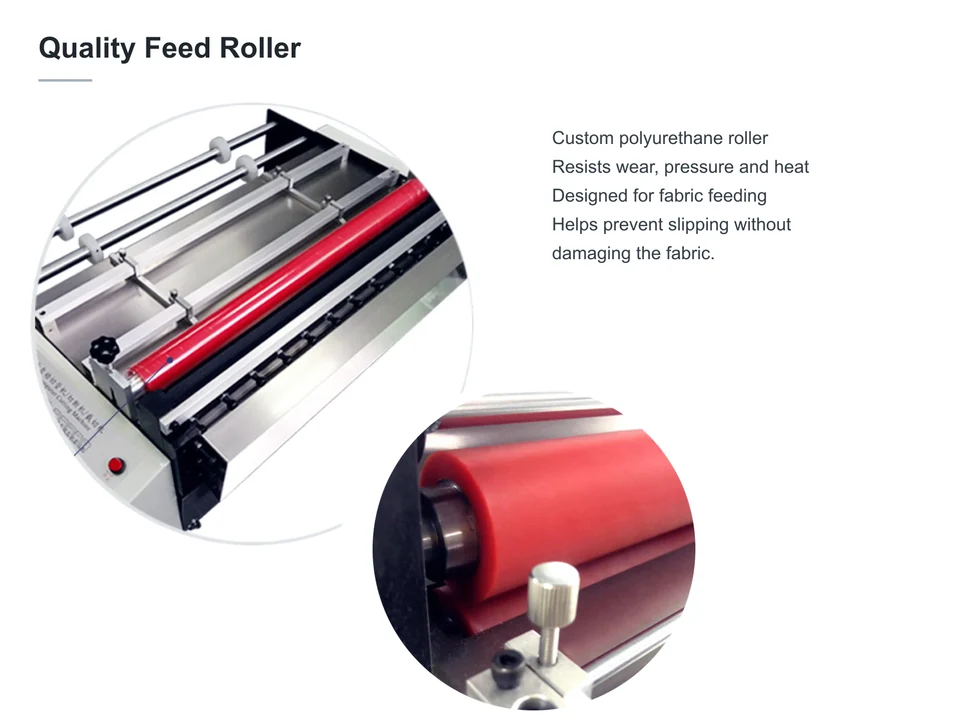
The feeding system uses a stepper motor and polyurethane rollers. Material guide positions and feed roller pressure can be adjusted for the PVC film being processed.
For coated PVC film or film with surface-protection requirements, specify the acceptable limits for roller marks, scratches and edge finish. A trial with the actual film helps assess feeding behavior, dimensional results and cut quality.
A 120 W AC geared motor drives the cutting mechanism. The power supply can be configured to customer requirements; confirm the voltage and frequency when ordering.
COMPONENT DETAILS
Component Details
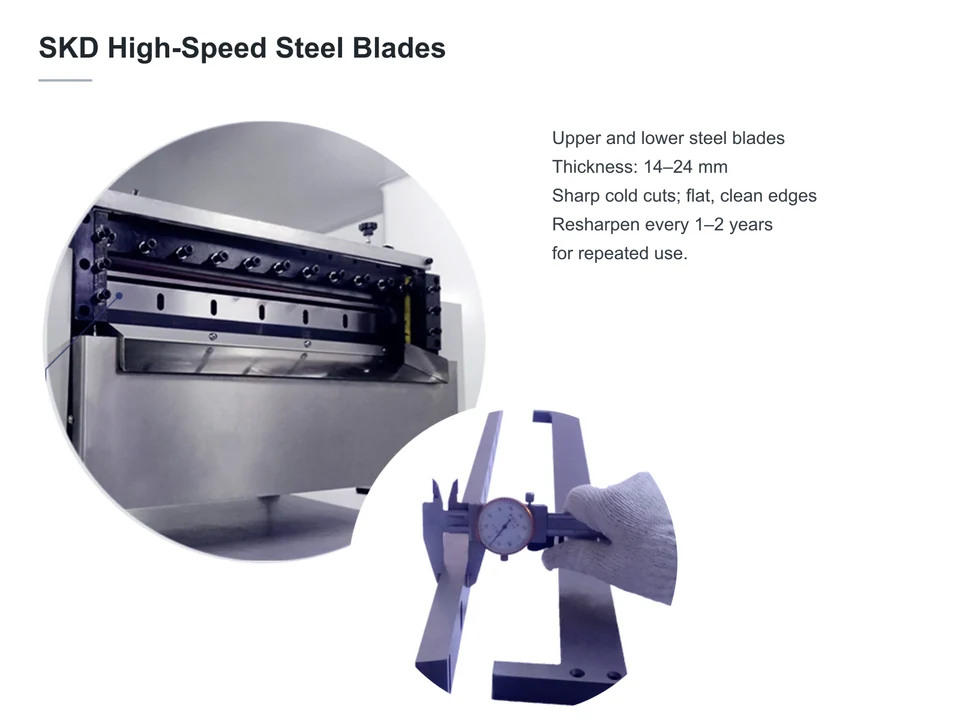
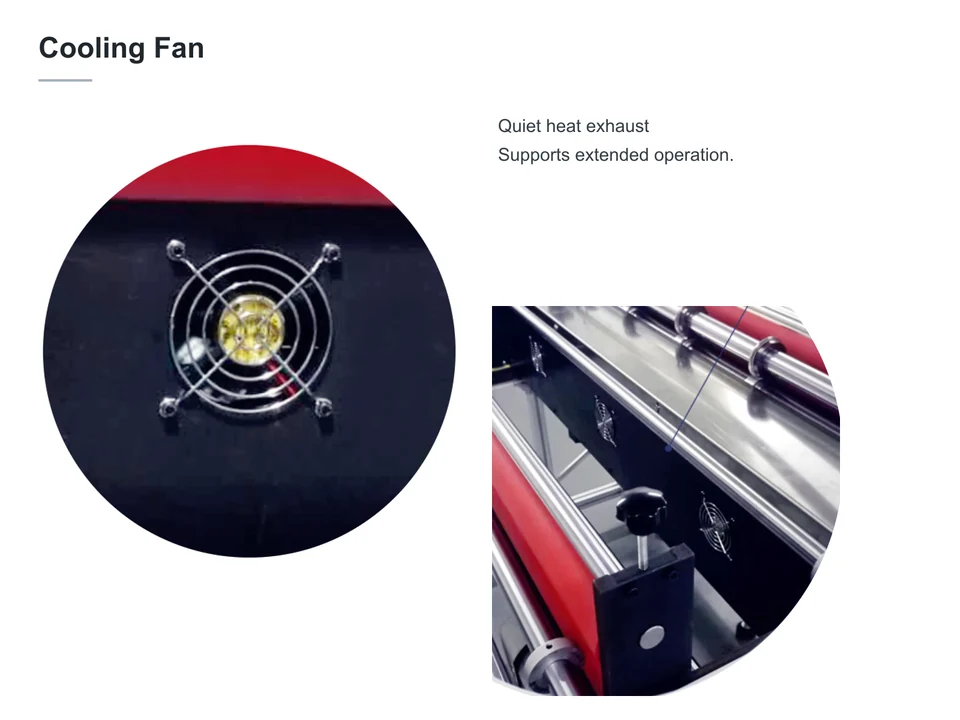
01 Chinese / English Controls02 Cutting Blades03 Stepper Motor04 Polyurethane Feed Roller05 Cooling Fan
TECHNICAL DATA
Technical Specifications
These are catalogue reference specifications. The usable processing range and production rate depend on the PVC film, cutting length and configuration. The listed 0.1 mm lower width value is not a confirmed minimum slitting width.
PVC Film Roll-to-Sheet Cutting Machine
Machine type
Tabletop PVC film cutter
Catalogue-listed cutting width
0.1–300 mm
Catalogue-listed cutting length
0.5–99,999.9 mm
Catalogue-listed cutting speed
34 m/min
Machine weight
60 kg
Machine dimensions
580 × 600 × 400 mm
Control panel
LCD display and keypad
Interface languages
Switchable Chinese and English
Feed drive
Stepper motor
Cutting motor
120 W AC geared motor
Roller material
Polyurethane
Power supply
Configurable to customer requirements
Optional configuration
Longitudinal blades for slitting and cross-cutting
FAQ
Frequently Asked Questions
How does a PVC film roll-to-sheet cutting machine work?
The machine feeds PVC film from a roll to the programmed length, then cuts across its width to produce a separate sheet. Operators set cutting length, feed speed and quantity through the control panel.
Can I adjust the cutting length and batch quantity?
Yes. The controls provide settings for cutting length, feed speed, batch quantity and total quantity. Batch pause and length compensation are also available. Confirm the practical cutting range and required tolerance for your film before ordering.
Can the machine slit PVC film as well as cut it to length?
Yes, with optional longitudinal blades. These blades slit the film into narrower widths before cross-cutting it to length. Provide your roll width, strip widths, number of strips and finished lengths to confirm the blade configuration.
What PVC film thickness can the machine handle?
The suitable thickness must be confirmed for the actual PVC film and configuration. Film flexibility, coatings, feeding behavior and required cut quality also affect suitability. Send a specification sheet or sample for assessment.
What is the maximum cutting width?
The catalogue lists a cutting-width range of 0.1–300 mm. Confirm the usable film width for the selected configuration. The lower value should not be interpreted as a verified minimum slitting width.
What cutting lengths are available?
The catalogue lists a cutting-length range of 0.5–99,999.9 mm. The practical range and achievable tolerance depend on the film and setup. Provide your shortest, typical and longest required sheet lengths for confirmation.
How fast can the machine cut PVC film?
The catalogue lists a cutting speed of 34 m/min. Finished sheets per minute depend on cutting length, film properties, timing settings and configuration. The control’s 0–80 speed scale does not directly indicate metres per minute.
Does the control panel support English?
Yes. The LCD control panel switches between Chinese and English. Operators can use either interface to set cutting length, feed speed, quantity and other cutting parameters.
How can I check whether the feeding rollers will mark the film?
Provide the actual PVC film and your surface-quality requirements for a trial. Roller pressure and guide positions can be adjusted, but the resulting surface condition and cut quality should be checked on your material.
Can the machine cut printed PVC film to registration marks?
Registration-mark cutting is not confirmed for the configuration described here. If each cut must align with a printed mark, send a film sample, mark layout and positioning tolerance for assessment.
Does the machine include rewinding or heat sealing?
Rewinding and heat sealing are not included in the process described on this page. The listed process is roll feeding and cut-to-length cross-cutting, with optional longitudinal slitting. Specify any additional process requirements when enquiring.
What information is needed for a quotation?
Send the PVC film thickness, roll dimensions, required sheet lengths, tolerance and target output. State whether optional slitting is required and include the strip widths. Samples or photos, electrical requirements and the delivery destination will help define the quotation.
Request a Cutting Configuration for Your PVC Film
To discuss a PVC film roll-to-sheet cutting application, please provide:
PVC film grade, thickness and any coating or adhesive layer.
Roll width, diameter and weight.
Required sheet lengths and dimensional tolerance.
Strip widths and number of strips, if optional slitting is needed.
Surface-protection and edge-finish requirements.
Target output and batch quantity.
Film samples, photos or a finished-part drawing.
Supply voltage, frequency and delivery destination.
HESPER can review these details to discuss the configuration, a film cutting trial and a quotation.
Your requirements have been saved to the HESPER enquiry inbox. We will contact you at the email address you provided. There is no need to submit again.
Reference:
To add photos or drawings, use the email link below and keep the enquiry reference in the subject.