
Do you need to cut industrial webbing approximately 76 mm wide and 2–3 mm thick at an angle?
Before buying a webbing cutting machine, you need a clear answer: can it cut your actual material into the shape you need?
Width and thickness are a starting point. The supplier also needs to know the material, the cutting angle and how the finished edge should look. Here are six simple checks to help you choose.
1. Show the Shape You Want
The easiest way to explain an angled cut is to send a photo, drawing or finished sample.
Draw a line across the webbing to show where it should be cut. If you know the angle, mark it and show which edge it is measured from. Do not let the supplier assume that you want a 45-degree cut.
Also explain:
- Does only one end need an angled cut?
- Do both ends need angled cuts?
- Should the two ends slope in the same direction or opposite directions?
If you do not know the angle, send a finished sample and ask the supplier to help confirm it.
This article describes a diagonal cut across flat webbing. If you need a sloped cut through its thickness, show that separately.
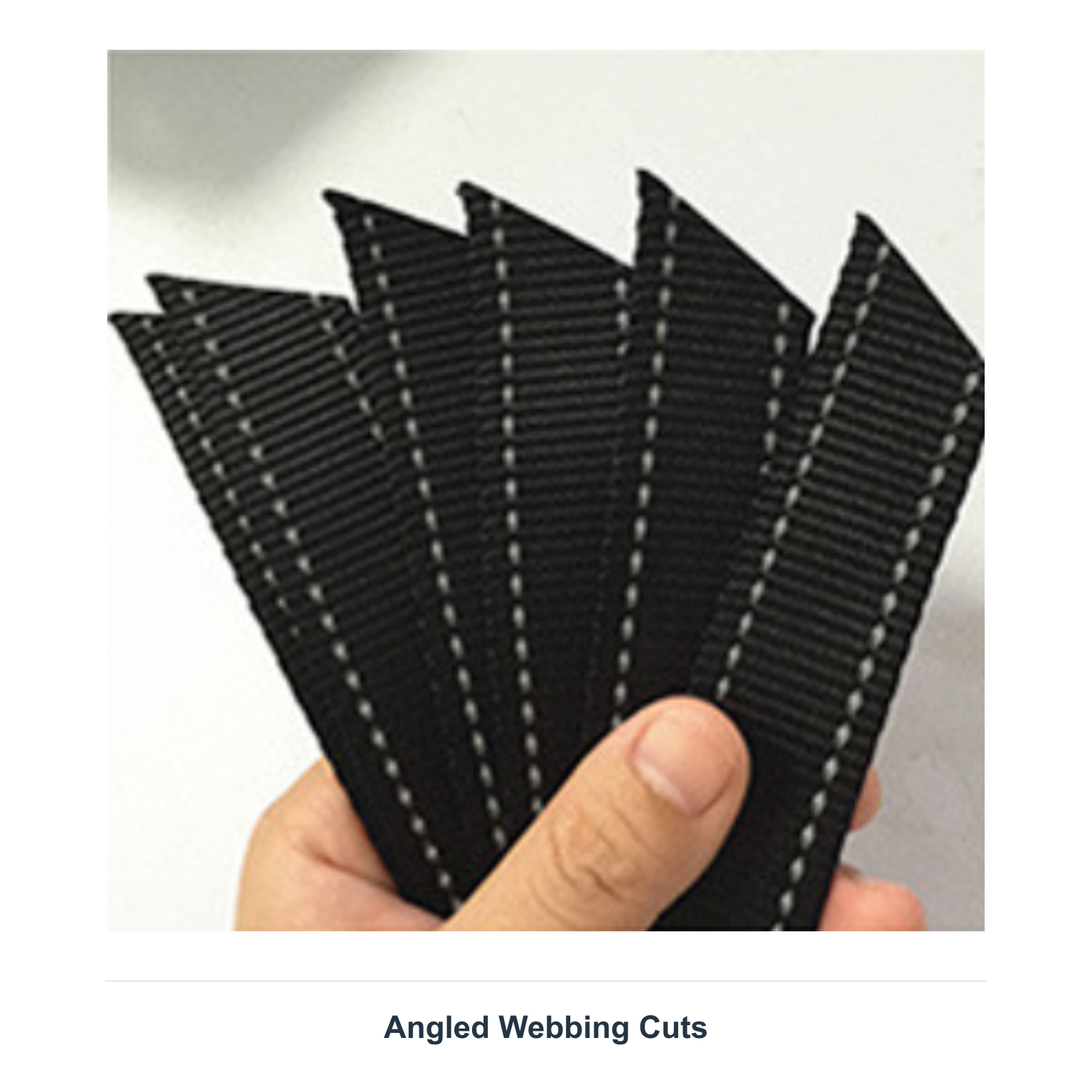
2. Explain What Your Webbing Is Made Of
Two pieces of industrial webbing can have the same dimensions but still need different cutting arrangements.
Start with this description:
“Our webbing is approximately 76 mm wide and 2–3 mm thick. We need angled ends.”
Then add the material name, if known, and explain whether it has a coating or backing.
If you do not know the material, say so. A real sample is more useful than a guess.
Also explain the thickness range. Does one material vary between 2 and 3 mm, or do you need to process several materials with different thicknesses?
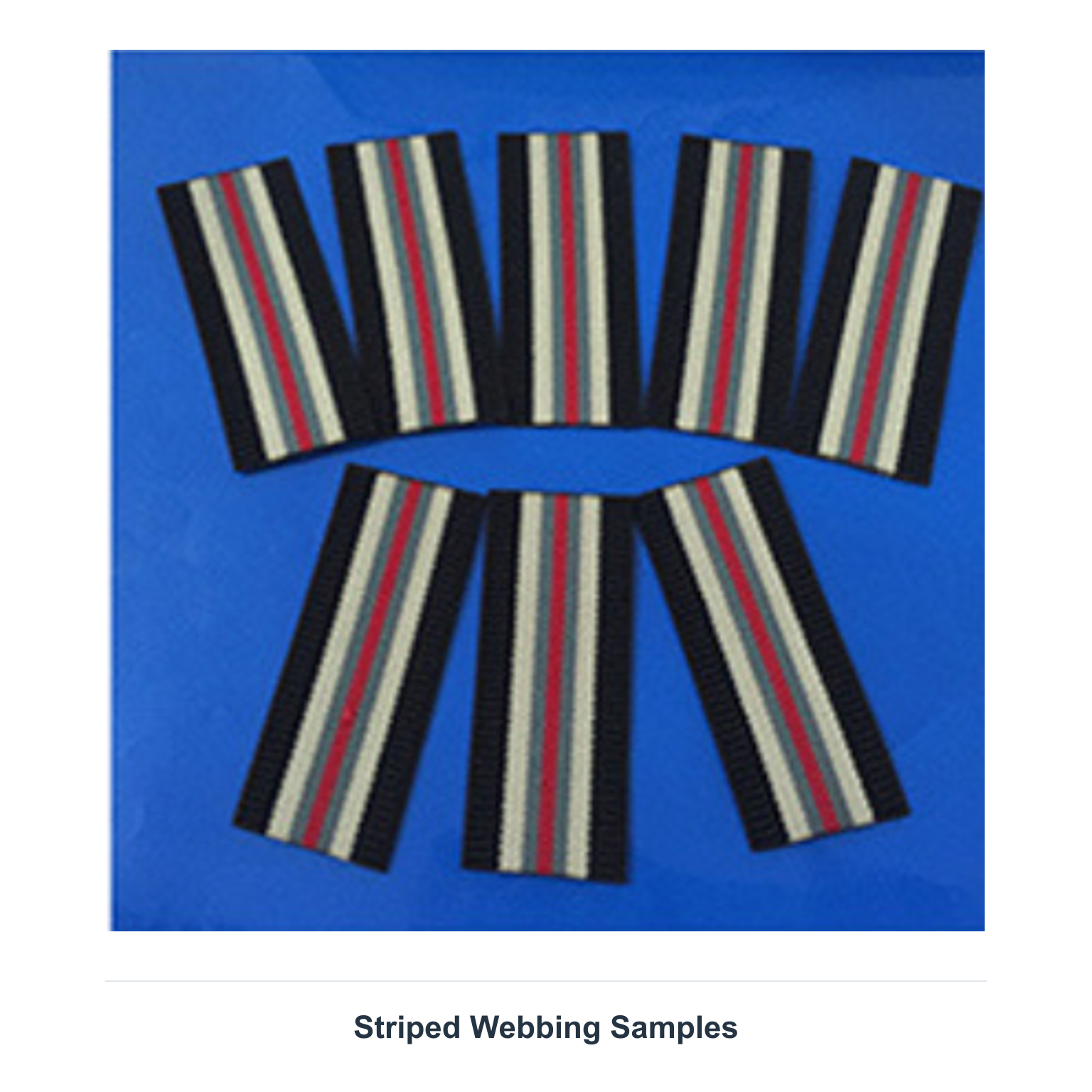
3. Ask for a Cutting Test
When choosing a webbing cutter, do not rely only on its advertised cutting width.
A machine may have enough space for 76 mm wide material, but that does not confirm it can make your required angled cut.
Ask the supplier:
“Can you test our actual webbing at the angle shown in this drawing?”
The test should use your material, your required angle and the thicknesses you plan to process.
For an automatic webbing cutting machine, ask to see how the material moves into position, how it is held during cutting and how the finished piece comes out.
A video showing a different material being cut straight does not confirm that your angled-cut job will work.
4. Show Where to Measure the Length
An angled end creates a longer side and a shorter side. This can cause confusion if you only specify one length.
Mark the start and end points of the measurement on your drawing. Explain whether the length should be measured along:
- The longer side.
- The shorter side.
- The middle of the webbing.
If both ends are angled, show both cuts clearly.
Also state how much variation is acceptable. If you are unsure, ask your customer or the person assembling the finished part before approving the samples.
5. Check the Edge After Cutting
Cutting webbing to the right shape is only part of the job. The edge must also meet your requirements.
Look closely at the trial samples:
- Are all the fibres cut through?
- Are there loose threads?
- Are there unwanted marks or colour changes?
- Is the edge too hard for the intended use?
- Does the cut end need to be sealed?
Tell the supplier which results are acceptable and which are not. Ask them to select and test a cutting method suited to your material.
Request close-up photos and physical samples. A general machine video may not show small edge problems clearly.
6. Check Several Pieces in a Row
One good sample does not show whether the machine can keep producing the same result.
Ask the supplier to cut several pieces in a row. Compare their lengths, angles and edge condition.
If you plan to process both 2 mm and 3 mm thick webbing, include both in the test.
Keep an approved sample and the matching drawing. These give everyone a clear reference for what the finished product should look like.
What Should You Send HESPER?
You do not need a complicated technical enquiry. You can start with this:
We need to cut industrial webbing approximately 76 mm wide and 2–3 mm thick at an angle.
Please check whether a suitable webbing cutting machine can make the shape shown in our photo or drawing.
Material: [name, or “unknown”]
Cutting angle: [angle, or attach a sample]
Finished length: [mark where to measure]
Angled ends: [one end or both ends]
Edge requirements: [for example, no loose threads]
Quantity needed: [pieces per day or per order]We can provide material for a cutting test. Please show the finished samples and confirm the equipment used.
Before buying, ask to see your own webbing cut into your required shape. For material approximately 76 mm wide and 2–3 mm thick, a sample test lets you check the angle, length and edge quality together.