
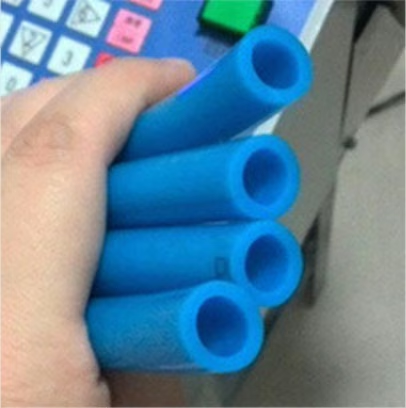
A flexible tube can reach the programmed length yet still fail inspection. Its end may look oval, one side may be longer, or the bore may close where the blade passed. These defects matter when the next operation requires a consistent sleeve, an open passage or a defined seating face.
Before buying an automatic tube cutting machine, separate length accuracy from cross-section damage and cut squareness. Each needs its own acceptance rule. A useful trial connects the actual tubing, feed arrangement and cutting action to the finished component your team will inspect.
1. Define the Defect Before Changing Settings
Start by photographing a rejected piece beside an accepted reference. Show the tube end directly and from the side. Record whether flattening appears along the entire piece, only under the feeding contact, or mainly at the cut. Those locations suggest different checks; they do not establish a diagnosis by themselves.
Also distinguish temporary compression from permanent damage. A soft tube may recover after release, while a split, folded lip or persistent indentation remains unacceptable. Agree when inspection takes place after cutting. Otherwise, a supplier measuring immediately and a buyer measuring later can report different results from the same batch.
2. Specify the Tubing and Its Delivery Condition
“Silicone tube” or “PVC tube” is not a complete cutting specification. Provide the material designation, outside diameter, inside diameter or wall thickness, and hardness when known. Include reinforcement, coatings and surface treatments. Leave unknown properties unconfirmed rather than inferring them from colour or appearance.
State whether material arrives on a reel, in a loose coil, straight or flattened. Coil memory and resistance during release can influence how tubing enters the feed path. Send samples from normal production, including relevant supplier or batch variations. One short, straight sample cannot represent every condition encountered while processing a full coil.
List minimum, typical and maximum finished lengths. For each, specify permitted length variation, end angle, visible marks and the required open bore. Treat these as customer requirements to test, not as capabilities already guaranteed by the machine.
3. Follow the Material From Coil to Collection
Trace the sequence: material release, alignment, gripping, measured feeding, cutting and collection. The tubing should approach the cutting area without an unnecessary sideways pull. Check whether the coil drags intermittently, whether the inlet bends the tube sharply, and whether the finished piece catches as it leaves.
Caterpillar feeding grips the tube over a contact length, but belt feeding alone does not prove that a particular tube will remain round or move without slipping. The trial must establish a workable balance between grip and deformation. Ask the supplier to explain which adjustments are available on the quoted configuration.
HESPER’s feeding-system inspection guide provides a broader checklist for alignment and material handling. For tubing, add checks for bore shape and contact marks, which a simple length measurement can miss.
4. Inspect Squareness, Bore Shape and Length Separately
A square cut is a geometric requirement: the end should meet the agreed orientation relative to the tube axis. Define how it will be checked, especially for curved or highly flexible samples. A side photograph may reveal an obvious slant, but perspective alone is not a reliable angular measurement.
Measure length with the tube supported and relaxed, using an agreed reference and contact method. Avoid squeezing a soft end with measuring jaws. Record several consecutive pieces and keep individual results; an average can conceal alternating long and short cuts.
Inspect the bore and outside profile after the agreed recovery period. Note flattened sections, tears, lips and loose fragments separately. Where assembly fit matters, include the actual mating component or an approved gauge in acceptance. Do not assume that passing a length check establishes fitness for the next operation.
5. Match the Trial to HESPER’s Confirmed Configuration
The HESPER Silicone & Heat-Shrink Tube Cut-to-Length Machine combines caterpillar belt feeding with pneumatic cutting. Its bilingual LCD controls provide cut-length, feed-speed and batch-quantity settings. An external compressed-air supply is required.
The published material range includes insulation tubing, PTFE tubing, PVC tubing, silicone tubing and heat shrink tubing. This is a starting point for evaluation. It does not establish compatibility with every diameter, wall thickness or compound. Confirm the usable cross-section, shortest acceptable piece and working output using your sample.
Ask for a written quotation that separates standard equipment from proposed adaptations. Special guides, coil support, receiving arrangements or a particular blade setup require engineering confirmation. Provide site power and air-supply details; obtain the required pressure and consumption from HESPER instead of assuming them.
6. Record a Repeatable Acceptance Test
Test the shortest, typical and longest requested pieces under agreed conditions. Include normal coil release, a stop and restart, and enough consecutive cuts to reveal recurring defects. Record the material batch, settings, inspection timing and accepted sample photographs.
Change one controllable setting at a time during investigation. Compare length, end shape and surface condition together before increasing production rate. Keep the approved sample and report with the order so both teams share the same reference during delivery acceptance.
FAQ
Will stronger belt pressure solve short cuts?
Not necessarily. Short pieces can involve slip, stretched feeding or measurement differences. Additional pressure may mark or flatten soft tubing. Diagnose the cause with a controlled trial.
Can one setup cut every tube material?
No universal setup should be assumed. Different compounds, wall thicknesses and delivery forms can require different settings or a revised configuration.
Does a clean-looking end prove the bore is acceptable?
No. Inspect the opening and test the agreed assembly requirement separately. Appearance is only one acceptance criterion.
Request a Tube Cutting Test
Send HESPER your tubing designation, cross-section, finished lengths, defect photographs and acceptance requirements through the cutting-equipment enquiry form. Include sample availability and target batch output to plan a relevant trial before confirming the machine.